Portugal's Firefighting Pilots May Now Fly Twenty Consecutive Days, and the Consent Has to Come From the Pilot
Portaria n.º 434/2026/1 is the first change in 33 years to the 1993 rulebook on flight and rest time for aerial-work pilots. A 20-day run needs the pilot's express agreement and five consecutive days off at the end. It takes effect on Wednesday.
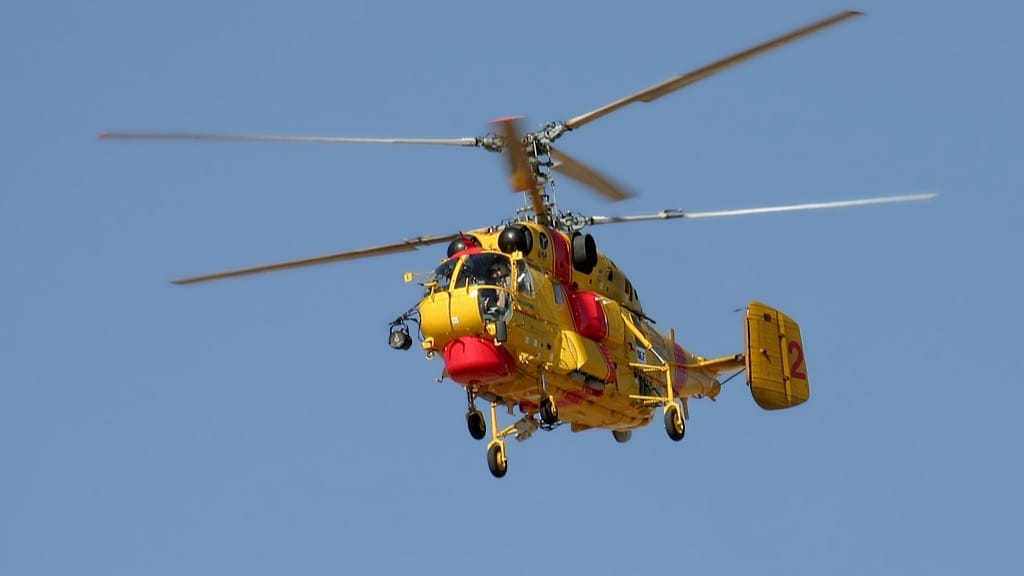
A rulebook that has governed the working hours of Portugal's aerial-work pilots since 1993 was amended on Tuesday for the first time, and the change is aimed squarely at the people who fly water-dropping aircraft over burning forest. Portaria n.º 434/2026/1, published in Diário da República 1st series no. 184, lets a firefighting pilot work up to 20 consecutive days without a day off, provided the pilot has personally agreed to it and is given five consecutive days off at the end. It takes effect on Wednesday, 23 September.
The instrument amends Portaria n.º 742/93 of 16 August, which approved the Regulamento sobre Tempo de Serviço de Voo e Repouso dos Pilotos de Aeronaves a Operar em Trabalho Aéreo (Regulation on Flight Service and Rest Time for Pilots of Aircraft Operating in Aerial Work). In 33 years it had never been touched.
What the new article says
The change works by inserting a new article 7-A into the annex to the 1993 regulation. Pilots engaged in firefighting may work a maximum of 20 consecutive days, but only if three conditions are met at once:
- Express consent. The pilot must state agreement to the operator. The regulation puts the decision in the pilot's hands, not the roster planner's.
- Daily limits still bind. The flight times and flight duty periods in the table at article 4 of the regulation continue to apply. The portaria lengthens the run of working days; it does not lengthen the flying day.
- Five days off afterwards. A 20-day stretch must be followed by a minimum of five consecutive folgas, as defined in article 3.
There is a middle tier. Where a pilot works more than seven but fewer than 20 consecutive days, consent and the daily limits still apply, and the operator must guarantee four days off in every 30-day period.
Article 7 of the annex, which sets the baseline, was rewritten to read that pilots are entitled to one day off per week, now expressly subject to the new article 7-A.
The second-job problem
The portaria also closes a gap that mattered more than the headline number. Article 2 now states that pilots flying for more than one aerial-work operator are bound by the regulation's limits in any circumstance, so hours cannot be reset by switching employer. Those pilots must keep their own individual records of flight duty periods, flight times, rest periods and days off, and must give each operator the data it needs to plan within the limits.
Why the government moved
The preamble is unusually frank about the pressure behind the change. Firefighting is seasonal, and it is flown largely by pilots whose homes are several hundred kilometres from the air-means centres spread across the country under the Autoridade Nacional de Emergência e Proteção Civil (National Emergency and Civil Protection Authority) and its Dispositivo Especial de Combate a Incêndios Rurais (Special Rural Firefighting Arrangement). Both crews and operators, the text says, take the view that working time and rest should be adapted to those realities while respecting operational safety.
The government also concedes a supply problem. Climate change has produced hotter, drier summers with more ignitions, it writes, in southern Europe and increasingly in central Europe too, and the resulting competition for aircraft and for pilots with the specific qualifications and experience required has left availability under strong strain.
Legally, the activity is placed under article 17 of Directive 2003/88/EC, the working-time directive's derogation for work whose duration cannot be measured in advance and which must run continuously in emergency conditions. The enabling power is article 42(4) of Decreto-Lei n.º 44/2013 of 2 April, and the portaria cites point 7(3) of National Operational Directive no. 2, the DECIR. The penalty regime remains the one in Decreto-Lei n.º 152/2000, amended by Decreto-Lei n.º 208/2004.
It was signed by three ministers: Infrastructure and Housing Minister Miguel Pinto Luz on 9 September, Interior Minister Luís Neves on 15 September, and Labour, Solidarity and Social Security Minister Rosário Palma Ramalho on 17 September.
What this means for foreign residents
- It arrives mid-crisis, not out of season. More than 80 councils across nine districts sat at maximum fire danger on Tuesday. The rule is in force from Wednesday, so it applies to the tail of this season, not just the next one.
- If you live rurally, this is your air cover. For households in the interior, the aerial fleet is often the first response to reach a fire. The state is managing a pilot shortage by lengthening how long each pilot can stay on the roster.
- Consent is the safety valve, and it is individual. The 20-day maximum is not something an operator can simply impose. A pilot who does not agree keeps the one-day-per-week entitlement.
- The daily ceilings did not move. This is a change to how many days in a row, not to how many hours in a day. That distinction is the whole design of the instrument.
Portugal has called on the EU civil protection pool for aircraft during severe fires, most recently at Vouzela in July. Tuesday's portaria addresses the other half of that equation, which is not airframes but the people qualified to fly them.