Working Remotely from Portugal: Tax, NHR/IFICI, and the Real Bureaucracy in 2026
Portugal is popular with remote workers and digital nomads. But how does tax actually work? What is IFICI? Do you need a D8 visa? A full practical guide for 2026.

Portugal has spent the past five years building a reputation as one of Europe's most welcoming destinations for remote workers. The D8 Digital Nomad Visa, the IFICI tax regime (successor to NHR), and comparatively low costs of living have all contributed to a significant influx of remote workers from the UK, US, Canada, and Northern Europe. But how does the practical and legal side actually work in 2026?
First: What's Your Legal Situation?
Your residency and work rights depend entirely on your nationality:
EU/EEA/Swiss Citizens
Freedom of movement applies. You can live and work in Portugal without a visa, without registering in advance (though you should register at your local Junta de Freguesia within 30 days of establishing residence). Working remotely for a foreign employer as an EU citizen is legally straightforward from a residency perspective.
Non-EU Citizens (UK, US, Canada, Australia, etc.)
You need a visa to work from Portugal legally. The most relevant options:
- D8 Digital Nomad Visa: Specifically for remote workers employed by or contracting with companies outside Portugal. Requires proof of monthly income of at least €3,480/month (4x Portuguese minimum wage as of 2026). Valid for 1 year, renewable, converts to 5-year residency.
- D7 Passive Income Visa: Primarily for those with passive income (pensions, rental income, dividends), but also used by freelancers and remote workers with demonstrable stable income. Income threshold is lower (~€870/month) but the framing is passive rather than employment income.
- D2 Entrepreneur Visa: For those starting a business, creating employment, or making a qualified investment in Portugal.
The D8 Digital Nomad Visa in Practice
The D8 visa has been available since October 2022 and is now well-established. Key requirements:
- Income proof: minimum €3,480/month (4x minimum wage). This can be demonstrated through employment contracts, client contracts, bank statements, or a combination
- Employer/client must be non-Portuguese (you're working from Portugal, not for a Portuguese employer)
- Health insurance: minimum €30,000 emergency medical repatriation coverage
- Clean criminal record
- Accommodation proof (rental contract)
- Processing time: 2–4 months via Portuguese consulate in your home country, then AIMA for residency permit
Processing happens at the Portuguese consulate in your home country first — you apply, receive the D8 visa stamp, enter Portugal, then book an AIMA appointment for the residency permit (Autorização de Residência). The full process from first application to having a residency card in hand typically takes 4–8 months.
Tax in Portugal as a Remote Worker
Once you're tax resident in Portugal (present more than 183 days in a calendar year, or with your habitual residence here), Portugal taxes your worldwide income. This is where the tax regime becomes critical.
Standard Portuguese Income Tax (IRS)
Portugal's progressive personal income tax rates in 2026:
- Up to €7,703: 13.25%
- €7,703–€11,623: 18%
- €11,624–€16,472: 23%
- €16,473–€21,321: 26%
- €21,322–€27,146: 32.75%
- €27,147–€39,791: 37%
- €39,792–€51,997: 43.5%
- €51,998–€81,199: 45%
- Above €81,200: 48%
On top of IRS, social security (Segurança Social) contributions apply if you're self-employed in Portugal — typically 21.4% of declared income (with a base calculation methodology that can be complex for freelancers).
IFICI: The New NHR Replacement
The original NHR (Non-Habitual Resident) regime — which offered a flat 20% tax rate on Portuguese-sourced income and exemptions on most foreign income for 10 years — was closed to new applicants after December 31, 2023.
In its place: IFICI (Incentivo Fiscal à Investigação Científica e Inovação). Introduced in 2024, it offers:
- A flat 20% personal income tax rate on eligible Portuguese-sourced income
- Tax exemptions on most foreign-sourced income (dividends, interest, capital gains, foreign pensions, foreign employment income)
- 10-year benefit period
- Available to new tax residents who haven't been Portuguese tax residents in the previous 5 years
The key difference from NHR: IFICI targets specific qualifying categories. The relevant ones for remote workers and expats:
- Qualified activities (tech, science, research, engineering, IT, finance — a list defined by AICEP and ANI)
- Entrepreneurs and start-up activities designated under Portuguese start-up legislation
- Highly qualified professionals in listed industries
Not everyone qualifies. If you're a freelance graphic designer, a writer, or working in an industry not on the qualified list, you may not be eligible for IFICI. The NHR had broader income categories; IFICI is more targeted.
Application process: register IFICI status with the Portuguese Tax Authority (AT) within the deadline after becoming tax resident (typically by the end of January of the year following your first full year of residency). A tax advisor familiar with international tax is strongly recommended.
The Self-Employed (Recibos Verdes) Route
Many remote workers operate as self-employed in Portugal, issuing recibos verdes (green receipts — Portugal's system for freelance invoicing). Key points:
- Register as self-employed at AT (online via finanças portal or at a Finanças office)
- Issue invoices (faturas) for services to clients — legally required, tracked by AT
- File quarterly or annual IRS declarations
- Social security contributions: 21.4% of 70% of invoiced income (for service providers) — so effectively ~15% of gross income. There's a 12-month exemption for new self-employed registrations
- Simplified regime (regime simplificado) applies if annual income is under €200,000 — most remote workers qualify, and it significantly simplifies accounting
Many expat remote workers retain their foreign employer/client relationships and issue invoices from Portugal to their clients abroad. This is legal, transparent, and well-understood by Portuguese tax authorities.
Double Taxation Treaties
Portugal has double taxation treaties with the UK, US, Canada, Germany, France, the Netherlands, and most EU countries. Under these treaties, you typically don't pay tax twice on the same income — either the treaty exempts foreign income in Portugal (common under IFICI) or you receive a credit for taxes paid abroad.
The US is a notable complexity: US citizens are taxed on worldwide income by the IRS regardless of residence. A US remote worker in Portugal on IFICI may pay 20% to Portugal and still have US filing obligations — though the Foreign Earned Income Exclusion (FEIE) and Foreign Tax Credit mechanisms exist to reduce or eliminate double taxation. US expat tax specialists are particularly worth consulting.
Practical Setup: What You Actually Need
To work legally as a remote worker in Portugal in 2026, you typically need:
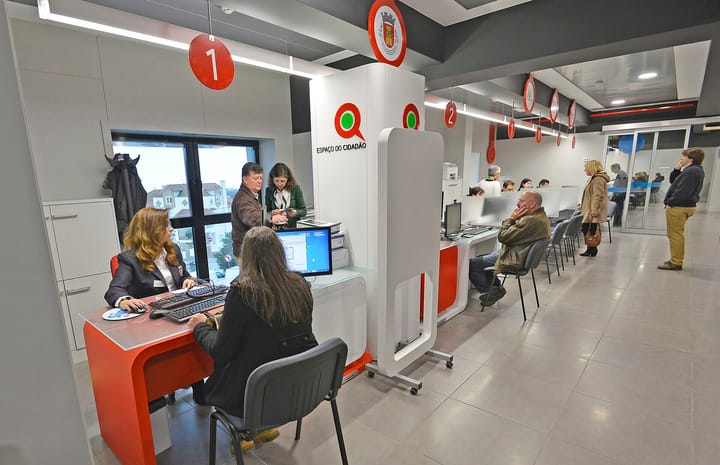
- NIF — Portuguese tax number. Get this first, at any Finanças office or Loja do Cidadão. EU citizens can get it same-day; non-EU may need a fiscal representative
- NISS — Social security number. Register at Segurança Social office once you have a NIF and proof of residence
- Portuguese bank account — For salary receipt, bill payment, tax direct debits. Requires NIF and proof of address
- Self-employed registration (if not employed by a Portuguese company) — through finanças.gov.pt or at a Finanças office
- IFICI application (if qualifying) — through AT portal, by January 31 of the following year
- Accounting software or a gestor — Portuguese accountants (gestores or técnicos de contas) charge €50–€200/month to handle your recibos verdes, IRS declaration, and social security filings. Well worth it for most expats
Working for a Portuguese Employer
If you're hired by a Portuguese company (not remote for a foreign one), the dynamics change:
- Portuguese employment law applies (substantial worker protections, 22 days annual leave, dismissal rules)
- Employer handles social security contributions (23.75% on top of your salary)
- You receive a salary with IRS withheld at source
- IFICI still applies to your income if you qualify, reducing the withholding rate
The Real Bottom Line on Tax
For a remote worker earning €60,000/year:
- Without IFICI (standard IRS): Effective rate roughly 35–38%, plus social security → take-home ~€35,000–€38,000
- With IFICI (qualifying activity): 20% flat on Portuguese income, plus social security (~€8,000–€9,000) → take-home ~€43,000–€45,000
The IFICI benefit is significant if you qualify. Combined with Portugal's relatively low cost of living versus London, Amsterdam, or Zurich, the after-tax purchasing power for many professionals is genuinely competitive.
If you don't qualify for IFICI, standard Portuguese IRS rates aren't the lowest in Europe — but the cost of living, quality of life, weather, and the country's expat infrastructure continue to attract remote workers even without a preferential tax regime. The maths still works for many, particularly those leaving London or coastal US cities. On the constitutional-control-of-tax-law side, our read on the Tribunal Constitucional's 21 April 2026 acórdão striking down Portaria n.º 230/2019 on the RNH 'atividades de elevado valor acrescentado' table (reserva de lei tributária bars Government from defining the 20% IRS-beneficiary professions by decree) sets the latest reference.