
Vets Will Have to Request Unlicensed Animal Medicines Online From 2 November, and Antibiotic Permits Will Expire After Five Days
A new DGAV order moves special-use authorisations for veterinary medicines not sold in Portugal onto an online platform, with a seven-day decision, no fee and a five-day limit for antimicrobials. What changes for pet owners and farmers.
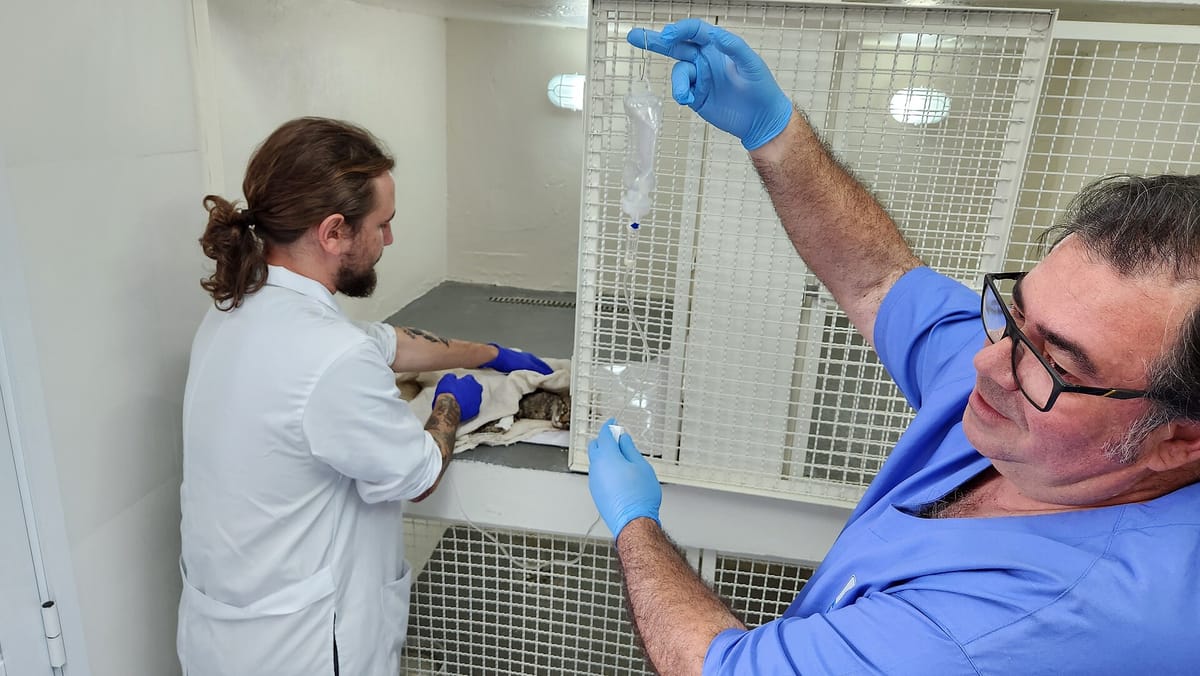
From Monday 2 November, a vet in Portugal who needs a medicine that has no authorisation to be sold here will have to ask for it through an online platform run by the Direção-Geral de Alimentação e Veterinária (DGAV, the Directorate-General for Food and Veterinary Affairs), which must answer within seven days. Permits for antimicrobials, the group that includes antibiotics, will last no more than five days.
The rules are in Despacho n.º 12555/2026, signed on 12 October by the director-general, Susana Pombo, and published in the Diário da República (Portugal's official gazette) on 15 October. They replace an order from 2018 (Despacho n.º 9118/2018) and take effect on the first working day of the month after publication. As 1 November is a Sunday and a public holiday, that is Monday 2 November.
What a special-use authorisation is
When no authorised veterinary medicine suits a species or a condition, EU law (Regulation (EU) 2019/6, articles 112 to 115) lets a vet step down a ladder of alternatives known in Portugal as the "cascata terapêutica" (therapeutic cascade). One step is a medicine that has no authorisation in Portugal at all, typically one authorised in another country. Under Decreto-Lei n.º 148/2008, using such a medicine needs the prior approval of the DGAV's director-general, given only when a vet's justification shows it is essential to prevent, diagnose or treat a condition, or when it is for research or clinical trials. That approval is the autorização de utilização especial (AUE, special-use authorisation).
What changes on 2 November
- Requests go online. The vet in charge files the request on the DGAV's Prescrição Eletrónica Médico-Veterinária (PEMV, the veterinary electronic prescription platform). Email is allowed only if the platform fails, using a form the DGAV publishes on its website.
- A seven-day decision. The DGAV must decide within seven days of receiving a complete request and notifies the vet through the platform. The order says its deadlines follow the Código do Procedimento Administrativo (Code of Administrative Procedure) unless they are expressly set in calendar days, which this one is not, so in practice the clock runs in working days. The DGAV may ask for more papers first, such as the medicine's authorisation in its country of origin, its summary of product characteristics, test results, a good manufacturing practice certificate or published literature.
- Free of charge. No fee is due for assessing a request.
- Personal to the vet and the animal. An authorisation cannot be transferred. It covers only the vet who asked and the animal or group of animals named in the request.
- Six months at most, five days for antimicrobials. An authorisation lasts up to six calendar months from issue. For antimicrobial medicines it lasts at most five calendar days from the moment the vet prints the purchase form on the platform. The DGAV links the shorter limit to prudent use of antimicrobials and the fight against antimicrobial resistance.
- Bought only through a Portuguese wholesaler. The medicine can be bought only from a wholesaler authorised in Portugal and named in the authorisation, which records the batches and expiry dates on the platform. The quantity is limited to what the treatment needs, and each authorisation covers a single purchase, although deliveries can be split if a farm, a vet or a clinic cannot store it all at once.
What it means for pet owners
The request is the vet's job, not yours. For a companion animal, the medicine is delivered to the centro de atendimento médico-veterinário (CAMV, the veterinary practice) or to the vet who made the request, not to the owner, and the vet must keep it in the right storage and transport conditions until it is given. If your pet needs a medicine that is not sold in Portugal, ask your vet whether it falls under this route and how long the request is likely to take. Under the new order, the DGAV's own deadline is seven days.
For a course of antibiotics, expect the vet to order the medicine as soon as the purchase form is printed, because the authorisation runs out five days later.
If some of the medicine is not used before the authorisation expires, the vet must tell the DGAV within 20 days how much is left and what was done with it, and either dispose of it lawfully or return it to the wholesaler. Vets must keep records linking each authorisation to the medicine supplied and its use for five years, and report any suspected adverse reactions to the DGAV.
A yearly permit for some pet medicines
The order keeps a yearly authorisation for medicines on a "positive list" that the DGAV will publish on the platform and its website. Only medicines for companion animals can go on it, and only when their use does not depend on showing the need case by case and they are not biological medicines. Medicines for food-producing animals can be added only exceptionally, by a reasoned decision. A vet asks for the yearly permit on the platform, stating the species and the expected annual use, and it lasts one year. The DGAV can withdraw it, for example, once an equivalent authorised medicine goes on sale in Portugal.
Farm animals and research
For animals that produce food, the medicine can be supplied only to the farm named in the authorisation and given only to the animals it covers, and the authorisation states the withdrawal periods that must pass before meat, milk or eggs reach the food chain. Medicines authorised for research, analysis or clinical trials cannot be sold or passed on, and those permits last for the length of the study.
What happens to requests already in the system
Yearly authorisations granted under the 2018 order stay valid until they expire. Requests still pending on 2 November will be handled under the new rules, with the deadlines counted from that date.
Veterinary care has been in the news for its cost as well: in July, vets asked parliament to cut the 23 percent VAT on pet care.
The full text of Despacho n.º 12555/2026 is in the Diário da República, in Portuguese. The DGAV publishes its forms and guidance on its veterinary medicines pages.


.jpg)