Ventura Brands Montenegro's Public 'No' to Chega's Vacation-Days, Overtime-Rights and Lower Retirement-Age Demands a 'Caricatural Strategy' From the Lisbon Headquarters on Sunday 24 May
Chega leader André Ventura called Luís Montenegro's public rejection of his party's vacation-days, overtime-rights and retirement-age demands a 'caricatural strategy' at a Sunday 24 May Lisbon HQ press conference — the labour-reform vote arithmetic depends on PS or Chega backing, neither in place.
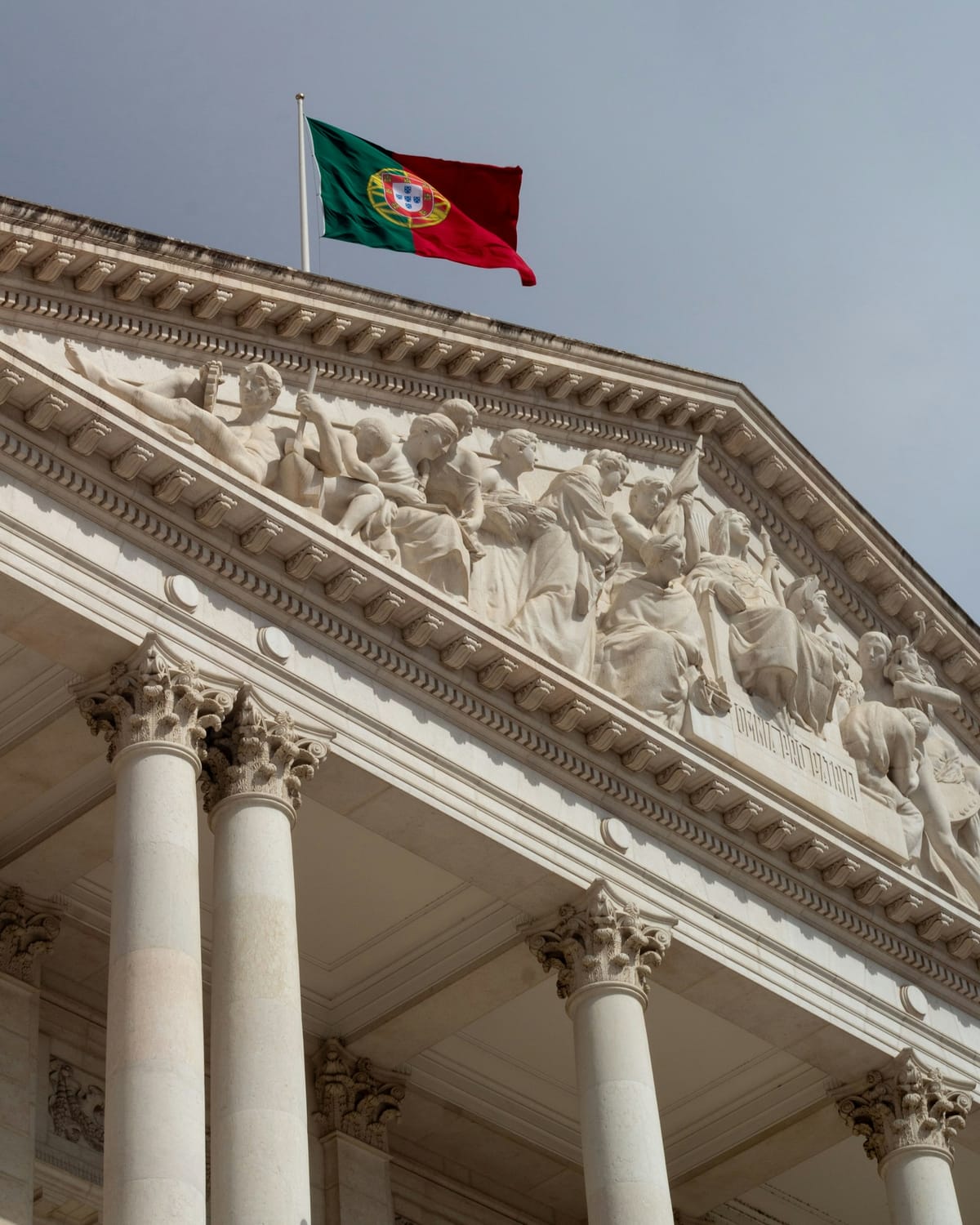
André Ventura used a Sunday-afternoon press conference at the Chega national headquarters in Lisbon on 24 May 2026 to brand prime minister Luís Montenegro's public rejection of his party's main labour-reform demands a "caricatural strategy" — the strongest characterisation yet from the leader of the second-largest party in the Assembleia da República since the government tabled its proposta de revisão da lei laboral in mid-May. The exchange sits at the centre of the question of whether the labour-reform package will clear the chamber at all, and on what terms.
The Stand-Off
The framing line for Ventura's Sunday intervention was Montenegro's address at the JSD Congress in Viseu earlier in the weekend, where the prime minister publicly ruled out two of Chega's named conditions for supporting the labour-reform vote: a meaningful reduction in the retirement age and an alignment of the minimum pension with the minimum wage. The Chega national council on 22 May had already unanimously voted to reject the government's labour and state-reform proposals; Ventura's Sunday press conference was the operational response to Montenegro's headline-level dismissal of the negotiating terms.
Ventura characterised the prime minister's move as "a bad strategy, which moreover has shown in the past that it has no result, it is at least a caricatural strategy." The implication carried in the choice of word: Ventura's argument is that publicly closing the door before the negotiation has run its course is theatre rather than tactics, and that the government will end up softening its position once the vote arithmetic comes into focus.
What Chega Is Asking For
The Chega ask is structured in three named blocks that have remained consistent across the past month of public communication. First, additional rights for workers on shift schedules and on supplementary or overtime hours — the bloc Ventura defends as "not an esoteric demand but the reflection of the reality of a country where millions of people adjust their family life to have working conditions." Second, restoration of vacation days that prior labour-code revisions removed. Third, a downward step on the statutory retirement age and an alignment of the minimum old-age pension with the minimum monthly wage. The party has presented all three as necessary preconditions for voting for the labour-reform package; the government's proposta on the table runs on the opposite track on the retirement-age question and is more flexible on the overtime-rights line.
What the Government Has Tabled
The Council of Ministers approved the labour-reform proposta in mid-May. The package leans on flexibilisation of working-time arrangements: a reinstated banco de horas por acordo, looser teletrabalho rules, more permissive regime de trabalho suplementar in defined circumstances, and adjustments to the rules governing posted workers and consecutive fixed-term contracts. The minister of labour has framed the package as a "national objective" and called on all parties in the arco da governação to engage; the PS, however, is on record voting against, and Chega's stated position keeps the chamber arithmetic tight unless the negotiation produces a compromise.
The Vote Arithmetic
The PSD/CDS-PP governing coalition does not command an absolute majority in the Assembleia da República. The labour-reform bill therefore needs either PS abstention or active Chega support to clear the generality vote. Chega's national-council rejection on 22 May closes the second route unless the negotiation produces a written government concession; the PS's published position on 19 May closes the first. The chamber's generality vote on the proposta is the next procedural step — and the line through which Ventura's caricatural strategy reading will be tested. The government has not yet scheduled it.
What This Means for Expats
- Personal impact: the labour-reform package, if it passes, reshapes overtime, teleworking and fixed-term-contract rules for every employee under Portuguese contract — including expats employed by Portuguese entities. The terms in the published proposta are the working baseline for HR-team planning.
- What to watch: the next public moments are the scheduled votação na generalidade in the Assembleia da República and any concrete revisions the government tables in response to Chega's three demands.
- Pensions context: the retirement-age and minimum-pension lines Chega is pushing intersect with the Segurança Social sustainability file the IMF flagged in its most recent Article IV review. The government's resistance is framed inside that fiscal envelope.
- Calendar: Montenegro's JSD address ruled out concessions on the two named lines, not the broader package. The signal to read is whether the government tables a written compromise in the next two weeks or holds the line through to the vote.