Unileite Trims Another Two Cents From São Miguel's Milk Price, and the Azores Farm Federation Puts the Year's Loss at €15 Million
September is the second general step down on the island this year, after Bel's 1.5 cents and August cuts by Lactogal, Insulac and Prolacto. Jorge Rita says diesel is rising 16.3 cents a litre, and the €23 million of war-related aid paid on the mainland never reached the Azores.
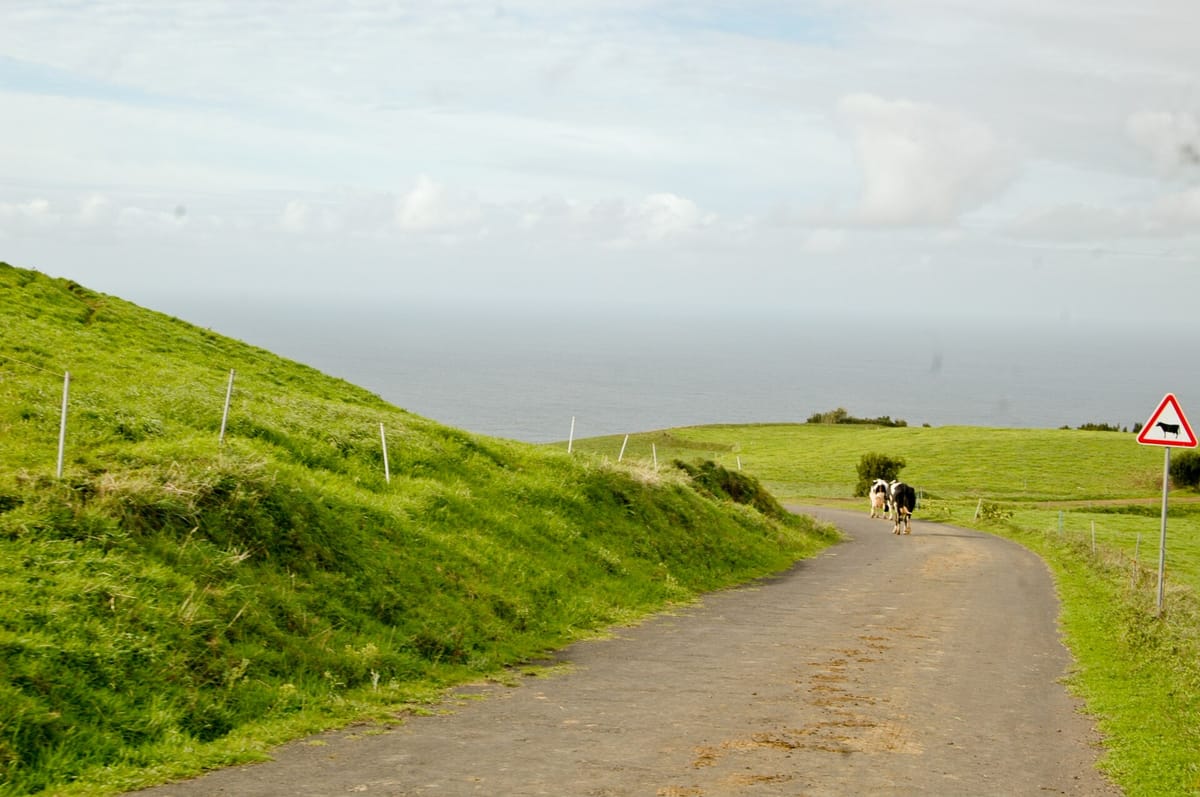
The dairy cooperative Unileite told its members on Friday that from September it will pay two cents a litre less for their milk on São Miguel. On Saturday the president of the Federação Agrícola dos Açores (Azores Agricultural Federation), Jorge Rita, put a number on what that and the cuts around it will cost the island's producers: 15 million euros of lost revenue between now and the end of the year.
"This is a dramatic situation for us producers," Rita told Lusa, "because by the end of the year we will have 15 million euros less in revenue from the fall in the milk price, and everybody knows the increase in production costs is imminent."
Four processors, two rounds
Unileite's two cents is the latest of a sequence rather than a single decision. The French group Bel, which runs a plant on São Miguel, had already announced a cut of 1.5 cents a litre from 1 September. Lactogal, Insulac and Prolacto all reduced what they pay São Miguel farmers in August. Taken together, that makes September the second general step down in the farm-gate milk price on the island this year.
Rita's complaint is less about the direction than about who absorbs it. "We know markets are difficult," he said, "but regardless of the markets, there is never any holding of prices on the industry's part so that producers are not harmed further."
The Azores account for more than 30 percent of the milk produced in Portugal, and São Miguel is the bulk of that. A price move on one island is therefore a national supply question, not a local one. Portuguese producers already receive among the lowest farm-gate milk prices in the European Union, a point the mainland producers' association made when the August round was announced.
The cost side moves the other way
What makes this round harder than an ordinary price cycle is that it arrives alongside a fuel increase. Fuel prices in the Azores are set regionally month by month rather than tracking the mainland's weekly changes, and Rita says diesel is going up by 16.3 cents a litre. He puts the increase over the past year at 48 cents.
"Diesel is going up brutally and the regional government is not even helping with that," he said. "We have much higher costs. With the falls in the price of milk and of meat, with the rise in production costs, with the rise in labour costs, with labour in short supply, this is not an easy process for farmers."
He also flagged what may come next: drought in several European countries could push cereal prices up, and Azorean dairy farms buy their concentrate feed in.
The 23 million that stopped at the sea
Running underneath the price argument is a support argument. Portugal paid out 23 million euros in extraordinary aid to farmers for production-cost increases caused by the war in Ukraine. That money went to mainland Portugal. Azorean farmers were not covered, and the federation has been asking for the same treatment for months.
A second tranche, tied to the cost effects of the war in Iran, has according to Rita been agreed but not yet transferred.
The gap is politically live in the archipelago. The Chega parliamentary leader in the Azores, José Pacheco, visited a farm in Povoação on 19 August and called the announced September price cut "another axe blow" to a sector already struggling, arguing that the exclusion of the Azores from the Ukraine-related support "widens the gulf" between farming there and on the mainland. On the mainland, meanwhile, a separate 500,000 euro pot for farm cooperatives and fish processors hit by April's fuel spike opened for claims this week.
Where the young farmers go
Both Rita and Pacheco make the same argument about the next generation, from opposite ends of the political spectrum. "This is total discouragement for whoever produces, for whoever wants to invest," Rita said. "Then we all go around with the speech that we need to attract young people into the sector. I have made an enormous effort myself so that young people come into the sector, but obviously the industries have no sensitivity at all on that front when it comes to the price of milk."
Pacheco's version is that those who stay feel undervalued and "many have moved across to the meat sector", and that if enough farmers leave milk, "some factories will have to close for want of raw material".
What this means for you
- If you buy Portuguese milk or cheese. Nothing on the shelf changes because of this. Farm-gate cuts and retail prices have moved in opposite directions for most of this year, which is precisely the producers' complaint.
- If you farm in the Azores. The September price applies to milk delivered from 1 September. The federation is asking for the Ukraine-related 23 million euros to be extended to the region and for the Iran-related tranche to be released.
- If you follow the regional fuel price. The Azores set their own monthly fuel prices, so the mainland's weekly movements are not a guide. A 16.3 cent rise lands on farms that run tractors, milk tankers and generators.
- The number to watch. Whether Lactogal, Insulac and Prolacto follow Unileite and Bel with a further September cut, which would take the island's losses past the federation's 15 million euro estimate.