Tourists Reclaimed €88.6 Million in Portuguese VAT Last Year, and Just Four Nationalities Drove Half the Receipts
Foreign visitors reclaimed €88.6 million in Portuguese VAT on their shopping last year, and four nationalities — Brazil, the US, Angola and China — drove more than half the receipts, most of it in Lisbon. Portugal is banking on higher-value tourists over higher volumes.
Foreign visitors reclaimed €88.6 million in Portuguese value-added tax on their shopping last year, according to the Ministry of Finance's annual anti-fraud report, summarised by ECO in July. That was about 3% more than in 2024, and it rested on some 928,000 certified invoices — up 4.5% — covering €447.5 million of purchases carried out of the country in tourists' luggage. Tax-free shopping is a small line in Portugal's tourism economy, but it is a revealing one: it measures not how many people come, but how much the wealthiest of them choose to spend.
On that measure the country's shoppers are a narrow group. Just four nationalities — Brazil, the United States, Angola and China — accounted for more than half of all the invoices certified through the e-Taxfree system, from a field of 257. Brazilians alone filed nearly a quarter. But the receipts are far from equal. The average Brazilian ticket came to about €436 and the average Angolan one to €378, while an American spent roughly €1,055 per purchase and a mainland-Chinese shopper €1,437 — with visitors from Hong Kong topping the table at €2,040. Volume and value, in other words, are driven by different passports.
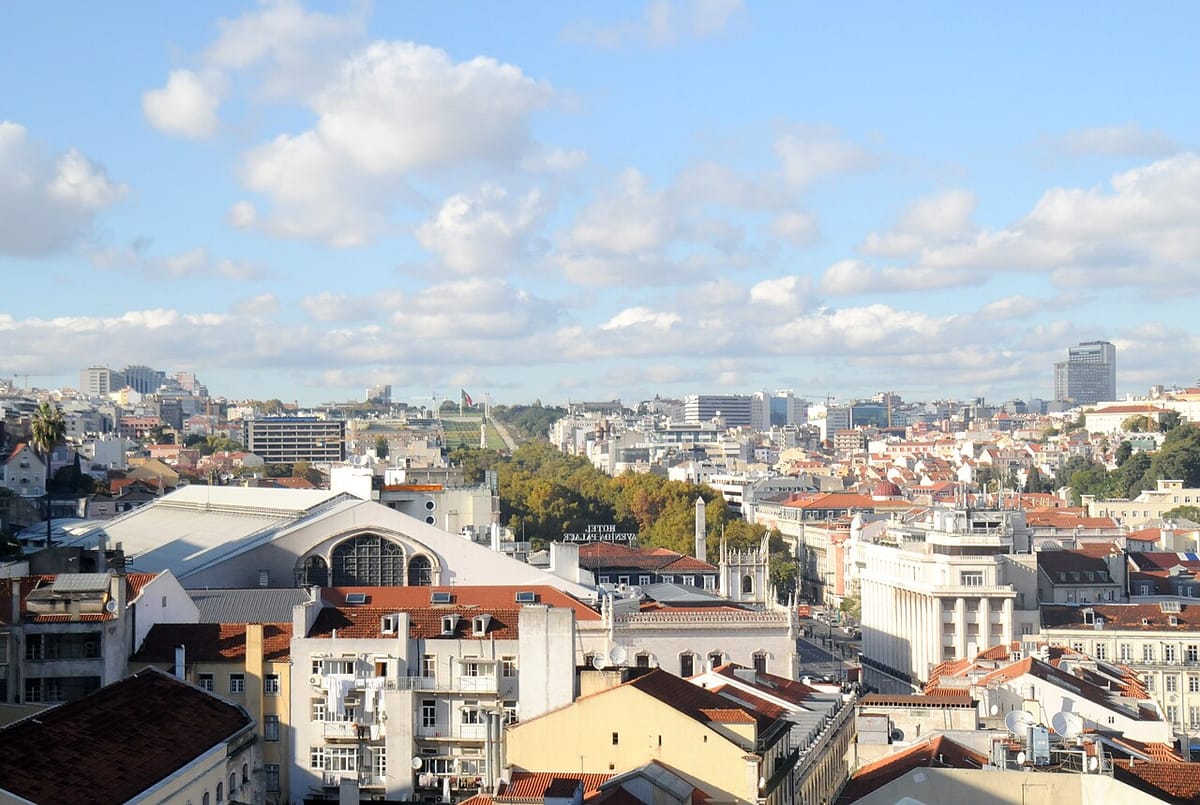
The geography is more concentrated still. Lisbon handled 72% of all the VAT value refunded at the border, against 9% for Porto and just 2% for Faro. The bulk of that spending flows through a single street — Avenida da Liberdade, the capital's luxury-retail spine, where the density of international fashion and jewellery houses is unmatched anywhere else in the country, and where store rents keep climbing against a physically capped supply of frontage.
The operator data points the same way. Global Blue, which processes many of these refunds, put the average spend per international shopper in Portugal at €2,320 in 2025, up from €1,600 in 2019, and reckons US and Brazilian tourists together supply about half of the country's tax-free luxury sales. That American presence at the top of the market is now familiar: US money has also become the leading force in Portugal's ultra-prime property, where Cascais has overtaken Lisbon for the priciest homes.
There are early signs the boom is maturing. Global Blue's own reading of 2026 so far shows more foreigners shopping tax-free but spending about 8% less each — more tickets, smaller baskets. That mirrors the wider pattern in the sector, where tourism growth has cooled to a crawl in visitor numbers even as revenue keeps rising — a country banking on higher-value guests rather than higher volumes, and quietly hoping the higher-value part holds.
For readers who shop rather than sell, the mechanics are worth knowing. The refund is open only to travellers resident outside the EU, staying under six months, on physical goods they carry home; the minimum is €50 per receipt, and the net repayment lands nearer 15% than Portugal's headline 23% VAT rate once operators take their fee. It is a separate thing from the IVAucher scheme aimed at residents. And it is not a subject Portugal takes lightly: whether to raise the minimum-purchase threshold, and so court fewer but bigger spenders, has been a live policy argument all year.