Three of the Eight Held in the Rabo de Peixe Drug Raid Go to Pre-Trial Detention, Days After Residents Stoned Four Police Vans
Eight people aged 18 to 36 were detained on Thursday in the Sao Miguel fishing parish, with 2,022 doses of cocaine, 5,355 of hashish and 18,490.95 euros seized. As the PSP withdrew, residents threw stones and timber at four vans and officers fired six warning shots.
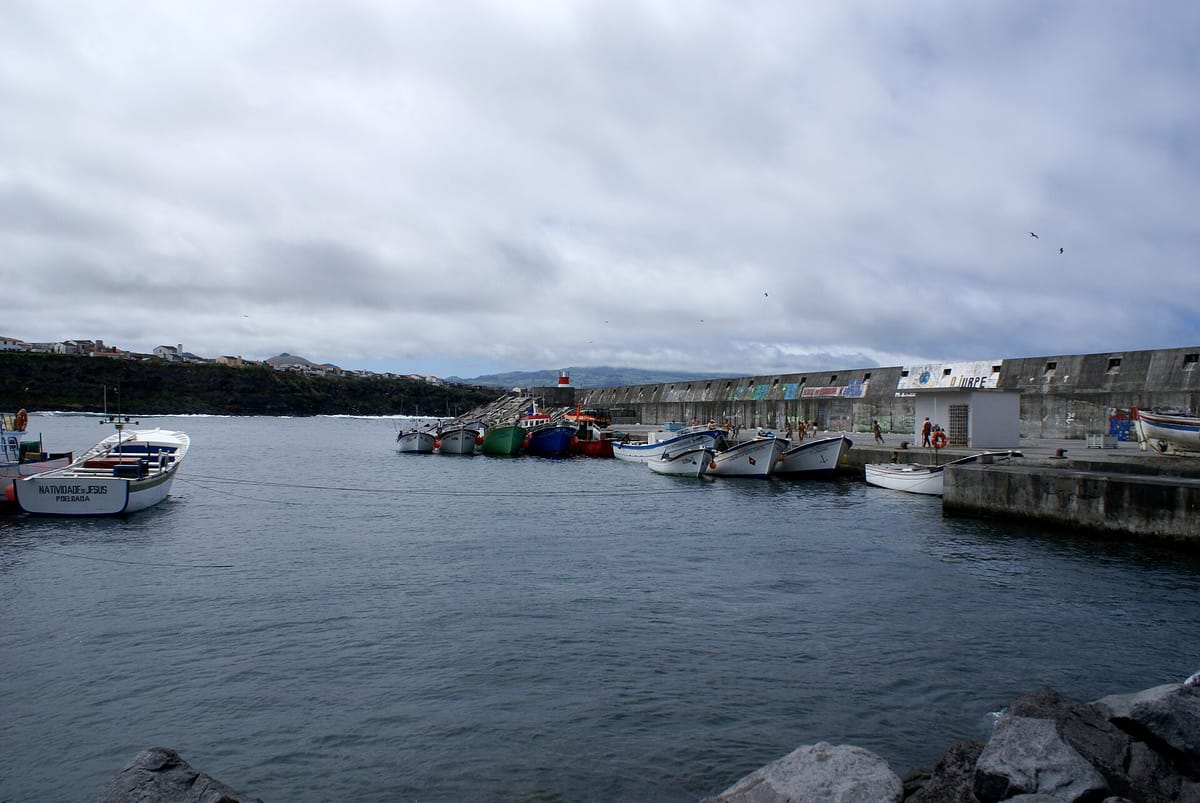
Three of the eight people detained in last Thursday's drug operation in Rabo de Peixe have been remanded in pre-trial detention, the Polícia de Segurança Pública (Public Security Police) said on Sunday, with lesser coercive measures applied to the other five. The eight, aged between 18 and 36, are suspected of trafficking. The PSP puts the final haul at 2,022 doses of cocaine, 5,355 doses of hashish, 28 doses of cannabis and 18,490.95 euros in cash, well above the figures given in its first communiqué on the day of the raid.
The arrests are not what made the operation national news. As the PSP withdrew, residents threw stones and lengths of timber at four police vans, damaging them. Officers fired six warning shots into the air to clear a path. Nobody was hurt, and a criminal inquiry into the attack is running alongside the trafficking case.
A parish the State keeps returning to
"A polícia voltará certamente onde for necessário," the PSP's deputy national director, Pedro Neto Gouveia, said afterwards, adding that the force cannot be prevented from carrying out its mission. The Interior Ministry condemned the attack in similar terms: the authority of the State has to be respected. The Azorean Socialists used the episode to make a different point, warning that the PSP on São Miguel is short of people and equipment and that Lisbon cannot keep ignoring it.
Rabo de Peixe is a fishing freguesia of 8,801 people in the municipality of Ribeira Grande, packed into 17 square kilometres on São Miguel's north coast. Portuguese reporting routinely describes it as one of the country's poorest parishes, and it carries a reputation it did not choose. In June 2001 a dismasted yacht off the island lost more than 505 kilograms of high-purity cocaine, part jettisoned and part washed onto the rocks, and the parish spent months living with what the tide had left. That story became a Netflix series in 2023 and a tourism talking point, which has not obviously improved anything on the ground.
The trafficking cases have kept coming since, with networks dismantled in 2022 and again in 2024. The pattern that should interest policymakers is not the seizures but the reception: a community that treats a police operation as something to be repelled is telling you about its relationship with the State, not just about its drug market. Seizure statistics answer the first question and say nothing about the second.
What this means for residents
- The Azores remain low-crime by any comparison. This is a policing story about one parish, not a regional safety warning. Visitors to São Miguel will notice nothing.
- Pre-trial detention is not a verdict. Prisão preventiva is a precautionary measure applied by a judge where there is risk of flight, of further offending or of interference with evidence. Charges and trial come later, often much later.
- Policing in the islands is resourced from Lisbon. The PSP is a national force with a regional command, so staffing complaints in São Miguel are settled in the national budget, not in Ponta Delgada. Expect the point to resurface when the 2027 budget is debated in October.
- Deprivation data is public. If you are weighing a move to São Miguel, INE publishes income and unemployment figures by municipality, and they are worth reading alongside the property listings.
The PSP has said the number of detainees may still rise. Whether anything else rises with it, in a parish whose economic indicators have barely moved in two decades, is a separate question that no police operation is designed to answer. Update: in October 2026 Portugal's drug dissuasion commissions marked 25 years with 213,621 cases opened and nine in ten people assessed found not to be dependent.