The Pay Order That Decides Whether Portugal's Emergency Rooms Stay Staffed Has Still Not Been Published, and the Locums Are Threatening October
A portaria setting hourly rates for medicos tarefeiros was due with the rest of the SNS package and has not appeared. Their association says a cut brings a massive stoppage, and hospitals have until 30 September to sign contracts nobody can price.
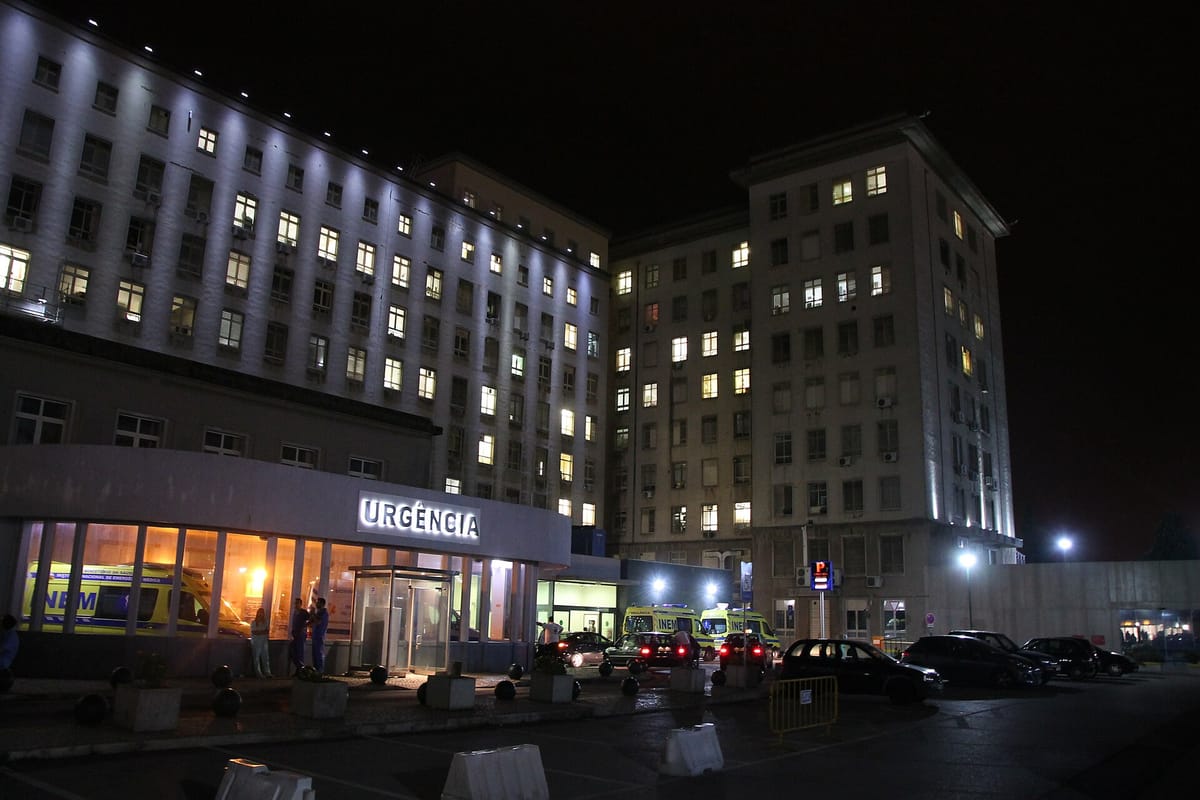
A single unpublished document now decides how many doctors turn up for emergency shifts in Portuguese hospitals this winter. It is a portaria (ministerial order) that will set the hourly rates paid to médicos tarefeiros (task doctors), the physicians who work Serviço Nacional de Saúde (National Health Service, SNS) rosters on service contracts rather than as staff. It was due with the rest of the legislative package. It has not appeared.
The doctors who depend on it have spent this week saying what happens if it cuts their pay. "A cent below the current hourly values is negative. Backwards, no," Nuno Figueiredo e Sousa, president of the Associação dos Médicos Prestadores de Serviço (Association of Service-Providing Doctors, AMPS), told Observador, ruling out any reduction in the tabled rates. He warned that the response could be "a massive stoppage in protest, by professionals walking away".
On Wednesday the warning hardened. RTP and SIC reported the tarefeiros saying that several emergency departments could stop, that hospitals' winter plans would become unworkable, and that an exodus of doctors abroad is possible. They accuse the Ministério da Saúde (Health Ministry) of issuing an ultimatum by holding the portaria back.
Why an unpublished order carries this much weight
The rest of the package is already law. Decreto-Lei n.º 115/2026 came into force on 1 July and rebuilt the contracting regime, with at least three incompatibilities at its centre. Doctors who refuse to work overtime beyond the hours the law already obliges them to do (150 or 250 a year) are barred from working as tarefeiros in other SNS hospitals. Doctors who unilaterally end their SNS contract are barred. So are newly qualified specialists who decline to take a vacancy.
The stated aim was to stop the drain of staff physicians into service provision, where the money is far better. The reference figures the ministry has worked from put roughly 4,600 tarefeiros in rotation across the SNS in 2025, on a line item of about 250 million euros, some 17 percent up on the previous year.
What the decree-law did not do is set the price. That is the portaria's job, and it is expected to reduce what service-providing doctors earn. Figueiredo e Sousa argues that the delay was deliberate, timed to keep a protest away from the summer, when rosters are hardest to fill. "They would never have risked launching a portaria during the summer," he said, adding that the ministry instead reached for its usual seasonal fix: the June despacho allowing hospitals to pay up to 50 percent above the career table. He called it "a crutch, so as not to create discomfort in the rosters and to keep the service providers quiet".
A 30 September deadline nobody can price
There is a second clock running. The decree-law created a three-month transitional window in which Unidades Locais de Saúde (Local Health Units) and the IPO cancer institutes must offer employment contracts to providers working at least 36 hours a week. That window closes on 30 September.
It is not working. Xavier Barreto, president of the Associação Portuguesa de Administradores Hospitalares (Portuguese Association of Hospital Administrators, APAH), confirms the take-up: "We have, at this point, far fewer contracts than would have been expected." Figueiredo e Sousa says the reason is arithmetic. A doctor cannot weigh a staff contract against continuing as a tarefeiro without knowing what the tarefeiro hour will pay, and that is precisely the number the portaria has not yet published. Doctors are not signing, because signing means accepting what he describes as a salary regression.
Hospital managers are caught between the two. "It worries us and I hope it does not happen," Barreto said of a stoppage. "I hope the service providers understand that the SNS needs their work." He also wants the order out: "The portaria should already have been published so that people can make decisions."
What this means for patients
Emergency cover in Portugal is not evenly spread to begin with. Recent official mapping showed that almost half a million people live more than an hour from an emergency room, and the districts with the thinnest cover are the same ones whose hospitals lean hardest on hired hours to keep a rota open. A walkout by service providers would not fall evenly either.
Nothing has stopped yet, and no date has been set for any protest, because the trigger has not been pulled. The tarefeiros say their action depends entirely on what the portaria contains. Until the Diário da República (Official Gazette) carries it, the winter plans of a good number of emergency departments rest on a figure nobody outside the ministry has seen.