The Last Picareto Built by Ortiga's Master Caulker Joins the Navy Museum, Ending a Tagus Boatbuilding Tradition
Manuel Pires Fontes built more than 300 of the small Tagus fishing boats. The Adamastor, made in 2009 when he was in his eighties and launched only once, is handed to the Museu de Marinha in Lisbon on Monday.
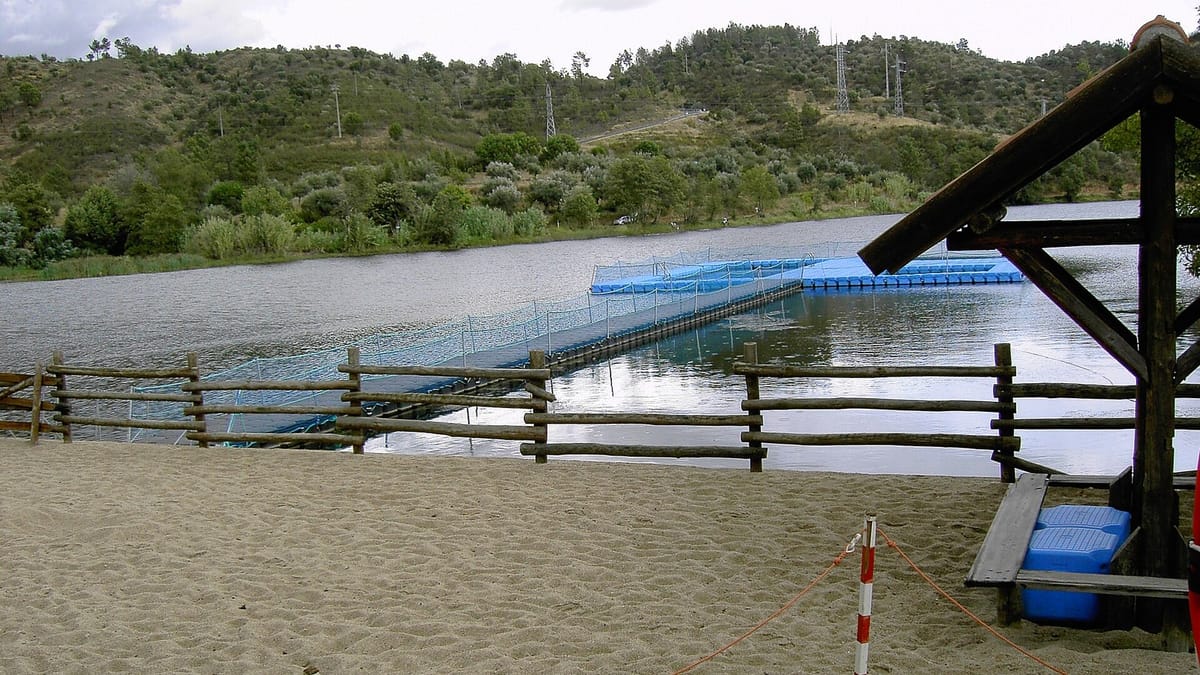
A wooden river boat built in 2009 by a master caulker in his eighties from Ortiga, a village in the Mação municipality, becomes part of the national collection of the Museu de Marinha (Navy Museum) on Monday. The Adamastor is a picareto, the small fishing boat of that stretch of the Tagus, and it is the last full-size one built by Manuel Pires Fontes, known locally as Ti Fontes, who was the last master builder of these boats in Ortiga.
The donation and incorporation ceremony takes place at 11:00 on Monday, 28 September, at the Cordoaria Nacional in Lisbon, the association Os Amigos da Estação de Ortiga (Friends of Ortiga Station) told Lusa. "This is the high point of a process that began in 2007 and ends now with the handover of the boat to the Navy Museum," said the association's president, Sérgio Durão.
A boat built to save a technique
In Ortiga, several generations of families combined farm work with fishing on the Tagus, and the picareto was, in Durão's word, their "companion". He told Lusa that the old fishermen would not step into their boats with their shoes on.
The project began before the village had a museum of its own. José Carlos Durão, who chairs the association's general assembly, explained that it challenged Ti Fontes to build two boats again using the traditional methods. He built the Príncipe do Tejo in 2008, an open boat for carrying people and goods between the two banks, and the Adamastor the following year, a closed picareto used for fishing. The wood came from the region, some of it given by local people, and the master worked in an improvised boatyard while the association recorded the process in photographs and video.
The Adamastor has hardly sailed. It went into the water once, for three or four hours, at a tribute to Ti Fontes in 2010, and has been kept out of the water ever since to preserve it.
The last of the master caulkers
Manuel Pires Fontes was born in Ortiga in 1926, learned carpentry and caulking from his father and built more than 300 picaretos over his life. He was also a fisherman who knew the river well. He died in 2017, at 90.
His work led to the Núcleo Museológico de Ortiga (Ortiga Museum Centre), which opened in 2020 in the village's former primary school with a collection on fishing, riverside life and picareto building. The building process is documented in records and measurements, but José Carlos Durão told Lusa he thought it "difficult" that a picareto would ever again be made in the same traditional way, because the practical knowledge of the master caulkers has gone. "In this way, it ends here," he said.
For the association, the museum's acceptance is "the recognition of a singular art, a unique tradition" and a way to "preserve heritage at the highest level". Sérgio Durão called it a recognition of Ortiga and of the river culture of the Médio Tejo, where these boats were used for generations.
Where the boat is going
The Museu de Marinha was founded in 1863 by King Luís and has been housed since 1962 in the Jerónimos Monastery in Belém. Its collection covers Portugal's relationship with the sea, including fishing and traditional boats, and the Adamastor joins that part of it.
Mação has been in the news this year for harder reasons: the storm damage that left the municipality leaning on the region's mobile nursing units. Monday's ceremony gives one of its river villages a place in the national collection.