The Government Leaves the Door Open to a 2027 Minimum Wage Above €970
Labour Minister Maria do Rosario Palma Ramalho says the government 'neither opens nor closes the door' to a 2027 minimum wage above the agreed €970, as the UGT pushes for €1,000 and a junior minister urges faster rises ahead of autumn Social Concertation talks.
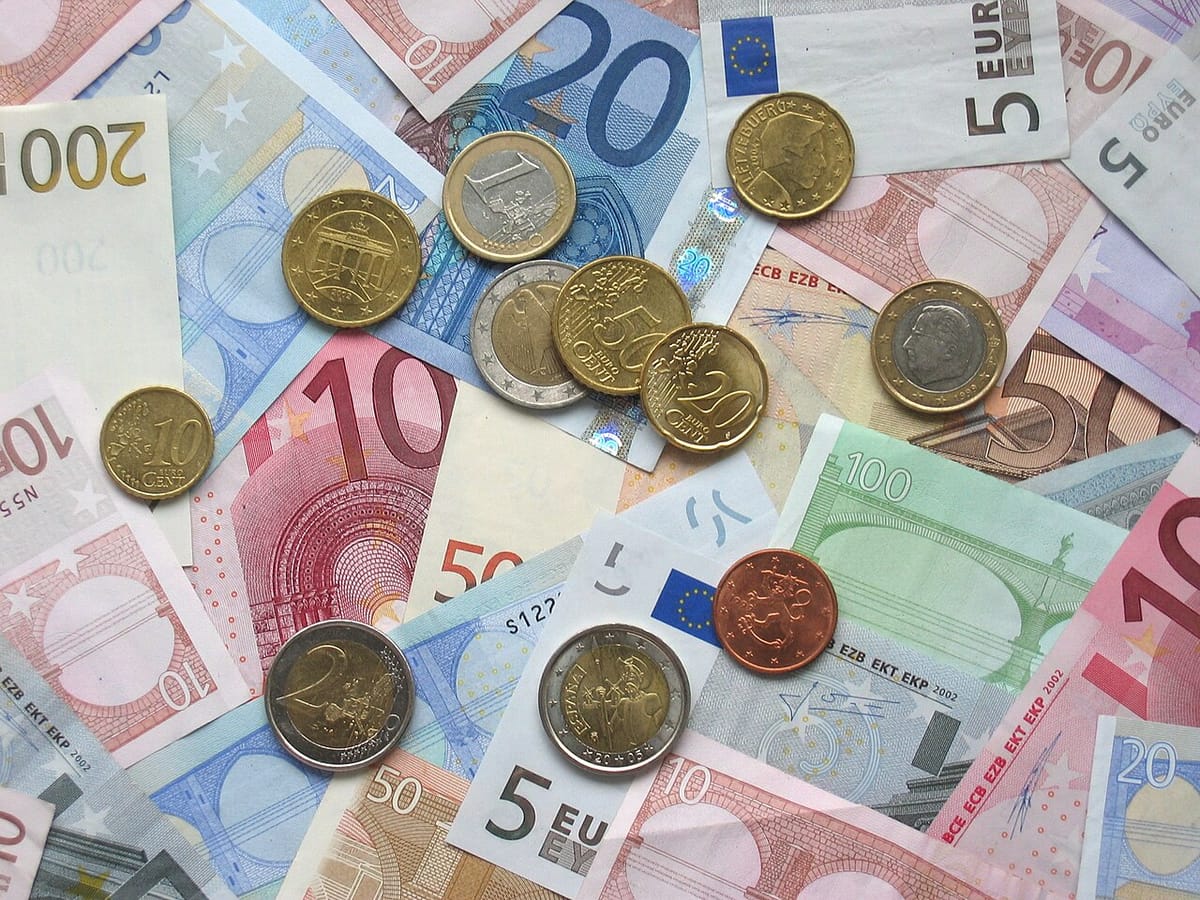
The size of Portugal’s minimum wage in 2027 is suddenly back in play. The Labour Minister, Maria do Rosário Palma Ramalho (Ministra do Trabalho), told reporters on 21 July that the government “neither opens nor closes the door” to setting the national minimum wage above the €970 already pencilled in for next year — a carefully hedged form of words that leaves room to move while committing to nothing.
The figure she was defending comes from a multi-year deal. Under a tripartite agreement signed with the UGT union confederation (União Geral de Trabalhadores, General Workers’ Union) and the main employers’ associations during Montenegro’s first government, the guaranteed monthly minimum (retribuição mínima mensal garantida) is meant to rise by €50 a year: from €920 in 2026 to €970 in 2027 and €1,020 in 2028. Ramalho was clear that any change to that path “must result from a new agreement, or a modification of the existing one, with the signatories” — in other words, it will not be imposed unilaterally.
Yet the government is not speaking with one voice, and that is what has opened the door. The State Secretary for Labour, Adriano Rafael Moreira, struck a notably more expansive tone, arguing that “at this point we should already be negotiating the 2027 minimum wage upward” and pointing to a run of positive economic data as justification. He said the executive would work towards “a more adequate figure,” language that goes well beyond simply honouring the €970 already agreed.
The unions want more. The UGT is pressing for the minimum to reach €1,000 in 2027 — an €80 rise on the current €920, rather than the €50 written into the agreement. Employers, for their part, tend to argue that faster increases squeeze smaller firms and labour-intensive sectors, and prefer to keep to a predictable, pre-agreed schedule. The governing party has its own longer-range promise on the table: a minimum wage of €1,100 by 2029, which implies a steeper climb than the €50-a-year formula would deliver.
The venue for settling all this is Social Concertation (Concertação Social), the standing forum in which the government, unions and employers negotiate wages and labour policy. Three meetings of its Permanent Commission (Comissão Permanente de Concertação Social) are scheduled before the end of the year, and the Finance Minister is expected to attend one of them — a sign of how closely the wage question is tied to the wider budget picture as the government prepares its plans for 2027.
For workers, the stakes are concrete. The national minimum wage sets the floor for hundreds of thousands of employees and feeds into a range of benefits and thresholds, so a difference of €30 a month between the agreed €970 and the union’s €1,000 compounds across a full year and across the whole low-paid workforce. It also matters to anyone hiring domestic help, running a small business or budgeting a payroll in Portugal.
Nothing will be decided quickly. The €970 remains the baseline unless and until the social partners agree to change it, and the autumn negotiations — running alongside the government’s broader fiscal choices and its stated goal of lifting household incomes and savings — will determine whether the door the minister left ajar is eventually pushed open. On what a creditor may and may not reach here, our guide to the penhora, under which two thirds of net pay cannot be seized, protection is floored at one minimum wage and capped at three, a permanent home is reached last, and an objection has to be filed within ten days sets the latest reference.