TAP's Sale Price Climbs to Five Times Its 2015 Level as Air France-KLM and Lufthansa Table Binding Offers
A financial valuation circulating as binding offers fall due values the whole of TAP at €1.948bn–€2.073bn, about five times its 2015 privatisation. The 49.9% stake the State is selling would be worth an estimated €972m–€1,034.5m, with Air France-KLM and Lufthansa the two bidders left in the race.
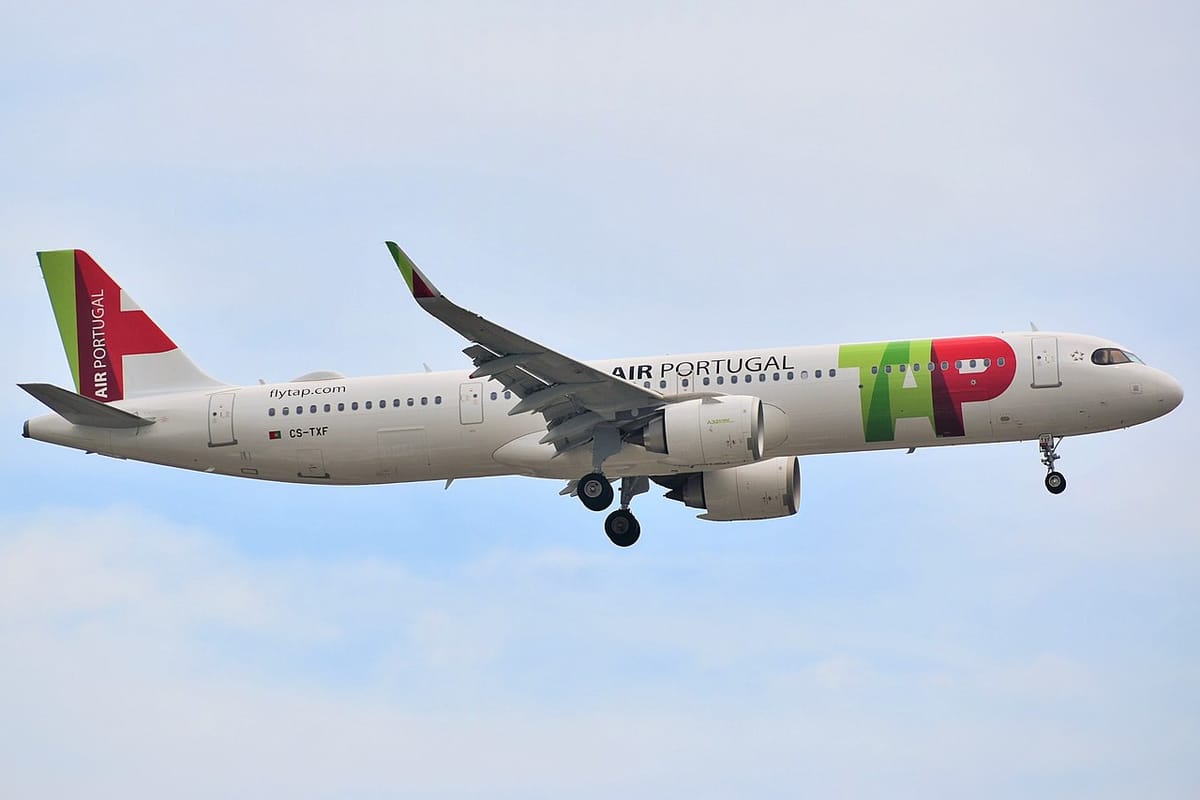
The price tag on Portugal's national airline has come into focus just as the sale reaches its decisive moment. A financial valuation circulating as binding offers fall due puts the whole of TAP at between €1.948 billion and €2.073 billion — roughly five times what the carrier was worth when it was last privatised a decade ago.
On that basis, the 49.9% stake the State is selling — a slice that includes 5% reserved for employees — would be worth an estimated €972 million to €1,034.5 million. A competitive bidding premium could push the price for that holding as high as €1.24 billion.
Five times the 2015 sale
The comparison with 2015 is stark. When the consortium led by David Neeleman and Humberto Pedrosa bought into TAP that year, they paid €27.5 million plus a further €203.4 million in shareholder funding — a total of around €231 million that implied a company value of roughly €379 million. The airline today is valued at more than five times that figure.
The jump is not simply the product of inflation. In the intervening years the State poured €3.34 billion into TAP through a European Commission-approved restructuring, an intervention that kept the airline flying through the pandemic and left it far larger than before. The fleet grew from 61 aircraft to 99, passenger numbers rose 46% and revenue climbed 84%, while earnings before interest, tax, depreciation and amortisation expanded roughly eightfold.
Two European giants left in the race
Two consortia remain in contention for the stake: the Franco-Dutch group Air France-KLM and Germany's Lufthansa. Binding offers were due on 29 July 2026, the moment that turns months of due diligence into hard numbers and, for the government, into a test of whether the sale can recover a meaningful share of the public money sunk into the airline.
The valuation implies an EBITDA multiple of between 4.25 and 4.4 times — a figure that sits within the normal range for European network carriers but which either bidder could exceed if they judge TAP's Lisbon hub, and its dense links to Brazil and Portuguese-speaking Africa, to be worth a strategic premium. TAP ended the period with a cash position of €765.3 million and equity of €754.5 million.
Why the number matters
For Portuguese taxpayers, the valuation is the yardstick against which the entire rescue will eventually be judged. The State cannot recoup its €3.34 billion in a single sale of a minority stake, but a strong price validates the argument that public money rebuilt a viable business rather than propping up a failing one.
For residents and travellers, ownership matters less than what a new industrial partner does with the network. Both Air France-KLM and Lufthansa run vast European hub-and-spoke systems, and the fear voiced repeatedly in Lisbon is that a foreign parent could over time thin out routes that do not serve its own hubs. The government has said it wants guarantees on the Lisbon hub and on connectivity written into any deal — conditions that, alongside the headline price, will shape which bid ultimately wins. On where the TAP sale has actually got to, our report on the Council of Ministers declining to pick a winner for TAP, opening a three-week negotiation round with Air France-KLM and Lufthansa and extending the deadline for the whole sale to 31 December 2026 sets the latest reference.