Seguro Promulgates the RED III Acceleration-Zones Diploma — 7% of Continental Portugal Marked for 12-Month Fast-Track Solar and Wind Licensing
President António José Seguro promulgated on 5 June the diploma that transposes the European Union's RED III Directive into Portuguese law and creates a new licensing regime — the Zonas de Aceleração de Energias Renováveis (ZAER, Renewable-Energy...
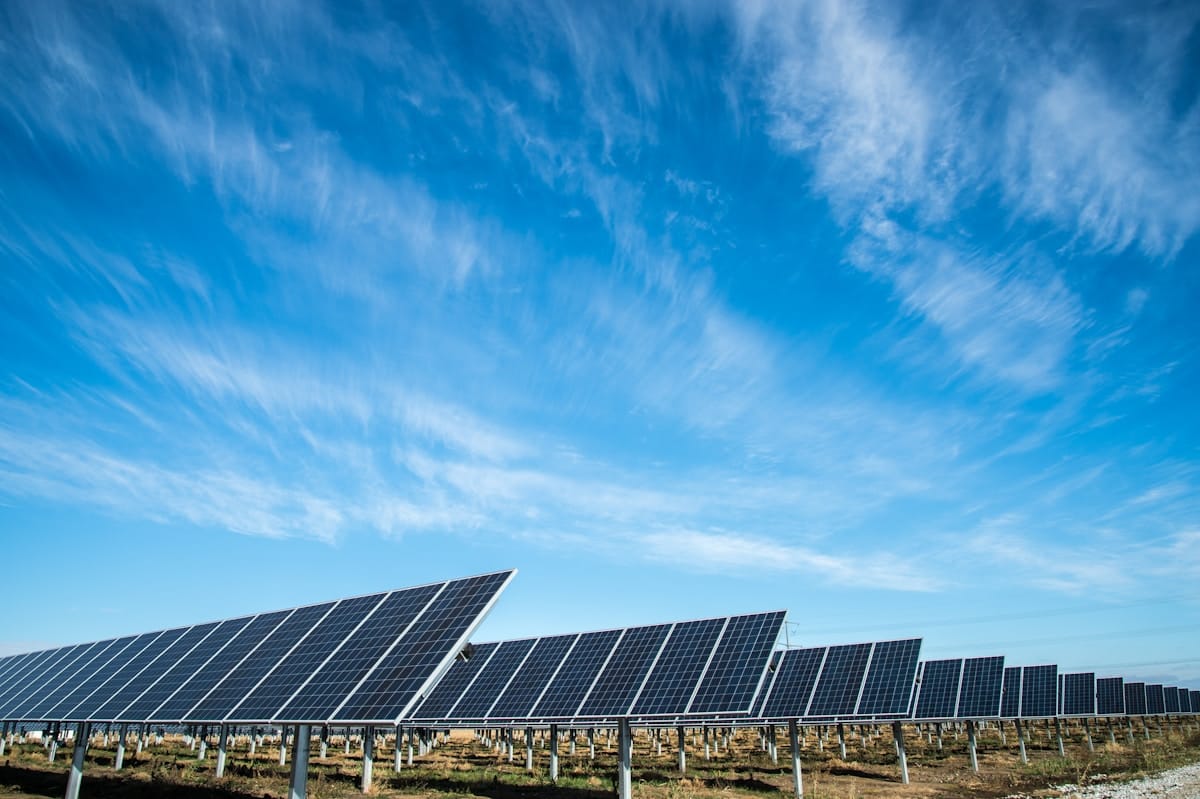
President António José Seguro promulgated on 5 June the diploma that transposes the European Union's RED III Directive into Portuguese law and creates a new licensing regime — the Zonas de Aceleração de Energias Renováveis (ZAER, Renewable-Energy Acceleration Zones) — across roughly 7% of continental Portugal that the Agência Portuguesa do Ambiente (APA, Portuguese Environment Agency) and the Direção-Geral de Energia e Geologia (DGEG, Directorate-General for Energy and Geology) have flagged as low environmental and heritage sensitivity. The promulgation closes the legislative cycle on the regime opened by the Government on 30 May and completes the Diretiva (UE) 2024/1711 deadline window.
What the ZAER Map Carries
The map — built around the cross-checked DGEG-APA technical study published on 4 May and the Sistema Nacional de Áreas Classificadas (SNAC, National Classified Areas System) overlay — designates a continuous corridor of low-sensitivity polygons concentrated in the Alentejo interior, the Algarve barrocal, the Beira Baixa plateau and parts of the Trás-os-Montes plateau. The 7% headline carries through 71 concelhos and overlaps with no Rede Natura 2000 site, no IBA (Important Bird Area) and no UNESCO heritage perimeter. The ZAER overlay sits on top of the existing PNAER (Plano Nacional de Atribuição de Energia Renovável) and replaces, for projects inside the perimeter, the standard project-by-project Avaliação de Impacte Ambiental (AIA, Environmental Impact Assessment) procedure.
How the 12-Month Window Works
Inside the perimeter, the licensing process collapses from a typical 3-5 year corridor — the median for solar projects that crossed APA in 2023-2025 — to a hard ceiling of 12 months from application to final decision, with a 6-month corridor for hybrid solar-storage projects under 50 MW. The trade-off is that the developer accepts a standardised environmental-monitoring protocol set by APA and DGEG, rather than negotiating a bespoke AIA scope. RED III leaves the standardisation choice to each Member State; Portugal's transposition picks the heaviest version of the protocol, with continuous biodiversity monitoring, an avifauna baseline, and a decommissioning bond proportional to installed capacity.
The Rede Eléctrica Bottleneck
The cap on the ZAER's real-world delivery is not licensing but the Rede Eléctrica Nacional (REN, National Electricity Grid) capacity. The technical study published on 4 May labelled the grid the "principal bloqueio" (main blockage) to renewable expansion. REN's 2026-2030 investment plan, approved by the Entidade Reguladora dos Serviços Energéticos (ERSE, Energy Services Regulator) on 28 May, carries €1.8 billion in mostly high-voltage line reinforcements through the Alentejo and the Algarve — broadly aligned with the ZAER map but operational across a 4-7 year horizon. The mismatch leaves a real-world deployment cliff: licences issued faster than the grid can absorb the output, with curtailment risk rising through 2027-2028.
What to Watch
The Government formally publishes the ZAER map in Diário da República on 12 June and opens the first ZAER licensing window on the Sistema Electrónico de Apoio ao Investimento (SEAI) portal on 1 July. APREN and the Associação Portuguesa de Energia Solar (APES) have pre-flagged a pipeline of 6.8 GW of solar and 2.1 GW of onshore wind ready to file inside the first 90 days — itself almost three times the current annual installed-capacity rhythm.