Santarém's Military Cavalry School to Become Heart of New Ribatejo Polytechnic University
The historic Escola Prática de Cavalaria will anchor Portugal's newest polytechnic institution as regional leaders push to elevate the Ribatejo's higher education infrastructure. Santarém's historic cavalry school — the Escola Prática de Cavalaria —...

The historic Escola Prática de Cavalaria will anchor Portugal's newest polytechnic institution as regional leaders push to elevate the Ribatejo's higher education infrastructure.
Santarém's historic cavalry school — the Escola Prática de Cavalaria — is being transformed into the administrative and logistical hub of Portugal's newest polytechnic university, municipal officials announced Monday. The Universidade Politécnica do Ribatejo will upgrade the existing Instituto Politécnico de Santarém as part of a coordinated push by 11 municipalities in the Lezíria do Tejo region to build a university-level institution capable of attracting students, talent, and multinational investment to an area historically overshadowed by Lisbon's metropolitan pull.
For expats considering Portugal's higher education landscape — whether for themselves, their children, or as an indicator of regional development potential — the project signals a deliberate effort to decentralize academic opportunity and anchor economic growth outside the capital corridor.
A Cavalry School Becomes a Campus
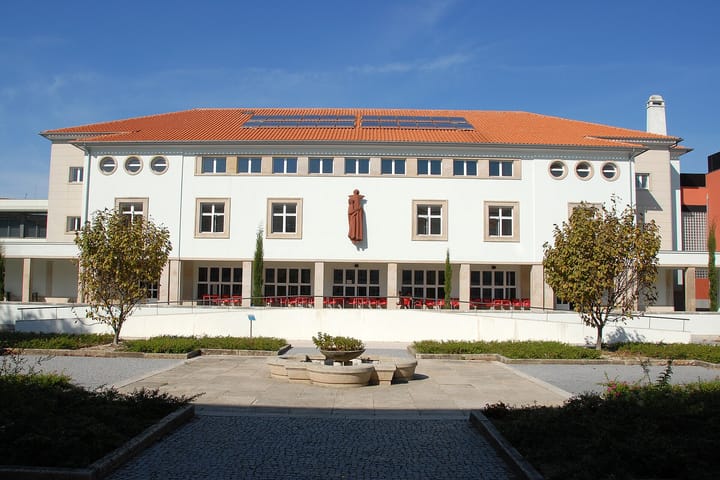
The Escola Prática de Cavalaria, a military facility steeped in Santarém's equestrian heritage, will serve as the university's "administrative and logistical heart," according to Santarém Mayor João Leite. The site is already being retrofitted with a 110-bed student residence — construction is underway after procurement delays forced a re-tender in 2025 — and will house 180 administrative and academic staff currently based at the Instituto Politécnico's existing facilities.
Relocating staff to the cavalry school will free up classroom space at the Institute's current campus, increasing capacity to accommodate the expected influx of students once polytechnic-to-university conversion is formalized. The site sits adjacent to Santarém's historic center, a deliberate choice Leite says will drive foot traffic and spending in the city's commercial core.
"The concentration of students and professionals at the gates of the historic center will have a direct impact on the local economy," Leite told the municipal council Monday.
Polytechnic-to-University Conversion Gains Momentum
The transformation of the Instituto Politécnico de Santarém into a full university has been a regional demand for decades. Portugal's polytechnic institutes traditionally focus on applied, vocational training — think engineering, nursing, business — while universities emphasize research and theoretical disciplines. The distinction matters for international recognition, research funding, and attracting doctoral-level talent.
The Ministry of Education has confirmed that enabling legislation will soon be submitted to Parliament for review, Leite said, though no timeline was provided. If approved, the Universidade Politécnica do Ribatejo would join a small cohort of polytechnics elevated to university status in recent years, following similar moves in Viseu and Leiria.
The context matters: Portugal's university system has been under strain. The Nova university crisis over language requirements and debates about English proficiency standards highlight ongoing tensions between internationalization and institutional identity. The Ribatejo university will need to navigate these same pressures as it seeks credibility beyond regional borders.
The 11-municipality Comunidade Intermunicipal da Lezíria do Tejo — which includes Santarém, Almeirim, Cartaxo, Coruche, and others — is collectively backing the project as a counterweight to the Lisbon-Setúbal axis, where most of the country's university seats and R&D investment are concentrated.
A €28 Million Bet on Regional Higher Education
Current investment in the Instituto Politécnico de Santarém exceeds €28 million, funded through Portugal 2030 (the EU's current cohesion fund cycle). The funding covers facilities upgrades, new equipment, and student housing — infrastructure that will carry over to the new university once conversion is approved.
This investment comes as Portugal faces a 12% cut in its overall EU funding envelope for the next budget cycle, making current Portugal 2030 allocations even more critical for regions like the Ribatejo that are competing for scarce resources.
Parallel to the university project, the region is developing a Center for Innovation and Technology of Lezíria do Tejo, which will focus on agrotechnology, life sciences, agriculture, and health. The center aims to attract multinational firms and research talent to the region, creating a symbiotic relationship with the university by providing real-world research opportunities and industry partnerships.
"This center will provide scientific and technological support to the future university, creating critical mass and conditions to retain qualified young people," Leite said, adding that the proposal has been submitted to the Comissão de Coordenação e Desenvolvimento Regional (CCDR) and the Ministry of Education for approval.
What This Means for Expats
For expat families evaluating Portugal's education system, the Ribatejo polytechnic-to-university project offers several practical implications:
1. More Higher Education Options Outside Lisbon and Porto
Portugal's university landscape is heavily concentrated in the coastal cities. A credible university in Santarém — 80 kilometers from Lisbon, served by train and highway — expands options for families who want proximity to the capital without paying Lisbon rents or navigating its competitive admissions environment. Compare the regional housing market: Porto house prices have hit €4,060 per square meter, while Santarém remains far more affordable.
2. Student Housing Availability
The new 110-bed residence at the Escola Prática de Cavalaria is purpose-built accommodation in a region where student housing supply has historically lagged demand. For expat families with university-age children, guaranteed housing can tip the balance when choosing institutions.
3. Regional Development Signal
Infrastructure projects like this are a barometer of local economic ambition. A municipality willing to invest €28 million in higher education — and coordinate with 10 neighboring councils to build a shared university — is signaling long-term commitment to talent retention and economic diversification. For expats considering Santarém or the Ribatejo as a base (lower property prices, agricultural character, proximity to Lisbon), the university project suggests the region is positioning itself as more than a commuter zone.
4. English-Language Programs (Likely)
While no details on program offerings have been released, polytechnic-to-university conversions in Portugal often expand international partnerships and English-taught master's programs to compete for foreign students and EU research funding. Expect similar offerings once the Ribatejo university is operational — though they'll need to square that ambition with the Ministry's push for Portuguese-language competency in national curricula.
Challenges Ahead
The project's success hinges on parliamentary approval of the legal framework — a process that can take months or years, depending on political priorities and budget constraints. Portugal's higher education sector is already under strain from underfunding, faculty shortages, and competition for EU research grants. Adding another university to the system could dilute resources unless the Ribatejo institution carves out a distinct niche (agrotechnology and applied sciences appear to be the focus).
There's also the risk of over-promising. The 11-municipality consortium is presenting a unified front now, but sustaining long-term financial and political commitment will require continued coordination as local priorities shift.
The Bigger Picture
Portugal's decentralization push in higher education mirrors similar efforts in healthcare, public transport, and business incentives — all aimed at stemming Lisbon's gravitational pull and preventing the interior from hollowing out. The Ribatejo region, with its agricultural base, heritage tourism, and commuter appeal, is well-positioned to benefit if the university project succeeds.
Regional initiatives like the Azores' space ambitions show that Portugal's periphery is increasingly competing for high-skill, knowledge-economy opportunities — not just accepting their role as agricultural hinterlands or tourist destinations.
For expats, the Universidade Politécnica do Ribatejo represents both an educational option and a regional development bet. If you're already in Santarém or considering it, the university's arrival could shift the area's demographic and economic trajectory. If you're comparing regions, it's worth monitoring how this project unfolds — because a thriving university tends to pull services, culture, and investment in its wake.
Timeline:
- 2025: Student residence construction begins (re-tender after delays)
- 2026: Ministry of Education confirms legislation will go to Parliament
- TBD: Parliamentary approval required for polytechnic-to-university conversion
- Ongoing: €28 million infrastructure investment (Portugal 2030 funds)
Key Players:
- 11 Municipalities: Comunidade Intermunicipal da Lezíria do Tejo (Santarém, Almeirim, Cartaxo, Coruche, others)
- Ministry of Education: Drafting enabling legislation
- CCDR: Regional development coordination body reviewing innovation center proposal
What to Watch:
Related reading: Universities Push Back as Government's Degrees-and-Diplomas Reform Adds Numeracy and English Tests
Background: See the IES route for recognising a foreign academic degree. On the schools, exams and higher-education side of the file, our coverage of the national-exam grading delay and 2026/27 higher-education access sets the latest reference. On the student-finance side of the file, the new €1,075 student grant sets the latest reference. On the schools, national-exams and university-access side of the file, the surge in national-exam re-grade requests sets the latest reference. On the student-housing front, Braga's new 786-bed public student residence shows how Portugal is trying to add affordable beds before the academic year. For students, the bigger housing grant for displaced students eases the cost of moving away to study. On the schools and teaching-workforce side of the file, the August round that placed more than 20,000 teachers sets out how many teachers were placed for the new year, and where the gaps remain. On the home-education side of the file, our guide to homeschooling in Portugal walks through ensino doméstico, the host school, the protocol and the equivalence exams. On the research-funding side of the file, the new €45 million line for the collaborative laboratories sets out the Compete 2030 tender replacing the Recovery-Plan money for the labs. On the research-infrastructure side of the file, the cost overrun on Lisbon's new artificial-intelligence building sets out how a tender came in 16.3% above estimate and who ended up paying the difference. On the higher-education governance side of the file, the annulment of the Universidade Nova de Lisboa's second rectoral election sets out what the Lisbon Administrative Circuit Court found about eight days' notice, an expired General Council mandate and the appeal the university has announced.
- Parliamentary approval timeline
- Program offerings (especially English-language options)
- Innovation center funding approval
- Student enrollment targets once conversion is finalized