Portugal's Space Ambitions Are Accelerating — And the Azores Could Become Europe's Gateway to the Moon
Portugal launched five satellites in a single mission last week. The Azores are being positioned as a potential European relay station for NASA's Artemis moon program. And Portuguese aerospace companies are quietly carving out niches in a global...
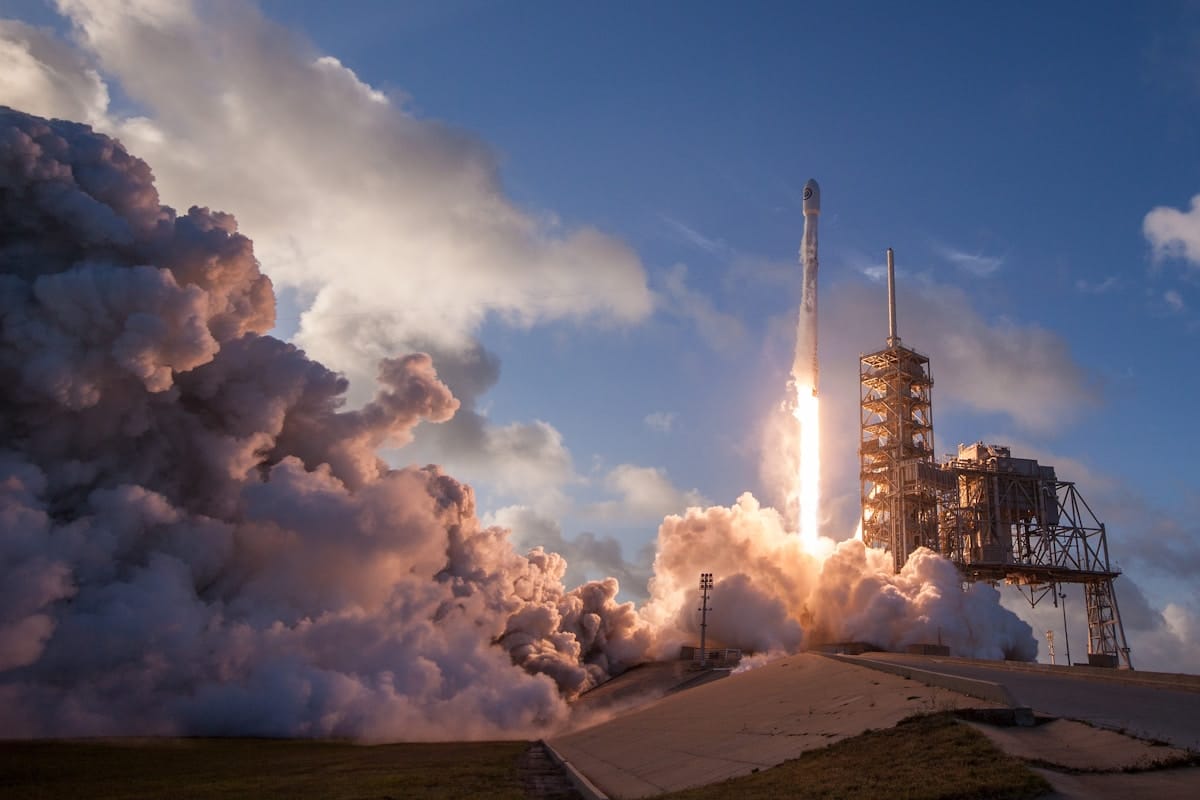
Portugal launched five satellites in a single mission last week. The Azores are being positioned as a potential European relay station for NASA's Artemis moon program. And Portuguese aerospace companies are quietly carving out niches in a global space economy that analysts project could reach $1.8 trillion by 2035.
For a country not traditionally associated with space exploration, Portugal is making surprisingly bold moves. And for expats watching where Portugal is placing its economic bets — particularly those in tech, engineering, or R&D sectors — the signals are worth paying attention to.
Five Satellites, One Mission — Portugal's Growing Space Infrastructure
On March 29, Portugal Space announced the successful launch of five satellites designed, built, or operated by Portuguese entities. While the specifics of the mission remain limited in public reporting, the milestone represents the largest single deployment of Portuguese space assets to date.
The launch underscores a strategic shift. Portugal is no longer content to be a passive consumer of satellite services or a minor subcontractor in European space projects. It's building sovereign capacity — small-scale, specialized, and targeted at high-value applications like Earth observation, maritime surveillance, and communications infrastructure.
This matters because space capabilities are increasingly tied to economic and security autonomy. Countries that control satellite infrastructure control data flows, telecommunications resilience, and surveillance capacity. Portugal, with its vast Atlantic maritime zone and strategic position as Europe's westernmost edge, has unique geographic advantages to monetize.
Santa Maria and the Artemis Moon Program
Perhaps more striking is the emerging role of Santa Maria Island in the Azores as a potential ground station for NASA's Artemis program, which aims to return humans to the lunar surface and establish a sustainable presence on the Moon.
Santa Maria's location — isolated in the Atlantic with minimal radio interference, clear sightlines to both North America and Europe, and existing aerospace infrastructure — makes it an ideal relay point for deep space communications. The island already hosts a critical transatlantic air traffic control station and has been used for decades as an emergency landing site for NASA space shuttle missions.
If formalized, Artemis ground station cooperation would position Portugal as a key node in humanity's return to the Moon. More concretely, it would bring high-skill aerospace engineering jobs, international research partnerships, and infrastructure investment to one of Portugal's most remote and economically vulnerable regions.
This is not science fiction. NASA already operates deep space communication networks in California, Spain, and Australia (the Deep Space Network), and is expanding capacity as lunar and Mars missions intensify. Santa Maria fits the geometry.
Why Portugal Is Betting on Space
Portugal's space push is part of a broader industrial strategy that recognizes the limits of competing head-to-head with European manufacturing giants like Germany and France. Instead, Portugal is targeting asymmetric advantages:
1. Geographic position. The Azores offer Atlantic access critical for satellite launch visibility, maritime monitoring, and deep space communications. Mainland Portugal's southern coast is near ideal for solar testing and optical ground stations.
2. Niche aerospace expertise. Portuguese companies like Active Space Technologies and Geosat have built reputations in Earth observation, microsatellite components, and space data analytics. Portugal isn't trying to build rockets; it's targeting the data and services layer.
3. EU funding alignment. Space is a priority under the EU's digital and defense strategies. Portugal has secured grants for satellite programs, space data applications, and research partnerships through Horizon Europe and ESA (European Space Agency) programs.
4. Maritime dominance. Portugal controls one of the largest exclusive economic zones (EEZs) in Europe, stretching deep into the Atlantic. Satellite-based maritime surveillance is a natural application — and a sellable service to NATO, the EU, and commercial shipping clients.
What This Means for Expats and Foreign Workers
Portugal's space ambitions might sound abstract, but they have tangible labor market and economic implications:
High-skill job creation. Aerospace engineering, satellite data analysis, RF (radio frequency) engineering, and space systems management are all growth areas. For expats with STEM backgrounds, Portugal's space sector offers a foothold in a high-value, future-facing industry that won't be automated or offshored anytime soon.
Regional development in the Azores. If Santa Maria does become an Artemis ground station, it would reverse decades of outmigration and economic stagnation in the Azores. For expats considering Portugal's islands as a lower-cost alternative to Lisbon or Porto, space infrastructure could be a long-term stabilizing force for the region's economy.
Startup and R&D opportunities. Portugal's space ecosystem is still small and agile. Early-stage companies are winning ESA contracts and EU grants. For entrepreneurs with technical chops or operational experience in satellite data, IoT, or telecommunications, Portugal offers lower barriers to entry than France, Germany, or the U.S.
Signal of economic diversification. Space investment signals that Portugal is serious about moving up the value chain. It's not content to remain a tourism and real estate economy. For expats evaluating Portugal's long-term economic trajectory, this is a positive indicator.
The Risks and Realities
Portugal's space ambitions are real, but they're not guaranteed to succeed. Several challenges loom:
Scale and competition. Portugal's space budget is a fraction of France's, Germany's, or Italy's. It will never compete in large-scale satellite constellations or crewed missions. Success depends on finding defensible niches and avoiding overreach.
Dependency on ESA and EU funding. Much of Portugal's space capacity is funded through European programs. If EU priorities shift or Portugal's share of ESA projects declines, momentum could stall.
Talent drain. Portugal trains aerospace engineers, but many leave for higher-paying roles in France, the U.S., or private space companies like SpaceX. Retaining talent requires competitive salaries and career progression — neither guaranteed in Portugal's public and academic sectors.
Geopolitical risks. The Azores' strategic value is also a vulnerability. U.S. military presence at Lajes Air Base has been a political flashpoint for decades. Adding NASA infrastructure could deepen that entanglement, with uncertain long-term implications for Portuguese sovereignty.
The Trajectory
Portugal's space program is not trying to be NASA or ESA. It's trying to be Denmark in wind energy or Switzerland in precision instruments — small, specialized, and indispensable in a specific domain.
For expats, the broader lesson is this: Portugal is placing bets on sectors where geography, EU integration, and niche expertise align. Space is one. Renewable energy and green hydrogen are others. Digital services and remote work infrastructure are a third.
The country is not trying to out-manufacture Germany or out-finance Luxembourg. It's trying to find durable competitive advantages in a European economy where scale alone no longer guarantees success.
Whether those bets pay off will depend on execution, funding consistency, and global market conditions. But the direction is clear: Portugal is investing in industries that can't be replicated by lower-cost competitors and won't be hollowed out by offshoring.
For expats with the right skills, that's an opening. For those watching where Portugal's economy is heading, it's a signal worth taking seriously.
Portugal Space and the Portuguese Space Agency did not respond to requests for comment on future satellite launch timelines or the status of Artemis ground station negotiations. On the space, satellite and NewSpace side of the file, our read on CEiiA federating Iberian satellite constellations with Telespazio Iberica sets the latest reference. On the space and connectivity side of the file, the Alfouvar teleport's bid to join the EU's IRIS² network sets out how a Sintra ground station is angling for a role in Europe's secure-satellite constellation.


