The Government Adds Another €1.5 Million to Amália, Its Home-Grown Public-Sector AI, and Launches a Gov.IA Portal
Prime Minister Luís Montenegro has added €1.5 million to Amália, Portugal's state-backed Portuguese-language AI, taking total investment to €7 million through 2027. The open-source model scales to 22 billion parameters, runs on the Deucalion supercomputer, and comes with a new Gov.IA portal.
Portugal is doubling down on its bid to build a sovereign artificial-intelligence model. On 1 July, Prime Minister Luís Montenegro announced an additional €1.5 million for Amália, the state-backed AI system trained for the Portuguese language, taking the total public investment to €7 million through 2027. He was careful to temper the moment: the government, he said, "is not celebrating anything" — the project is simply reaching the end of the 18-month timetable it was given.
Amália is a multimodal model, meaning it handles text, images and voice rather than words alone. Its capacity is being scaled up from 9 billion to 22 billion parameters — a rough measure of how much a model can learn — so it can take on more complex tasks. Crucially, the government will release it as open-source code in a public repository, letting universities, companies and independent developers inspect, use and improve it rather than locking the technology behind a single vendor.
Built on Portuguese supercomputers
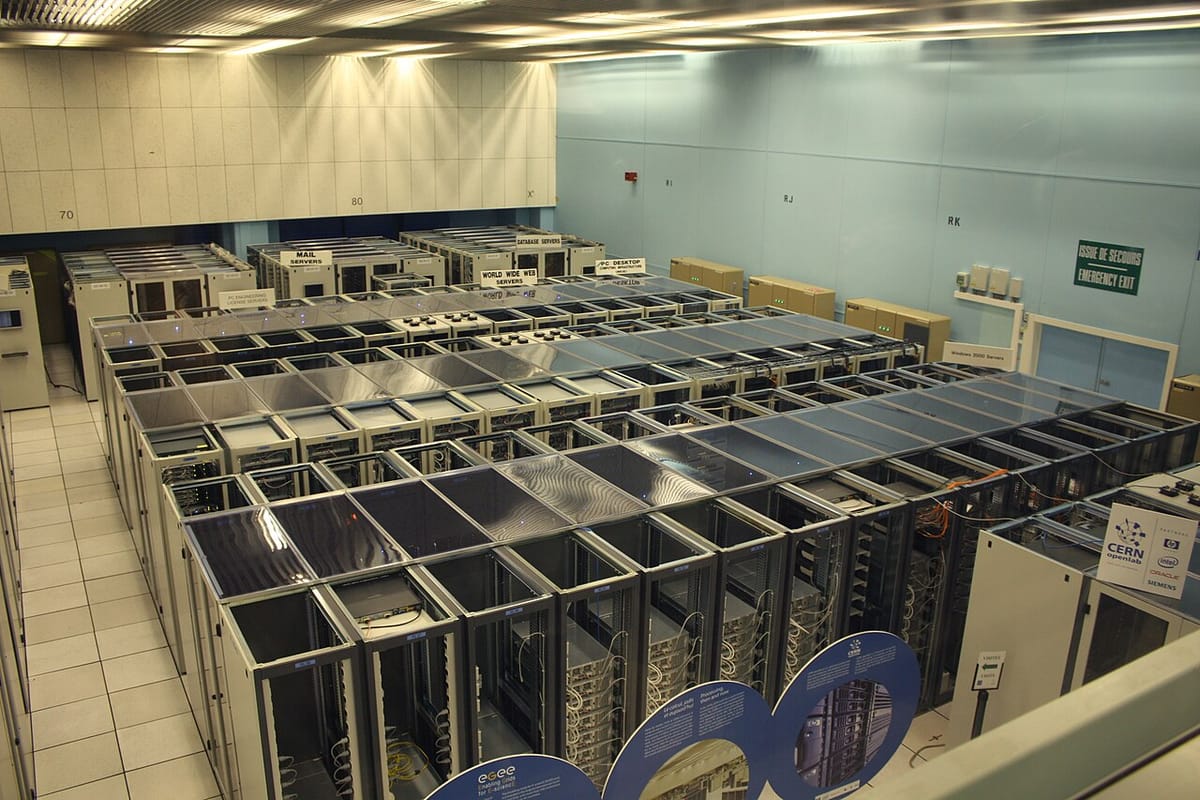
The model is being trained on national high-performance computing infrastructure, chiefly the Deucalion supercomputer in Guimarães and Portugal's share of the Iberian MareNostrum 5 machine — assets representing more than €12 million in related investment. The development effort draws on a partnership with Carnegie Mellon University in the United States, part of a long-running academic bridge between the two countries. Ministers frame the whole exercise as a matter of "technological sovereignty": ensuring that a small country can process sensitive public data on its own terms rather than renting intelligence from Silicon Valley.
A new front door for public-sector AI
Alongside the funding, the government launched Gov.IA, a portal meant to steer how the public administration adopts artificial intelligence, and to promote responsible use by public bodies, citizens and businesses. Amália is being lined up to support education, defence, culture, health and citizen services, with concrete early uses including renewing citizen cards through the Gov.pt app and speeding up permits via the LicencIA licensing platform. The next phase, officials say, is "agentification" — moving from a model that answers questions to one that can carry out multi-step tasks on a user's behalf.
The push slots into a wider national tech story. Portugal has spent recent years courting research and innovation money, from the fast-growing space sector to state-backed startup funding, even as regulators wrestle with unglamorous infrastructure questions such as mobile spectrum licensing.
What this means for residents and expats
- Portuguese-first AI: Most large models are trained overwhelmingly on English. Amália aims to understand European Portuguese — its idioms, legal language and accents — which should improve state chatbots and translation tools you actually use.
- Open-source means scrutiny: Because the code will be public, researchers can audit it for bias and errors — a safeguard when the same model touches health and citizen services.
- Smoother bureaucracy, eventually: If the Gov.pt and LicencIA integrations work as promised, routine tasks like renewing a citizen card or a licence could get faster.
- Data stays closer to home: Running on Portuguese and Iberian supercomputers is pitched as keeping sensitive public data within European jurisdiction.
Whether a €7 million model can hold its own against systems built on budgets a thousand times larger is the open question. For now, Portugal is betting that owning a modest, transparent, Portuguese-speaking AI is worth more than renting a bigger foreign one.