Private Patient Transport Firms Left Out of Fuel Aid Warn They Could Halt SNS Trips to Dialysis and Cancer Treatment
Companies that carry about half of the SNS's non-urgent patient journeys say the October fuel decree helps taxis, fire brigades and charities but not them, and are weighing a slow-drive protest in Lisbon. What the law says about who gets free transport, and who to call if it fails.
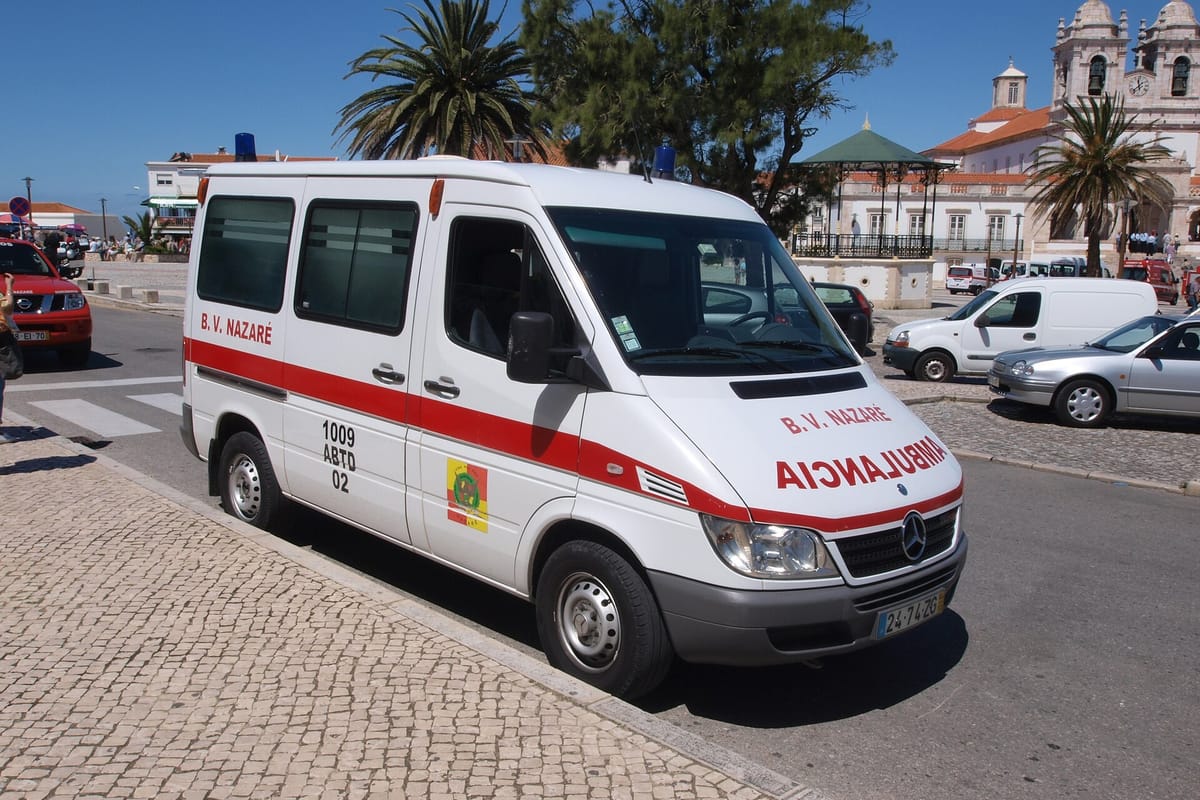
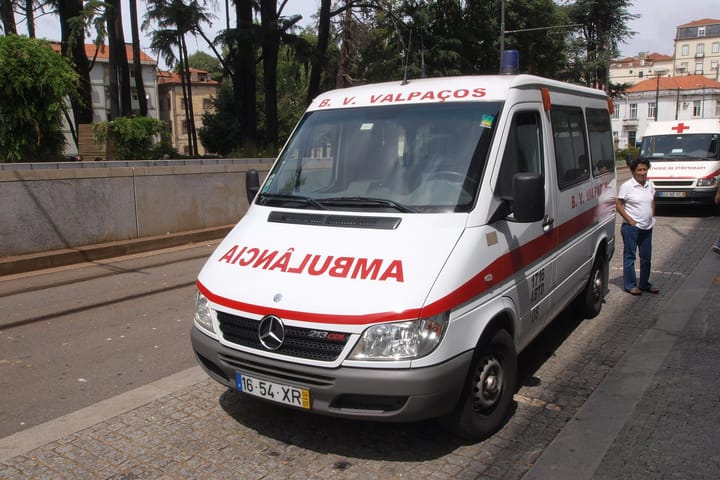
Private companies that drive patients to non-urgent appointments for the SNS (Serviço Nacional de Saúde, the National Health Service) say they will stop unless the Government includes them in its fuel aid. As a first step they are considering a marcha lenta (a slow-drive protest) in Lisbon next week, according to a Lusa report citing Público, carried on Thursday by Notícias ao Minuto and Dinheiro Vivo.
What the operators say
"From the Government there is absolute silence. Only the office of the Presidency of the Republic received us," said Álvaro Gil, president of the Liga Portuguesa de Ambulâncias (LPA, the Portuguese Ambulance League). He said non-urgent transport is paid at prices fixed in 2023, so firms cannot pass higher costs on to the SNS, and that fuel prices driven by the Middle East crisis are also raising the cost of vehicle maintenance and consumables such as oxygen. The companies say they have been asking for months to be included, and are now handing out leaflets to the patients they carry.
According to the report, the SNS recorded more than four million non-urgent patient journeys in 2025, about half of them by private firms that win tenders run by health units. Most are trips to cancer treatment, haemodialysis, physiotherapy and consultations; the firms also handle transfers between hospitals and discharges home.
Who the fuel aid covers
The latest round, signed by the President earlier this month, is Decreto-Lei (Decree-Law) n.º 199/2026 of 7 October. Article 7 extends it to taxi firms, humanitarian firefighters' associations and "social sector" bodies, which it defines as IPSS (private social solidarity institutions), Misericórdias, casas do povo, social solidarity cooperatives and mutual associations with a social action agreement. Fire brigades get 120 euros per vehicle, or 360 euros for each of their “Class S (Super)” vehicles, and that includes their patient transport vehicles. Social sector bodies get 600 euros each. Private patient transport companies are not on the list.
The prices the SNS pays are capped by Despacho n.º 7606/2023, which set a schedule from 2023 to 2026. For 2026 the cap is 11.63 euros per patient for an ambulance trip of up to 15 km, return included, and 9.58 euros in a dedicated patient transport car, with 0.69 and 0.65 euros a kilometre on longer trips. Oxygen is capped at 10 euros.
What it means for patients
Under Portaria n.º 142-B/2012, as amended, the SNS pays for non-urgent transport prescribed by an SNS doctor. It covers patients on low incomes whose condition justifies it (cancer and chronic kidney failure among them) and, whatever their income, patients who need prolonged and continuous care, including dialysis, cancer and palliative care. The ERS (Entidade Reguladora da Saúde, the Health Regulator) puts the low-income threshold for 2026 at 805.70 euros a month per household head. The portaria makes the health unit that requests the transport responsible for paying for it.
The ERS says that if you have trouble getting transport you are entitled to and it limits your access to care, contact first the health establishment that requested the transport; if that does not resolve it, you can complain to the ERS. Questions about a transport firm's licence or vehicles go to INEM (the National Institute for Medical Emergency).
The firms have not set a date for any stoppage, and no reply from the Government or the Health Ministry has been reported. Our guide explains how free transport to hospital appointments works.