Portuguese Space Group Omnidea Buys the Assets of Insolvent British Rocket Maker Orbex, and Now Sets Its Sights on 2030 to 2035
Omnidea has bought Orbex's production equipment and intellectual property, but not its debts or its Scottish spaceport. Its chief executive says a first launch is more likely nearer 2035 than 2028.
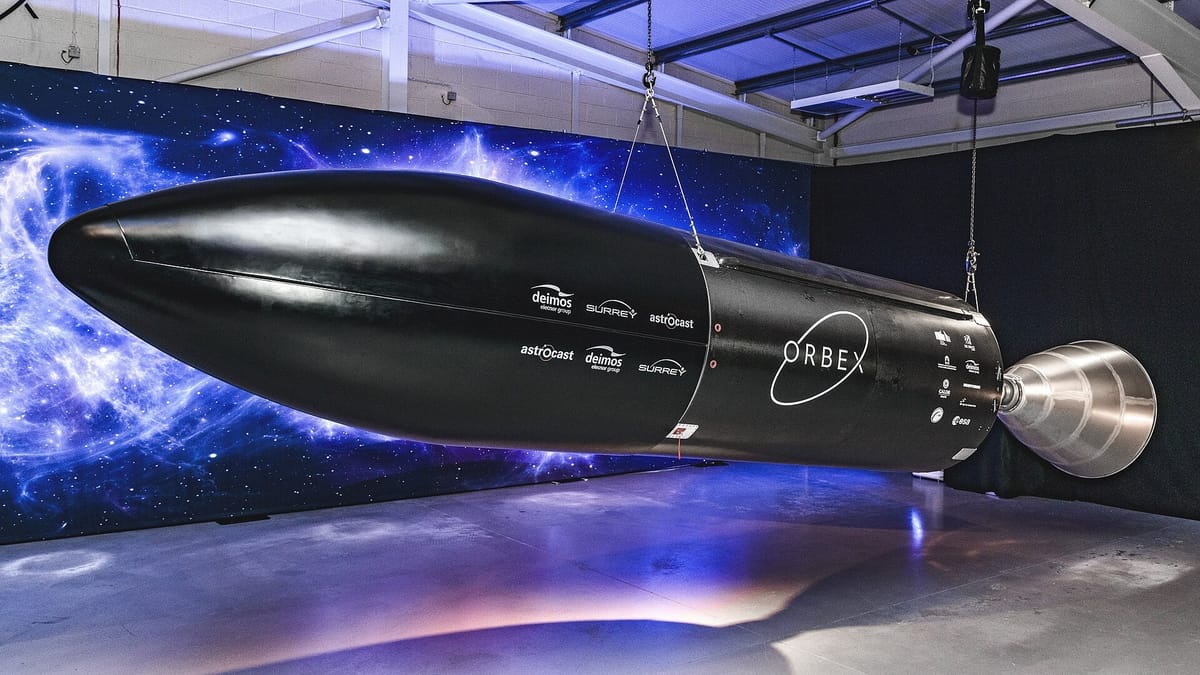
Omnidea, a Portuguese space technology group, has bought the production equipment and intellectual property of Orbex, the British rocket developer that went insolvent this year. The deal gives the Portuguese company a launcher programme of its own. Its founder and chief executive, Tiago Pardal, set out the purchase in an interview with the business daily ECO published on Thursday. The price has not been disclosed.
Assets, not the company
Pardal said Omnidea was not taking over Orbex itself. "We are not going to buy the company, we are going to buy the assets": the production equipment, the intellectual property and what Orbex had in the United Kingdom and Denmark, where it also had a subsidiary. The staff still working there will transfer. Omnidea is not taking on Orbex's liabilities or debts.
The two companies were already partners. Last year Orbex was one of five contenders the European Space Agency (ESA) selected for its European Launcher Challenge, the competition for Europe's next generation of small orbital rockets, and Omnidea was in its consortium. Pardal said Orbex then missed the programme's deadlines, so that contract will not be revived. Omnidea will now assess the technology, draw up a new development plan and seek funding from ESA or private investors.
A rocket for satellites up to 200 kilos
According to Pardal, Orbex was building a rocket very similar to the one Omnidea was developing in Portugal, designed to carry satellites of up to 200 kilograms. The work in Scotland covered the flight termination system (which ends a flight if anything goes outside safe limits), the rocket's structures, its electronics and its launch communications.
Orbex's planned spaceport in Sutherland, in the north of Scotland, is not part of the deal. Pardal said it sat in a separate company and has been taken over by Highlands and Islands Enterprise, the public development agency for the region. Omnidea wants to supply rockets rather than run launch sites: "In this perspective, we are a Boeing, an Airbus."
A launch window of 2030 to 2035
Pardal would not give a date for a first launch. The European Launcher Challenge had expected an orbital launch capability by 2028, which he called "not at all viable". His own aim last year had been to launch before the end of the decade. "If it is 2035, it will probably be closer to the mark," he said, adding that the market window runs from 2030 to 2035 and that arriving late would cost Omnidea its place. Developing the rocket will take "much more capital" than the group has, and bonds and venture capital are both being considered.
He argued that demand is there. SpaceX, he said, has no spare launch slots for the next two or three years because of its US government contracts and its own Starlink satellites. That matters closer to home: Pardal is also a shareholder in Geosat, the operator linked to the Atlantic Constellation satellite programme, whose next satellites "probably" cannot fly on SpaceX. "It would make sense for us to be able to launch our own satellites."
Santa Maria still waiting
On launching from Portugal, Pardal said he was "certain" a spaceport will be built on Santa Maria in the Azores and would probably be operating by the time Omnidea has a rocket, though how the island's launch sites will be organised is not yet clear.
Omnidea has grown through acquisitions before, in Germany and in Spain, where it bought the satellites now operated by Geosat. In September, a Lisbon satellite firm put two million euros into laser links for drones.