Portugal's Health Inspectorate Logged 224 Workplace Harassment Cases Since 2017, and Confirmed Only Three
IGAS's report on harassment in the public health service finds cases rising every year since 2021, mostly about bullying in hospitals, and 106 complaints not confirmed.
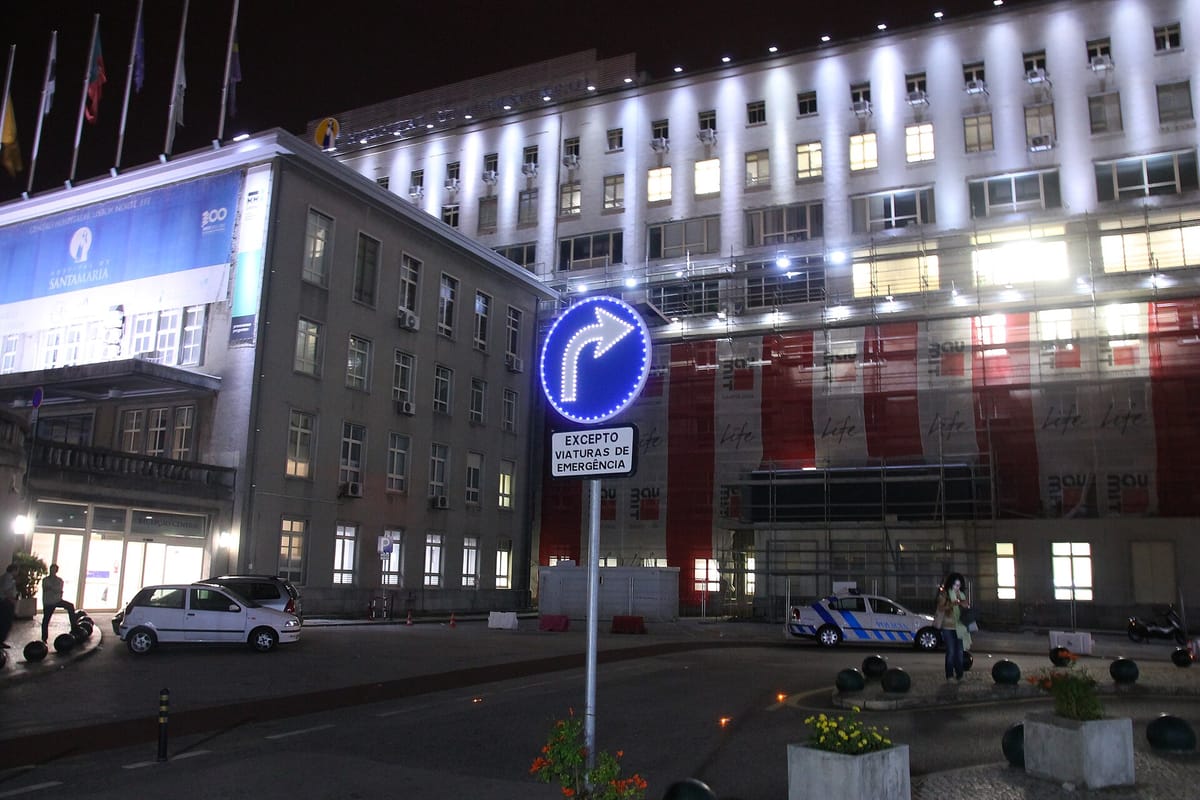
Portugal's health inspectorate opened 224 cases about workplace harassment in the public health service between January 2017 and July 2026, and in the cases that reached a verdict it found harassment proven in just three. The figures are in a report the Inspeção-Geral das Atividades em Saúde (IGAS, the General Inspectorate of Health Activities) published on 30 September. It updates an earlier report that covered 2017 to 2023.
Of the cases with a known outcome, harassment was confirmed in 3 and not confirmed in 106. In another 70, the matter was carried into a different kind of IGAS inquiry or passed to another body. The inspectorate draws its own conclusion: many complaints, it says, do not meet the legal test for harassment, which may point to workplace conflicts of another kind or to the difficulty of proving what happened.
A sharp rise since 2021
The number of cases was in single figures every year from 2017 to 2020: one, three, two and five. It jumped to 24 in 2021 and has risen every year since, to 32 in 2022, 44 in 2023, 48 in 2024 and 53 in 2025. Twelve were opened in the first seven months of 2026. IGAS says the growth may reflect greater awareness and stronger channels for reporting.
Almost all of the complaints are about moral harassment, the Portuguese legal term for bullying and psychological harassment at work: 209 cases, or 93.3 percent. Sexual harassment was alleged in 8 cases (3.6 percent), and both forms together in 7 (3.1 percent).
Hospitals account for most of the caseload. Of the 224 cases, 159 (71 percent) concerned SNS hospitals, 40 (17.9 percent) primary care units such as health centres, 23 (10.3 percent) bodies of the Health Ministry, and 2 hospitals outside the SNS (Serviço Nacional de Saúde, the National Health Service).
Where the cases came from
The single bodies with the most cases are the former Lisbon and Tagus Valley regional health administration, with 16, and its northern counterpart, with 14, followed by the INEM (Instituto Nacional de Emergência Médica, the National Institute for Medical Emergencies) with 12, the São João local health unit in Porto with 11 and the Coimbra local health unit with 10. Some institutions appear in the tables under both their old hospital-centre name and their new local health unit name, and IGAS warns that its figures cannot show whether the new local health units are the most frequent targets.
Most cases begin as a quick screening file, which IGAS calls a clarification process: there were 110 of them, peaking at 38 in 2024. There were 70 full inspections, 46 of them opened in 2025 alone; 44 are finished and 26 are still under way or yet to start. There were also eight inquiries, of which four of the five with a known result led to no disciplinary case, and three disciplinary cases. Only one of those ended in a penalty: a fine, at the Rovisco Pais rehabilitation centre in the Centro region. The other two, both opened in 2025, concerned the Amadora/Sintra local health unit and ended without a sanction.
What the inspectors told employers to fix
The report gathers the recommendations IGAS has made to health bodies after its inspections. Many are basic. Employers were told to adopt, revise and publish a code of good conduct on harassment, to explain it to new staff, and to make clear that it covers every worker, including managers, whatever their contract. Others were told to name a person or unit to receive complaints, to set up a procedure for a quick first assessment, to train staff and managers, and to assess psychosocial risks.
Several recommendations protect people who speak up. The inspectors reminded boards that the Labour Code bars disciplinary action against a worker who reports harassment, or against the witnesses that worker names, unless they acted with malicious intent, and that no disciplinary proceedings should be opened against them for a year after the complaint. Codes of conduct, IGAS said, must promise that there will be no reprisals against complainants and should remind staff that victims are entitled to compensation.
Since December 2020, a technical guideline from the inspector-general has required every service of the Health Ministry, including the state-owned hospital companies, to open an inquiry or disciplinary case whenever it learns of alleged harassment, and to send IGAS a copy of the report so it can decide whether to open an administrative offence case. Some employers were told to send in procedures opened between June 2021 and December 2023 as soon as they were finished.
Where a health worker can complain
The report sets out which bodies take complaints, and it depends on the worker's contract. Staff on an ordinary employment contract can go to the ACT (Autoridade para as Condições do Trabalho, the Working Conditions Authority) and to the CITE (Comissão para a Igualdade no Trabalho e no Emprego, the Commission for Equality in Labour and Employment). Staff on a public-service contract can go to the IGF (Inspeção-Geral de Finanças, the General Finance Inspectorate), to the CITE and to IGAS.
Harassment cases have reached other parts of the public sector too. In September, Lisbon's engineering school shelved a case brought by eight lecturers against the advice of its own inspectorate. The full IGAS report, in Portuguese, is on the inspectorate's website.
Sources: IGAS, "Resultados da Atividade Inspetiva: Ações inspetivas sobre assédio entre janeiro de 2017 e julho de 2026" (report dated 29 September 2026, 59 pages) and its news note of 30 September 2026 (igas.min-saude.pt).