Portugal's 3 June General Strike Lands at 100% Lisbon Metro and 98% Carris Workshops — Hospitals São João, Santa Maria and IPO Porto Run Central Surgical Blocks at Zero as Trabalho XXI Hardens Toward the Parliamentary Vote
End-of-day read on the 3 June 2026 CGTP general strike: Lisbon Metro at 100% participation, Carris workshops at 98%, Transtejo at 85% — and central surgical blocks shuttered at São João, Santa Maria, IPO Porto, Braga and Viana do Castelo.
Wednesday 3 June closed with the CGTP (Confederação Geral dos Trabalhadores Portugueses, General Confederation of Portuguese Workers) general strike landing at the top end of the pre-strike forecasts in public transport while leaving the political column on Avenida da Liberdade markedly thinner than the December 2023 joint stoppage. The Lisbon Metro confirmed 100% participation from 23:00 on Tuesday — the system was the only urban operator running with no minimum-services determination from the courts — and Carris's oficinas (workshops) booked 98%. Transtejo/Soflusa (Transtejo, the river-crossing operator and the second to escape minimum services) cleared 85%. CP/IP (Comboios de Portugal and Infraestruturas de Portugal) operated only the minimum service tier, leaving Alfa Pendular and Intercidades passengers on rebooking or refund footing across Alfa, Intercidades, Internacional, InterRegional and Regional services.
Healthcare carried the second-largest visible footprint. The central surgical blocks at Hospital de São João (Porto), Hospital de Santa Maria (Lisbon), IPO Porto (Instituto Português de Oncologia, Portuguese Oncology Institute) and the Braga and Viana do Castelo units ran at zero, with elective surgery deferred and only emergency cases proceeding under minimum-services orders from SEP (Sindicato dos Enfermeiros Portugueses, Portuguese Nurses' Union) and the regional medical unions. The Tiago Oliveira-led CGTP leadership opened its first balanço in the early afternoon, citing more than two dozen companies with halted production and several câmaras municipais (municipal councils) shuttered. "O Governo tem de deixar a linha de arrogância e ser mais humilde" ("The Government has to drop the arrogance line and be more humble"), Oliveira told reporters on the Rossio.
The political read
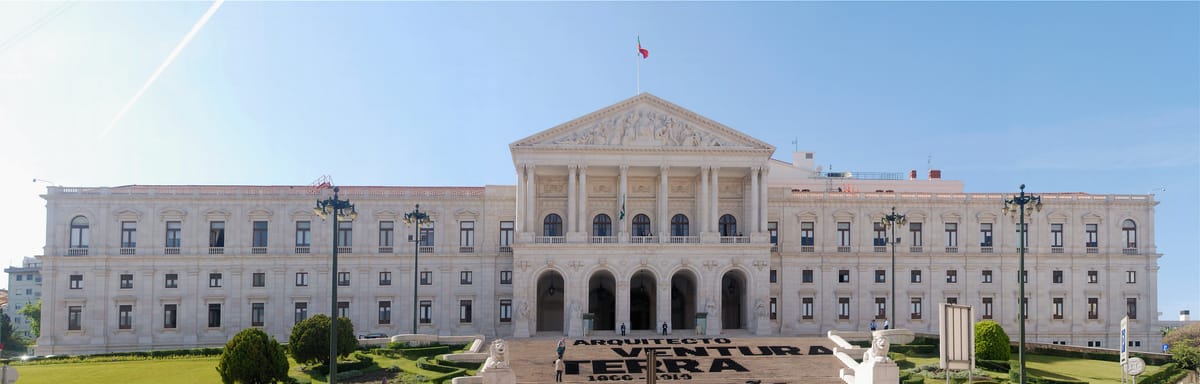
The signal-to-noise ratio for this stoppage was always going to depend less on the count itself than on who was — and was not — in the column. UGT (União Geral de Trabalhadores, General Workers' Union) sat this one out, with secretary-general Mário Mourão telling ECO last month that the timing was extemporânea (untimely) because the Trabalho XXI reform package had only just landed in the Assembleia da República (Parliament). That call gave Labour Minister Rosário Palma Ramalho cover to frame the day as "alguns inconvenientes" ("some inconveniences") — a deliberate downshift from the political weight a joint CGTP–UGT march would have carried.
The Trabalho XXI text the Government tabled in May carries more than fifty modifications to the original draft, including a tightened minimum-services regime that would, if approved, narrow the operational space for exactly the kind of full-coverage paralisação the Metro de Lisboa delivered today. That is the parliamentary horizon the CGTP wants to load with political cost before the generalidade vote — and the absence of UGT cushions the Government's reading of where the median voter sits.
Sectors beyond transport and healthcare contributed too: telecoms, commerce, manufacturing (including Autoeuropa workers), call centres and architecture all carried pre-avisos (strike notices). The Lisbon manifestação left the Rossio and moved up Avenida da Liberdade toward the Assembleia, with secondary columns in Porto, Coimbra, Faro and Évora. The CGTP framed the day as "a derrota do pacote laboral" — defeat of the labour package — rather than a one-off pressure release.
What This Means for Expats
- Hospital scheduling: Elective surgeries postponed at São João, Santa Maria, IPO Porto, Braga and Viana do Castelo will need re-booking through the secretariado clínico — expect 4–8 week slippage on most non-urgent slots.
- Commute reset: Lisbon Metro service resumes Thursday 4 June. CP passengers with affected Wednesday tickets can claim full refunds or free rebooking across all service categories.
- Employment law watch: The Trabalho XXI package — when passed — touches probation periods, fixed-term contract limits, severance, and the minimum-services rules. Expat employees and employers in PT contracts should track the generalidade vote calendar.
- Calendar friction ahead: The ECB Council meeting on Thursday 5 June and the AIMA (Agência para a Integração, Migrações e Asilo, Agency for Integration, Migration and Asylum) strike running through Friday compound the week's institutional friction.
- Public-service touchpoints: Câmara appointments — including IMI, IMT and certidões — postponed today should be rescheduled directly through the Balcão Digital rather than waiting for the câmara to call back.
The strike has done its political work: it has set a clear ceiling on how far the Government can compress minimum-services rules without provoking a second escalation. Whether that ceiling holds through the Trabalho XXI parliamentary vote depends on whether the UGT abstention today widens into formal opposition — or hardens into the absence Mourão framed as a calculated wait.