Spring 2026 Property Market: Portugal Resets as Rates Fall and New Supply Arrives
Portugal's property market is entering a new phase in spring 2026: falling Euribor rates, more new-build supply, and a post-Golden Visa buyer mix shift. What buyers, sellers, and investors need to know now.
Spring is traditionally Portugal's busiest season for property transactions, and 2026 is shaping up to be a pivotal year for the market. Following two years of interest rate pressure, a new ECB easing cycle, a more pragmatic government stance on housing supply, and a gradual cooling of speculative demand from Golden Visa elimination, the market is entering a new phase. Here's what buyers, sellers, and investors need to understand.
The Rate Environment Has Shifted Significantly
The ECB's decision to cut its deposit rate to 2.5% in March 2026 — the eighth cut since mid-2024 — has had a measurable impact on Euribor, which drives the vast majority of Portuguese mortgages. The 6-month Euribor, which peaked at 4.16% in late 2023, has fallen to approximately 2.6% as of February 2026. For a €250,000 mortgage at a typical spread of 1%, that translates to a monthly payment roughly €400 lower than at peak rates.
The practical effect: buyers who were priced out of the market in 2023-2024 are returning. Mortgage applications at major Portuguese banks rose 22% year-on-year in Q4 2025. That pent-up demand is now meeting a market that has reset — but not collapsed.
Where Prices Stand
Despite the rate pressure of recent years, Portuguese property prices proved remarkably resilient. National average prices fell only 2.3% from their 2023 peak, with Lisbon and Porto seeing flat-to-slightly-positive performance. The Algarve held strongest, with prime coastal properties near Quinta do Lago, Vale do Lobo, and Lagos seeing sustained demand from Northern European and British buyers.
Current average asking prices (February 2026, per idealista.pt data):
- Lisbon (city): €4,850/m² — up 3.1% year-on-year
- Porto (city): €3,020/m² — up 1.8% year-on-year
- Algarve (coastal): €4,200–€8,500/m² depending on location
- Silver Coast (Óbidos to Figueira da Foz): €1,800–€2,800/m²
- Interior/Alentejo: €600–€1,400/m² — significant value vs coast
Supply: Finally Moving in the Right Direction
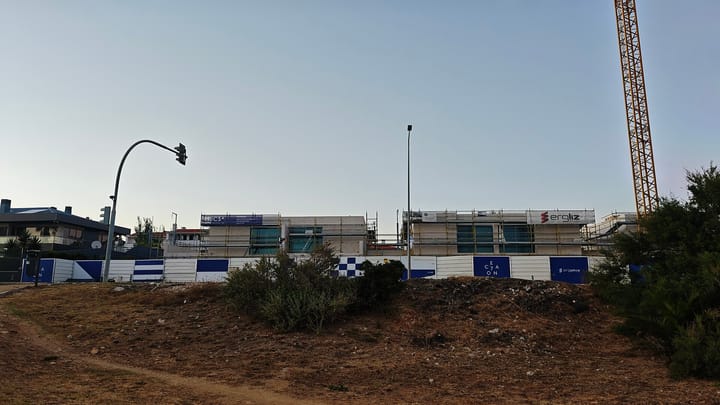
One of the structural causes of Portugal's housing affordability crisis has been chronic undersupply. The government's Mais Habitação programme has had mixed results, but its liberalisation of AL (short-term rental) licensing has begun to redirect some inventory back to the long-term rental and for-sale markets. Additionally, new construction starts in greater Lisbon increased 18% in 2025 versus 2024, with completion of several large-scale developments in Marvila, Beato, and the Setúbal corridor expected in 2026–2027.
For buyers, this means more choice — particularly in new-build. Portuguese developers are increasingly targeting the €280,000–€450,000 price band, the sweet spot where demand from first-time Portuguese buyers and relocating expats overlaps.
The Golden Visa Aftermath
The elimination of real estate routes under Portugal's Golden Visa programme in October 2023 was expected to crater the luxury market. That hasn't happened — but the buyer mix has changed. Chinese and Brazilian high-net-worth buyers who drove much of the Golden Visa-era speculation have been replaced by American, British, and Northern European buyers motivated by lifestyle, NHR tax advantages, and genuine relocation. These buyers tend to be end-users, not speculative investors, which is arguably healthier for the market.
Practical Advice for Spring 2026 Buyers
Financing
Get your mortgage pre-approval before starting your search. Portuguese banks typically offer variable-rate (Euribor-linked) mortgages to non-residents up to 70% LTV, with fixed-rate options available at a premium. Caixa Geral de Depósitos, Millennium BCP, Novo Banco, and Santander Portugal all have non-resident mortgage products. Budget 6–9 months from first search to key handover for resale properties, longer for off-plan.
Legal Due Diligence
Always engage a Portuguese property lawyer (advogado) — not just a notary. Key checks: caderneta predial (land registry), certidão permanente (title search), encumbrances, building licence, habitation licence (licença de habitabilidade), and energy certificate. Budget €1,500–€3,000 for legal fees on a typical transaction. The paperwork behind the building has its own guide: the ficha técnica da habitação, the building datasheet your notary stopped asking for.
Transaction Costs
Portugal's property transaction costs are moderately high by EU standards. Budget approximately 7–9% on top of the purchase price: IMT (transfer tax, 0–8% sliding scale), stamp duty (0.8%), notary and registration fees (~€500–€1,000), and legal fees.
The Investment Case
For buy-to-let investors, the numbers have become more interesting as mortgage rates have fallen. Central Lisbon long-term rental yields average 4.5–5.5%. Short-term rental yields in Algarve peak at 6–8% (pre-costs) but require active management and carry licensing risk. The Alentejo and interior are attracting growing interest from buyers seeking value: purchase prices of €100,000–€200,000 for restored stone houses, rental yields potentially 8–10%+, and a tourism market that's broadening beyond coastal resorts.
The Bottom Line
Spring 2026 represents a genuine market reset — not a crash, not a bubble revival, but a more rational environment where fundamentals (location, condition, yield) matter again. For serious buyers who were waiting out the rate cycle, the window is opening. Competition in prime locations remains fierce; in secondary markets, there's real room to negotiate.
What This Means for Expats: If you've been waiting to buy, the rate environment is now significantly more favourable. Do your due diligence, engage a lawyer, and move decisively in prime areas where inventory remains tight.