Three Months On, Portugal's Self-Driving Test Regime Has Produced Plenty of Meetings and Zero Licence Applications
The IMT says it has fielded several requests for preliminary meetings about testing automated driving systems on Portuguese roads, and that not one formal licence application has arrived. A 5,000 euro fee and a 40,000 euro deposit help explain the gap.
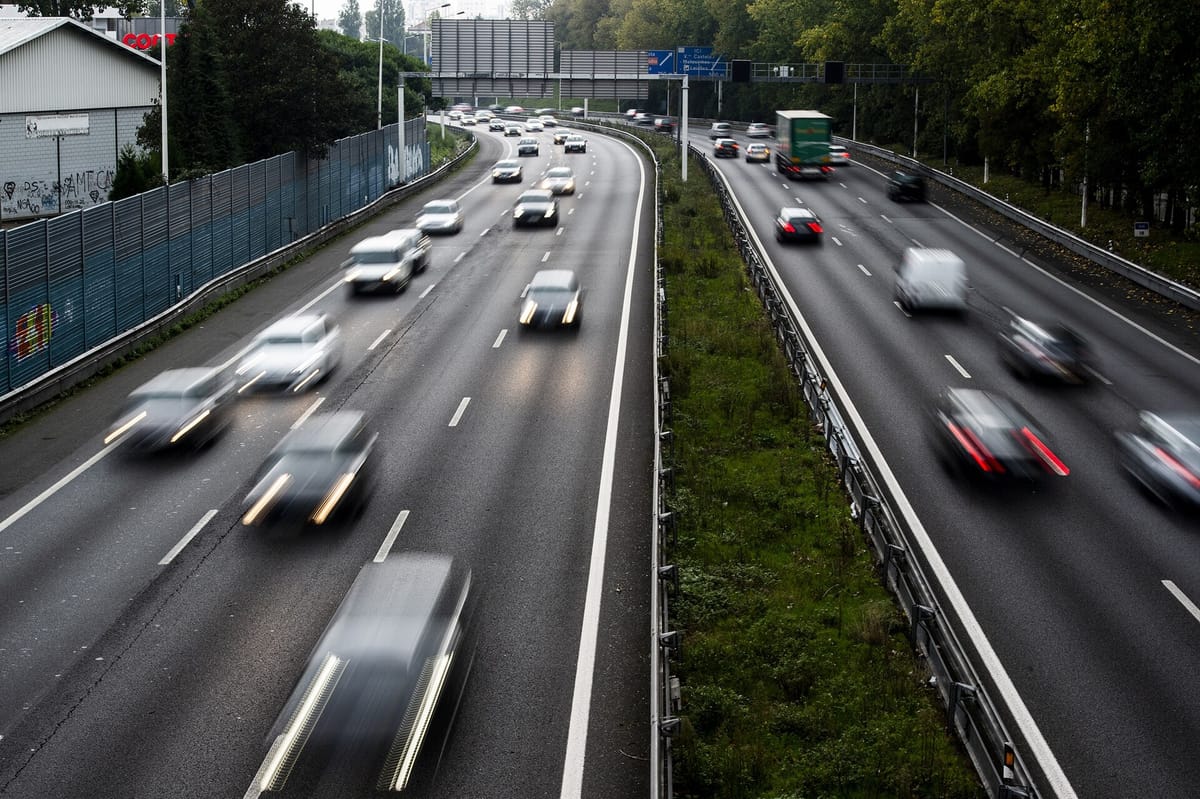
Portugal's rulebook for testing self-driving cars on public roads has been fully usable for less than three weeks, and the regulator says the phone has been ringing. What it has not received is a single application.
The Instituto da Mobilidade e dos Transportes (IMT, the Institute for Mobility and Transport) told the economic daily ECO that it has taken "various requests for preliminary meetings, with a view to clarifying and discussing questions relating to the legal regime applicable to the licensing of tests of automated driving systems". In the institute's reading, that demand "shows the sector's interest in the implementation of this new legal framework".
The institute would not say which organisations asked, how many there were, whether the meetings have actually happened, or whether anyone has yet named a stretch of road they would like to drive on. And on the only question with a clean answer, the answer was zero: "to date, no licensing requests have been submitted to the IMT, nor any requests for recognition of licences issued by other member states."
What the regime actually is
The framework is Decreto-Lei n.º 113/2026, published in June and in force since 9 July. We covered the decree when it landed. Three months on, the practical picture has filled in, and the main thing that changed over the summer was the price.
A licence is not granted by one office. It goes to a deliberative conference of five bodies: the IMT, which prepares the file, the Autoridade Nacional de Segurança Rodoviária (the national road safety authority), either the GNR or the PSP depending on whose territory the route crosses, and Infraestruturas de Portugal, which manages the national road network. Where the route uses municipal roads, the council gets a say too.
There are no sandboxes or fenced-off proving grounds here. Unlike the technological free zones set up for other kinds of trial, this regime leaves the ordinary rules of the road in place and stacks extra duties on top. The applicant proposes its own route, described in the decree as the "operational design domain", and the licence can then shrink it: limiting where and when the car may drive, requiring a police escort, or requiring that part of the road be partly closed off.
A human stays responsible, at every level
Every test vehicle must carry a driver on board or be watched by a qualified remote operator with the power to override the automated system. That requirement applies at all levels of automation, which rules out, for now, any operation with nobody answerable for it.
The bar is set higher than for ordinary driving in three specific ways. The blood alcohol limit is 0.2 grams per litre rather than the general 0.5. The car must travel 20 kilometres per hour below the posted limit for the road unless it wins a reasoned exemption. Compulsory insurance rises to four times the normal minimum capital. On top of that, each vehicle has to log 17 categories of data, from vehicle-to-vehicle communications through to every single intervention by the human driver.
The bill: 5,000 euros to apply, 40,000 to leave on deposit
The financial terms were the last piece, and they only closed on 30 July, when a portaria fixed the licensing fee at 5,000 euros and the security deposit at 40,000 euros for companies (3,000 euros for an individual applicant). Those charges took effect at the end of August, which is why a regime nominally in force since July has in practice only been open for business for a matter of weeks.
The published figures are also not the whole cost. The decree puts the expense of police accompaniment and of partially segregating a road on the applicant, and the law sets no tariff for either. An applicant finds out what that will cost only once the licence is issued, which is an awkward number to put in a budget before you have committed to the process.
Who is circling
ECO reports that at least four companies are interested. Two have surfaced by name.
Bolt, the ride-hailing and delivery operator that most readers will know from the app on their phone, was told by ECO that a source familiar with the matter had placed it among the interested parties. An official company source said flatly that "Bolt has not submitted any licence request", and then declined to say whether one was being prepared. The company has run a partnership since 2023 with Starship Technologies, whose small pavement robots already deliver groceries from Bolt Market shops in markets including Tallinn, the Estonian capital and the home city of Bolt founder Markus Villig. Tallinn turns up in the IMT's own explanatory infographic for the new regime, which notes that the city "has been a pioneer in the use of autonomous robots for logistics distribution", running on pavements with traffic-light recognition to cross the street.
The other named party is Critical Software, the Coimbra-founded software and systems engineering firm, which has stated its interest publicly.
What this means for you
If you drive, cycle or walk in Portugal, nothing has changed on the road yet, and nothing can change without a licence that nobody has applied for. When the first trial does start, the rules mean you should not expect to meet an empty driver's seat: there will be a person on board or a person watching remotely, and that car will be moving 20 kilometres per hour slower than you are.
It is worth knowing the tell-tale signs, because the licence conditions are the visible part. A stretch of road with a police escort, or partly coned off for no obvious roadworks reason, is what a licensed trial can look like from the outside.
And if something automated reaches you first, it is more likely to arrive on the pavement than in the traffic. The delivery-robot model the IMT chose to illustrate its own guidance is the one already running in Tallinn, and the company with the longest track record of operating it in Europe is one of the four reportedly looking at Portugal.
Finally, a word on what the zero means. Three months of meetings and no applications is not necessarily a sign the regime has failed. It is what a 5,000 euro fee, a 40,000 euro deposit, an untabled police bill and a five-body approval conference tend to produce in the first weeks: a lot of careful questions, asked before anyone writes the cheque.