Portugal Joins Three of the EU's Five Flagship Defence Projects, From Drones to Seabed Security
Portugal has joined three of the five European Defence Projects of Common Interest unveiled by Brussels on 3 July: the Decoder drone programme, the IMSD maritime and seabed-defence effort, and the EU-FIAMD air- and missile-defence shield — part of a push worth some €190 billion by 2036.
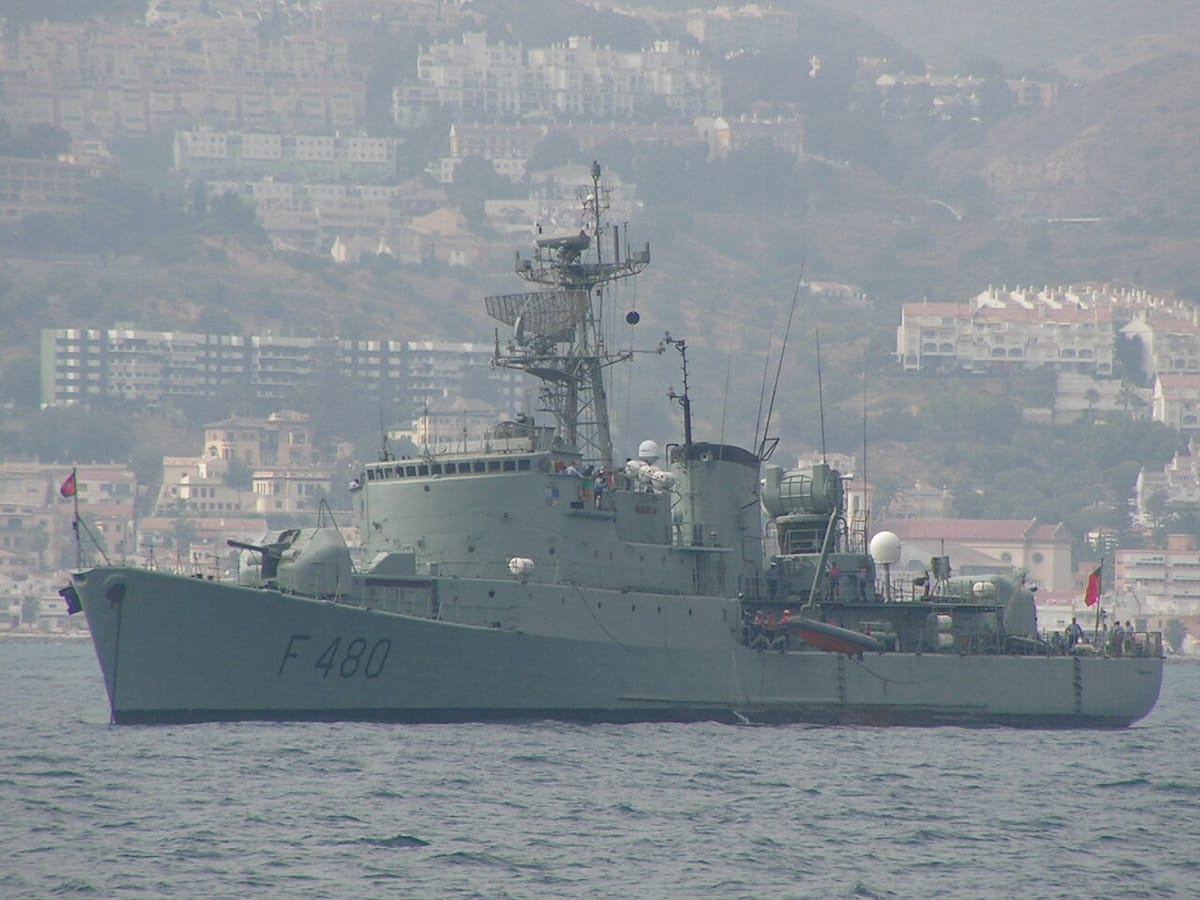
Portugal has signed up to three of the European Union's five flagship defence programmes, placing the country inside some of the most ambitious military-industrial projects the bloc has ever attempted. The European Commission unveiled the five so-called European Defence Projects of Common Interest on 3 July, a framework designed to pool money and engineering across member states rather than duplicating national efforts twenty-seven times over.
Lisbon is joining Decoder, a drone and counter-drone programme with an estimated budget of €3.5 billion to €5 billion through 2033; IMSD, an integrated maritime and seabed-defence effort requiring an eye-watering €43 billion to €72 billion through 2045; and EU-FIAMD, an air- and missile-defence shield with early-warning systems, budgeted at €55 billion to €80 billion through 2040. The two projects Portugal is sitting out cover space defence and the reinforcement of the EU's eastern flank — priorities more pressing for members bordering Russia.
Sharing the load
On average, about 18 of the EU's member states are backing each project, and Ukraine — whose battlefield is effectively a live laboratory for European defence planners — is involved in four of the five. To kick-start the work, the Commission has earmarked €325 million from its €1.5 billion European Defence Industry Programme, with a combined long-term financing ambition of roughly €190 billion across all five projects by 2036. Andrius Kubilius, the Commissioner for Defence and Space, said the initiatives would "strengthen EU readiness" and "reinforce strategic autonomy" — Brussels shorthand for depending less on the United States for Europe's own security.
Why the sea projects fit Portugal
Portugal's choices are telling. As an Atlantic nation with one of the largest exclusive economic zones in Europe — and a continental shelf claim that would stretch it further still — the country has a natural stake in IMSD's focus on protecting undersea cables, pipelines and the seabed itself, infrastructure whose vulnerability was thrown into sharp relief by sabotage scares in the Baltic. The drone-focused Decoder programme, meanwhile, targets the single fastest-moving domain in modern warfare, where cheap unmanned systems have upended far costlier hardware.
The commitment also lands as Portugal navigates NATO pressure to spend more. The country only recently pushed defence outlays up towards the 2% of GDP benchmark and remains among the alliance's lower spenders, so plugging into shared European projects offers a way to punch above its budget. It fits a broader pattern of Lisbon leaning into EU cooperation, whether by calling on the bloc's civil-protection mechanism during wildfire season or by courting France on trade and industry. Defence-technology work also dovetails with the government's push into space and advanced tech.
What this means for residents and expats
- Industrial opportunity: Portuguese shipyards, tech firms and universities could win subcontracts on the maritime and drone projects, bringing skilled jobs — especially in naval engineering and software.
- Budget pressure ahead: Rising defence commitments compete with health, housing and pensions for public money; expect the trade-offs to surface in future budget debates.
- Long horizons: These are multi-decade programmes. Little changes for daily life now, but they signal where the state will steer research funding.
- A more autonomous Europe: The stated aim is a continent less reliant on Washington — a strategic shift residents will hear invoked repeatedly in coming years.
For a country more often associated with tourism and sunshine than tanks, the move is a quiet marker of how thoroughly European defence has moved up the agenda — and how Portugal intends to be in the room when the contracts are written.