EU Auditors Cannot Prove €43 Billion in Home-Renovation Money Saved Any Energy, and Portugal Drew From the Same Pot
After €43 billion of post-pandemic home-renovation spending through the Recovery and Resilience Facility, the European Court of Auditors says the EU still cannot prove the money saved much energy. Portugal drew on the same fund for its own €240 million building-efficiency drive.
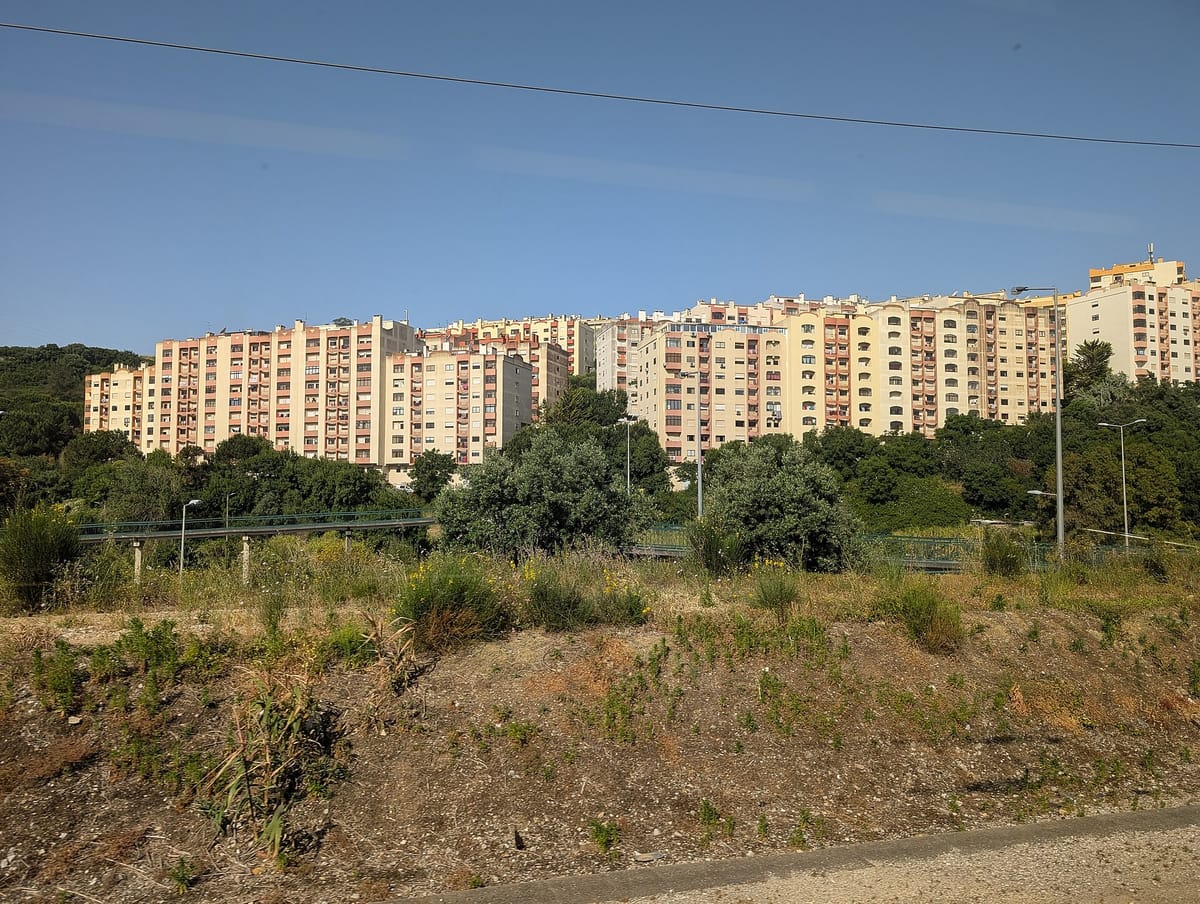
Europe spent the post-pandemic years pouring money into insulating, re-roofing and re-glazing its homes, on the promise that warmer houses would mean lower bills and less carbon. On Tuesday the European Court of Auditors (Tribunal de Contas Europeu) delivered an uncomfortable verdict: after some €43 billion channelled through the Recovery and Resilience Facility (Mecanismo de Recuperação e Resiliência), the EU still cannot prove the money actually saved much energy.
Money where it was easiest to spend
The auditors' core charge is that funds flowed "where they were easiest to spend, not where they would make the biggest difference." Governments, chasing tight deadlines, favoured quick wins — solar panels, new windows, boiler swaps — over the deep renovations that cut a building's consumption by 60% or more. Projects were frequently waved through on eligibility criteria alone, without ranking them by how much energy they would actually save.
"Projects were often approved based on eligibility criteria alone, without comparing them to prioritise those with the highest energy savings," said Nikolaos Milionis, the ECA member who led the review, which examined schemes in Belgium, Italy, Cyprus and Lithuania.
The measurement problem
Compounding the design flaw is a data gap. Much of the reported "savings" rests on Energy Performance Certificates (in Portugal, the certificado energético), which the auditors note were never built to measure real-world consumption. Theoretical figures can diverge from actual use by several hundred percent, opening a wide "performance gap" between what a renovation promises on paper and what it delivers in a lived-in home. With no systematic tracking of energy saved per euro spent, the value-for-money question is left effectively unanswerable.
Italy's Superbonus is the cautionary tale. By reimbursing homeowners up to 110% of costs — more than they spent — it turned into an estimated €123 billion bill for Italian taxpayers while inflating prices across the renovation market.
Why Portugal should pay attention
Portugal drew on the same facility to fund its own building-efficiency drive. Component 13 of the national Plano de Recuperação e Resiliência (Recovery and Resilience Plan) earmarked roughly €240 million for energy efficiency in buildings, while the Vale Eficiência programme has been handing out efficiency vouchers worth about €1,300 each — some 40,000 of them — to households in energy poverty, to buy heat pumps or upgrade their homes.
Those are precisely the kinds of quick, distributable interventions the auditors flagged as easy to deploy but hard to verify. Portugal has one of Europe's least thermally efficient housing stocks — cold, damp winters indoors are a national cliché — so the case for spending is strong. The auditors' warning is not that the spending is wrong, but that without honest measurement, neither Brussels nor Lisbon can say whether households are genuinely warmer and their bills genuinely lower.
The lesson for the next round
With the RRF's 2026 completion deadline looming and negotiations over the EU's next long-term budget under way, the report lands as a plea for rigour: prioritise deep renovations, measure actual consumption, and stop treating a certificate as proof. For Portuguese homeowners weighing whether a subsidised upgrade is worth the disruption, the sharper question the audit raises is one worth asking of any grant — not how much was spent, but how many kilowatt-hours it actually saved. On the document that rates a Portuguese home's energy performance, what the energy certificate on a Portuguese property actually has to say sets out who has to obtain a certificado energético and when, the site visit a qualified expert cannot skip, the ten years a housing certificate lasts, what registration on the Portal SCE costs, and the 250 to 44,890 euro fine band behind the rule.