Portugal Heads Into Winter With Its Carriço Gas Store 95 Percent Full, While EU Storage Sits Near 75 Percent
Portugal's only underground gas store, at Carriço, was 95.5 percent full on its last confirmed day, well above the EU's 74.7 percent. Most of the country's gas arrives by ship at Sines, and regulated household prices rose 6.4 percent on 1 October.
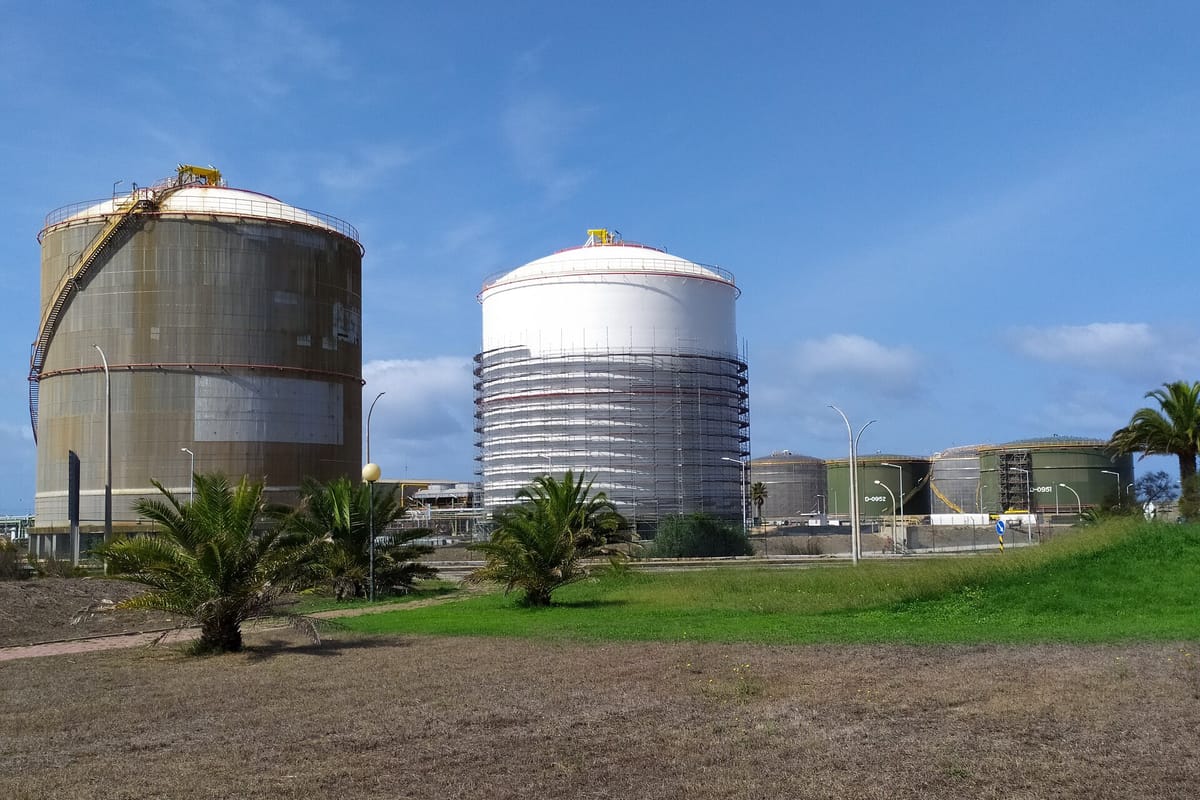
Portugal's underground gas store at Carriço, near Figueira da Foz, is starting the winter almost full. On the last day its operator confirmed figures to Europe's transparency platform, the 6 October gas day, the site held 3.41 terawatt hours (TWh) of gas against a working capacity of 3.57 TWh: 95.51 percent full, according to AGSI+, the storage database run by Gas Infrastructure Europe. AGSI+ has carried that same figure forward as an estimate every day since, up to the 30 October gas day.
That is comfortably above the EU's 90 percent storage goal and close to last year, when Carriço stood at 96.21 percent on the same date. The EU as a whole is in a weaker position: AGSI+ puts the bloc's storage at 74.68 percent on 30 October (a provisional figure), against 82.8 percent a year earlier.
The EU target is now flexible
Under Regulation (EU) 2025/1733, which amended the EU's gas security of supply rules and was published on 10 September 2025, countries no longer have to reach 90 percent by 1 November. The European Commission says they now have a two-month window, from 1 October to 1 December, to meet it, may deviate from the target in difficult market conditions or because of technical constraints, and the Commission can lower it further if unfavourable conditions persist. The extended rules run for two years.
Why a full store matters less here than elsewhere
Carriço is small. By AGSI+'s calculation, the gas held there equals about 8 percent of Portugal's annual consumption, while the gas in storage across the EU equals about 24 percent of the bloc's. Portugal relies instead on the liquefied natural gas (LNG) terminal at Sines, where tankers unload gas that is turned back into vapour and fed into the national grid. An ERSE report on 2025, reported by Lusa via RTP, found that about 95 percent of the gas entering Portugal last year came through Sines, mainly from Nigeria and the United States, and the remaining 5 percent by pipeline from Spain at Campo Maior and Valença do Minho.
What it means for you
- Supply: a full store and a working LNG terminal mean there is no sign of a physical shortage for household customers this winter.
- Regulated prices are already set: the energy regulator ERSE raised regulated household gas prices by 6.4 percent from 1 October 2026 to 30 September 2027. In its decision, ERSE put the average monthly bill at 17.38 euros for a couple without children and 32.53 euros for a couple with two children, increases of 0.91 and 1.62 euros. We covered the rise when it took effect.
- Free-market contracts can change: most households (about 1.13 million at the end of June 2025, against about 437,000 on regulated tariffs) buy from the free market. ERSE notes that their price depends on what each supplier pays for gas on international markets, plus its margin, so a tight European winter can feed through when a contract is repriced. Check your contract's terms.
- Help with bills: households entitled to the tarifa social (the social energy tariff for low-income households) keep a 31.2 percent discount on either market, according to ERSE. Bottled gas is a separate case; see our piece on the 25 euro bottled gas discount.