Portugal Has Until 12 November to File Its Sines Bid for an EU AI Gigafactory, and German Industry's Worry Is the Paperwork
EuroHPC opened the call on 30 July and closes it at 16:00 on 12 November. Portugal's Sines bid has the cables, the deep-water port and the power. The head of the Luso-German Chamber told ECO this weekend that what worries German investors is the bureaucracy.
Portugal's bid to host one of the European Union's AI gigafactories has a date on it now, and it is close. The EuroHPC Joint Undertaking, the EU body that co-funds Europe's supercomputers, opened its call for tenders on 30 July under the reference EUROHPC-2026-CEI-AIGF-01. Submissions close at 16:00 Central European Time on 12 November. That leaves 54 days.
What the call asks for is not a data centre. EuroHPC wants up to seven gigafactories spread across at least seven member states, each carrying at least three to four times the number of the most advanced AI processors currently installed in Europe's most powerful AI factories. Consortia have to show they can bring the electricity, and they have to demonstrate energy efficiency, water efficiency and circular-economy practice while doing it. Selection is expected in early 2027, with operations required to begin within 18 months of that. The Commission expects the programme to pull in more than 20 billion euros of private money across the bloc, drawn from the current multiannual budget and then the one that runs from 2028 to 2035.
What Portugal has put on the table
The Portuguese leg is anchored at Sines and steered by the Banco Português de Fomento (Portuguese Development Bank). In June the Conselho de Ministros (Council of Ministers) approved a public commitment of up to 200 million euros for computing time in the project's first stage, a figure EuroHPC would match for a combined 400 million, inside a wider Portuguese project the government has valued at around 4 billion euros. It is structured as an Iberian candidacy, shared with Spain. Gonçalo Matias, the Minister in the Cabinet of the Prime Minister and for State Reform, framed it in terms of control rather than capacity: the gigafactory, he said, guarantees that Portugal will have sovereign capabilities in producing artificial intelligence. We covered the funding decision at the time.
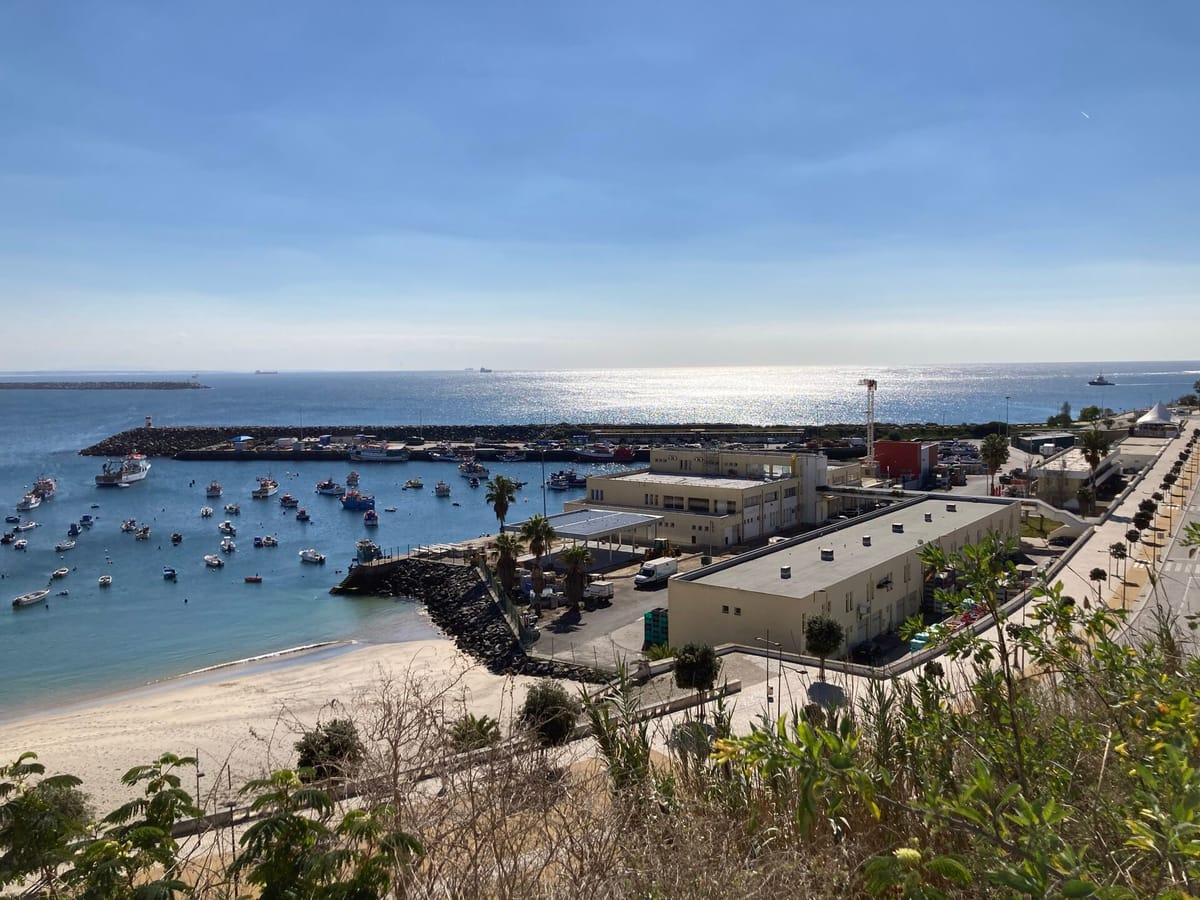
Sines is the obvious Portuguese address for this. The submarine data cables come ashore there, the deep-water port is there, and the energy infrastructure is there: 95 percent of the gas Portugal burned last year landed at the same terminal. Power and connectivity are the two constraints that decide where a project of this size can physically go, and Sines is one of the few places on the Atlantic coast that has both.
The people with the chequebooks name a different problem
None of that is what the German business community is worrying about. Markus Kemper, president of the Câmara de Comércio e Indústria Luso-Alemã (Luso-German Chamber of Commerce and Industry) and chief executive of the Sintra filament maker Filkemp, told the business daily ECO this weekend that there are always plenty of investments in the pipeline "because Portugal is quite in fashion", and that investments like the AI gigafactory will attract many German investors. His reasoning is supply and cost: there is an absolute shortage of AI processing capacity in Europe, and energy in Portugal is cheaper than in the countries Portugal is competing against.
His reservation is bureaucracy. That is worth sitting with, because it is a different kind of risk from the ones usually discussed around Sines. The land is there, the cables are there, the megawatts are there. Those are settled questions. What is not settled is how quickly a permit gets issued, how many agencies have to sign, and whether a consortium that wins a designation in early 2027 can actually be operating within 18 months, which is what the call demands.
That is the real test the next 54 days lead into. A bid can be technically strong and still lose on the second question, because the 18-month clock starts whether or not the paperwork is ready.