Portugal and the Ukraine War: Defence, Diplomacy, and Refugees in 2026
Three years into Russia's full-scale invasion of Ukraine, Portugal's response has evolved from initial humanitarian aid to a more comprehensive commitment spanning military support, refugee integration, and diplomatic positioning within NATO. Here's...

Three years into Russia's full-scale invasion of Ukraine, Portugal's response has evolved from initial humanitarian aid to a more comprehensive commitment spanning military support, refugee integration, and diplomatic positioning within NATO. Here's where things stand in 2026.
Military Support and NATO Commitments
Portugal has provided over €250 million in military aid to Ukraine since February 2022, including Leopard 2A6 main battle tanks (from the Army's existing stock), M113 armoured personnel carriers, ammunition, and individual equipment. The country has also contributed to EU training missions, with Portuguese forces helping train Ukrainian soldiers in Germany and Poland.
Under President Luís Montenegro's government, Portugal has committed to reaching the NATO 2% GDP defence spending target by 2029 — up from approximately 1.55% in 2025. This represents a significant shift for a country that has historically spent well below the alliance average.
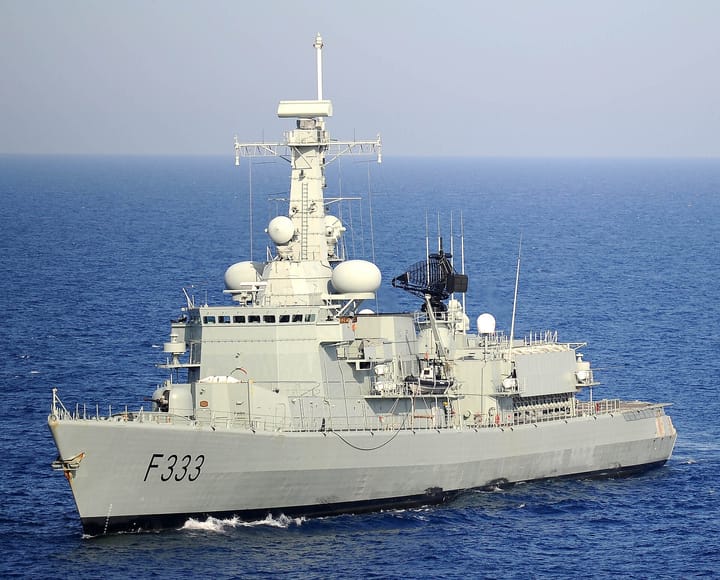
The Portuguese Navy has increased its presence in NATO Standing Maritime Groups, and the Air Force has participated in Baltic Air Policing missions. Portugal's strategic position on the Atlantic also gives it a role in monitoring Russian naval movements.
Ukrainian Refugees in Portugal
Portugal has granted temporary protection to approximately 65,000 Ukrainian refugees since 2022. The initial wave was met with strong public support and a relatively efficient bureaucratic response — unusual by Portuguese administrative standards.
Key facts for 2026:
- Temporary Protection: Extended through March 2027 under EU directive, granting residence, work, and healthcare rights
- Employment: Approximately 70% of working-age Ukrainian refugees are employed, higher than the EU average. Many work in hospitality, construction, and healthcare
- Education: Over 12,000 Ukrainian children enrolled in Portuguese schools, with dedicated language support programmes in larger municipalities
- Geographic distribution: Concentrated in Lisbon, Porto, Setúbal, and Faro districts, with smaller communities in Braga and Aveiro
Diplomatic Position
Portugal has consistently supported EU sanctions packages against Russia and voted in favour of all UN General Assembly resolutions condemning the invasion. The country's position has been firmly within the Euro-Atlantic consensus, with cross-party support for Ukraine in the Assembleia da República.
Portugal has also used its historical relationships with Portuguese-speaking African nations (particularly Angola and Mozambique) to advocate for broader international support for Ukraine — with mixed results, as many CPLP countries have maintained more neutral positions.
Economic Impact on Portugal
The war's economic effects on Portugal have been significant but manageable:
- Energy: Portugal's low dependence on Russian gas (historically under 10% of imports) meant less disruption than Germany or Italy. The Sines LNG terminal has increased capacity, partially supplying Spain
- Inflation: Energy and food price spikes in 2022-23 have largely moderated, with Portuguese inflation back below 3% in 2026
- Defence spending: The increase to 2% GDP means roughly €1.2 billion in additional military expenditure by 2029, which the government plans to partially fund through NATO infrastructure investments and EU defence fund contributions
- Agriculture: Portugal's agricultural sector was minimally affected due to limited direct trade with Ukraine/Russia in food commodities
Public Opinion
Portuguese public opinion remains broadly supportive of Ukraine but with growing fatigue. A 2026 Eurobarometer survey showed 64% of Portuguese respondents supporting continued EU aid to Ukraine — above the EU average of 59% but down from 78% in 2022.
The far-right Chega party has occasionally questioned the scale of military support, but no major political party advocates cutting ties with Ukraine or softening the sanctions regime. (Background: see our piece on the Portuguese F-16AM Baltic Air Policing rotation in Estonia.)
What This Means for Expats
For expats in Portugal, the war's direct impact is now minimal — the energy price shock has passed, and daily life is largely unaffected. Ukrainian refugees have become a visible and generally well-integrated part of Portuguese society, particularly in urban areas. The main ongoing effect is Portugal's increased defence spending, which may influence fiscal policy in coming years. For Ukrainian expats specifically, temporary protection status remains secure through at least March 2027, with permanent residency pathways available after five years of legal residence. On the foreign-policy and multilateral side of the file, our 4 June read on Portugal winning a non-permanent UN Security Council seat for the 2027-2028 term with 134 first-round votes — Austria joining on 131, Germany pushed off the body for the first time since 1976 on 104, Paulo Rangel anchoring the post-vote framing on cross-party Portuguese diplomacy and the eighth Portuguese term on the Council since 1979-1980 sets the latest reference.