Pordata's World Environment Day Scorecard Crowns Portugal Third-Lowest EU Per-Capita Emitter While the 88% Car Modal Share Weighs on the Transport Decarbonisation Curve
Pordata's 5 June Environmental Portrait ranks Portugal third-lowest EU per-capita emitter and sixth in renewables — but car modal share at 88% drags the transport tape.
Pordata, the Fundação Francisco Manuel dos Santos (Francisco Manuel dos Santos Foundation) statistical database, released its Retrato do Ambiente (Environmental Portrait) on Friday 5 June 2026, marking Dia Mundial do Ambiente (World Environment Day) with a dataset that puts Portugal third-lowest in the European Union on greenhouse-gas emissions per capita and sixth in the bloc for renewable-energy share — but pins the country's transport modal split as the structural drag that prevents the scorecard from running cleanly green.
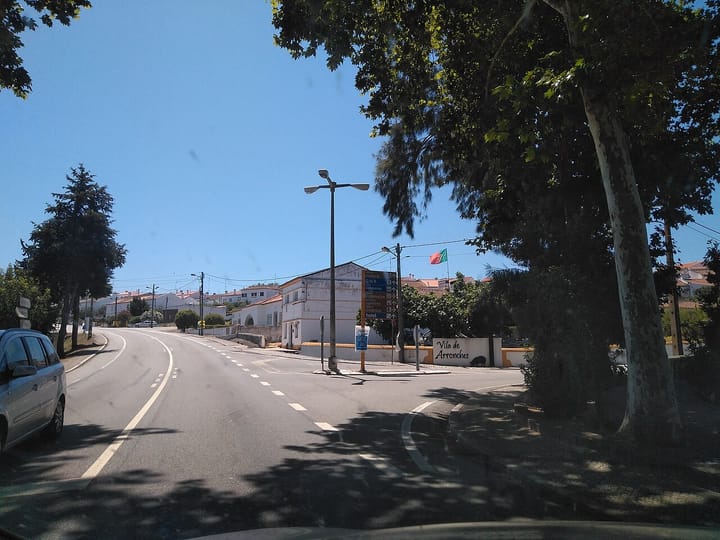
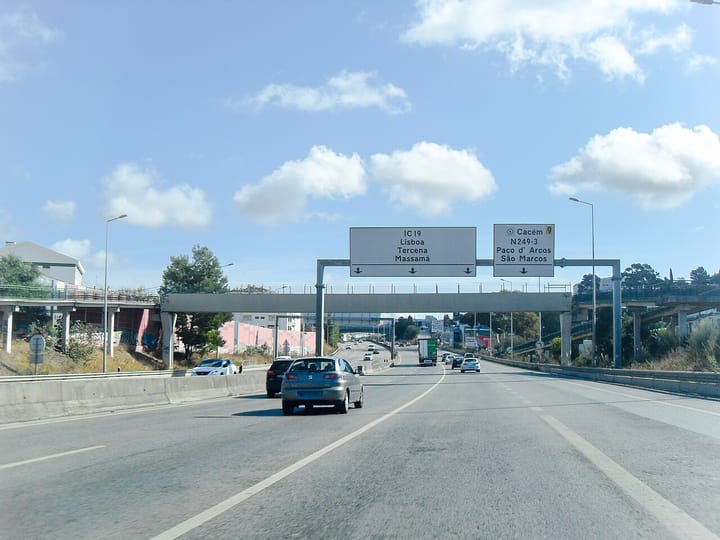
The headline modal-share figures are the sharpest part of the dataset. Between 1990 and 2023, the share of journeys taken on public transport in Portugal collapsed from 29% to 12%, while the car share rose from 72% to 88%. Across the same period, Portugal moved from being the fifth-lowest country in Europe for car use to the very top of the table, from the fourth-highest train user to the fourth-lowest, and from the fifth-highest bus user to the fourth-lowest, among the seventeen European countries with comparable data. In 2023, 88.2% of passenger-kilometres in Portugal were travelled by car, the third-highest figure in the European Union; buses accounted for 7.5% and trains for 4.2% — roughly half the European average for rail.
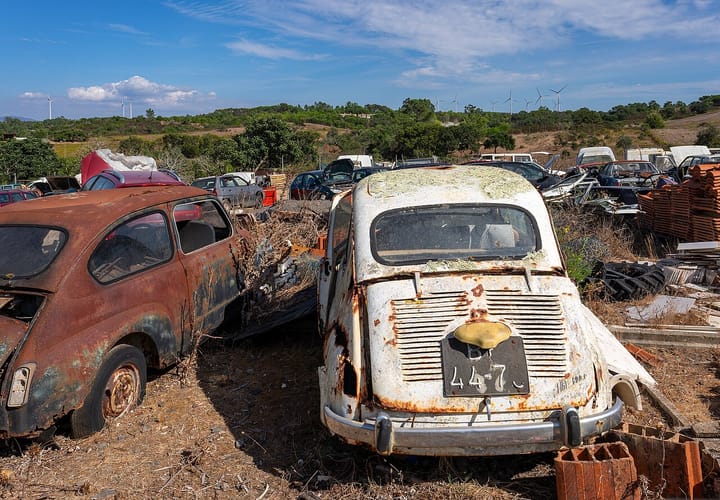
The car-fleet trajectory underwrites the modal collapse. Between 1990 and 2024, the Portuguese vehicle fleet more than tripled, moving from one car per five inhabitants to one car per two inhabitants. New-vehicle electrification has accelerated — Pordata records more than 40,000 new electric cars sold in Portugal in 2024, representing 20% of the total new-car market and ahead of the European Union average of 13.5%, though still well below Denmark, where more than half of new cars were electric. The electrification curve is real, but the installed fleet is dominated by internal-combustion vehicles bought across three decades of expansion, and the gasoline/diesel inheritance is what shows up in the emissions tape. The first official measure of how that fleet is used shows the shift beginning: in 2025 diesel and petrol traffic fell while hybrids and electrics grew 39.5 percent.
Transport accounted for 34.4% of Portugal's emissions in 2024, the fourth-highest sectoral share in the European Union, with roughly 20% of national emissions traced to gasoline and diesel combustion across the car fleet. Portugal's headline per-capita performance — third-lowest in the bloc, behind only Sweden and Malta — is impressive in absolute terms, but the comparative reduction story is less flattering: between 1990 and 2024, Portugal was the third-slowest country in the European Union at reducing emissions. Every other member state reduced more.
The energy mix is where Portugal's environmental positioning gets its lift. In 2024, final energy consumption across households, industry and transport split into petroleum products (42.9%), electricity (26.4%), renewables (19.5%) and natural gas (10.2%). Portugal ranks sixth in the European Union on renewable-energy consumption — above the European average — and sits among the four EU member states where more than 95% of energy produced came from renewable sources. Portuguese households consume less energy than the EU average, leaning on grid electricity (43.2%) and renewables (36.7%) rather than the natural gas (29.7%) and electricity (26.6%) that dominate the European household mix.
Pordata director Luísa Loura, speaking to Diário de Notícias, flagged a separate gap behind the green-energy headline: thermal-insulation quality in Portuguese housing remains weak, and energy poverty — cold homes in winter, overheated rooms in summer — is a structural feature of the country's residential stock that the scorecard does not directly capture. The housing-crisis effect runs the other direction too: rising urban rents have pushed households toward suburban and peri-urban locations underserved by rail and bus networks, reinforcing the car-fleet expansion at the precise moment Brussels is asking Lisbon to reverse it.
What This Means for Expats
- Public-transport coverage outside city cores remains thin: If you are relocating outside the Lisbon, Porto or Coimbra rail catchments, expect car-dependent daily routines. The 4.2% national rail modal share is half the European norm and is concentrated in the metropolitan corridors.
- EV purchase economics favour early adoption: The 20% EV share of 2024 new-car sales sits above the EU average; charging-infrastructure rollout, the Mobi.E network expansion and the IUC (Imposto Único de Circulação — Single Circulation Tax) preferential framing for electric vehicles tilt the maths in favour of going electric on your next purchase.
- Heating budgets are real: Portuguese residential thermal performance is poor by Northern European standards, so factor a winter heating allowance into your housing budget and ask the landlord about insulation, double glazing and reversible air-conditioning before signing.
- Renewable electricity is genuinely abundant: The grid mix is among the cleanest in the European Union, which means your domestic carbon footprint on electricity is structurally lower than in most member states — the gap is concentrated in transport and heating, not in plug-in power.
The Pordata dataset lands the same week that the European Commission flagged Portugal's public-transport offer as "insufficient" in the 2026 Country-Specific Recommendations, and that the Conselho de Ministros (Council of Ministers) adopted the Visão Zero 2030 road-safety strategy six years late. The three documents read together: Brussels says Lisbon is under-investing in rail and bus, Pordata says the population has noticed and moved into cars, and the Council of Ministers is now writing down a road-safety frame for a 6.6-million-vehicle fleet that the country built while the public-transport network thinned out. Friday's Tribunal Constitucional ruling on IUC sits inside the same vehicle-ownership envelope.