New Decree Brings Metros, Trams and Tourist Trains Under One Licensing and Safety Regime for the First Time
Decreto-Lei 215/2026 makes IMT license metro, light rail, tram and tourist train operators and the AMT oversee their safety, with fines up to 44,891.81 euros. Historic funiculars and lifts now need AMT authorisation to run.
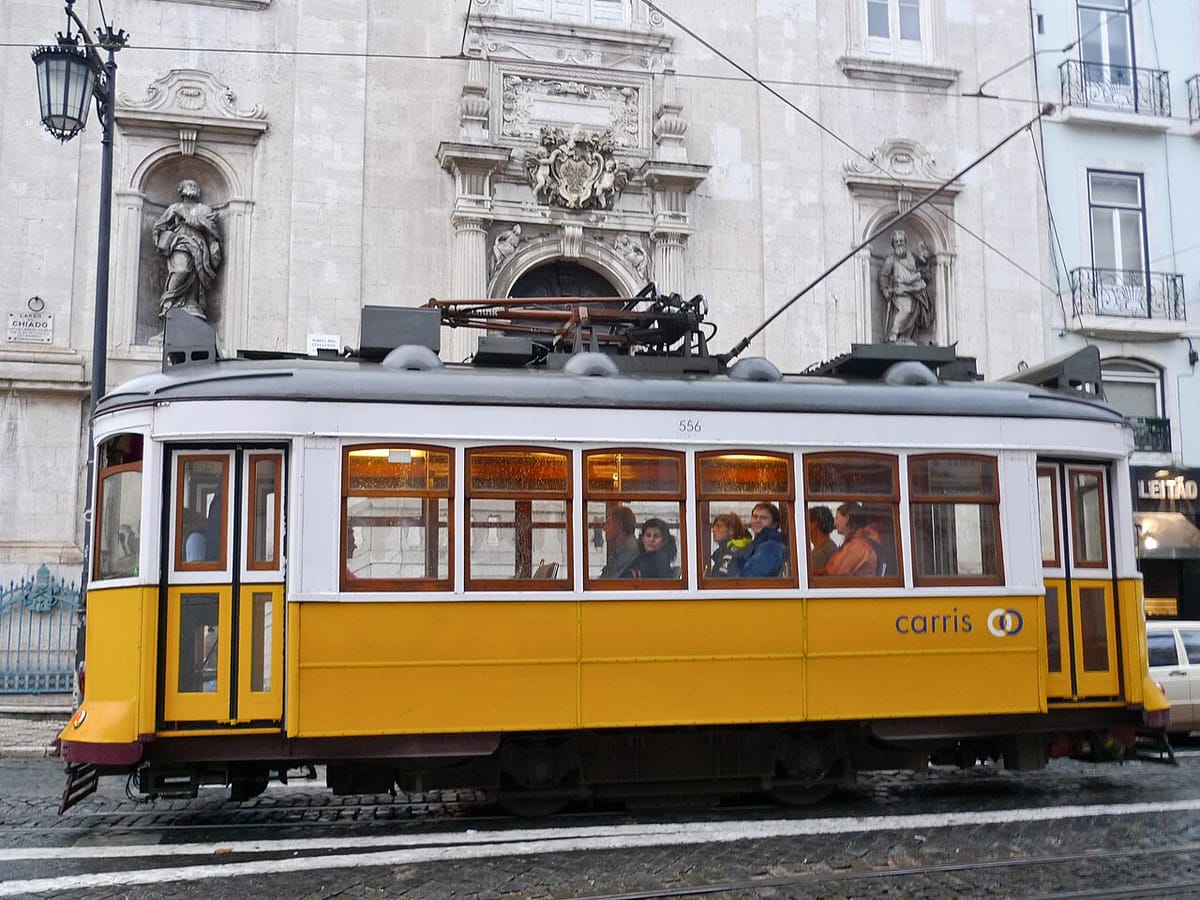
Portugal now has its first dedicated safety and licensing law for metros, light rail, trams, isolated railway lines and tourist light trains. Decreto-Lei n.º 215/2026, published in the Diário da República (the official gazette) on 11 November, also gives a named regulator explicit powers over historic funiculars and street lifts, under a regime the government approved after the Glória funicular derailment in Lisbon.
The decree enters into force on 12 November. Its new regulation takes effect nine months later.
Who licenses and who checks safety
The work is split between two bodies. The Instituto da Mobilidade e dos Transportes (IMT, the transport institute) issues the licence to run passenger services. Licences last up to five years and are renewable. Operators must prove good standing, financial and technical capacity, and hold civil liability insurance of at least 10 million euros for metro, light rail and isolated lines, or 5 million euros for trams and tourist trains.
The Autoridade da Mobilidade e dos Transportes (AMT, the transport regulator) handles safety. Metro, light rail and isolated-line operators need an AMT safety certificate backed by a documented safety management system. Tram and tourist train operators need a simplified safety management system and a named technical safety manager. The AMT must authorise construction, new lines and stations, and every vehicle. The AMT takes over these safety powers from the IMT once the IMT's restructuring under Decreto-Lei n.º 179/2026 is complete.
Maintenance, inspections and incident reporting
On metro, light rail and isolated lines, every vehicle must have an entity responsible for its maintenance, certified by an accredited body. All operators must send the AMT a safety report by 31 May each year and notify it of safety-relevant accidents and incidents; the AMT will set the reporting rules. The AMT can audit and inspect at any time. If it finds a serious risk, it can restrict or suspend operations straight away.
Metro and light rail drivers and traffic controllers need an AMT certificate valid for six years. They face medical and psychological checks every three years, yearly after age 55, and employers must screen safety staff for alcohol and drugs.
Fines for companies run from 10,000 to 44,891.81 euros for offences such as operating without a licence or safety certificate, or putting a line or vehicle into service without authorisation. For individuals the range is 1,250 to 3,740 euros.
Funiculars and historic lifts
The decree changes the cable installations law (Decreto-Lei n.º 34/2020) to cover funiculars and lifts that are classed as historic, cultural or heritage installations, entered service before 1 January 1986 and never received a service authorisation. They now need AMT authorisation to enter service, and running one without it becomes an offence. The preamble says this follows a safety recommendation from the GPIAAF (the rail and air accident investigation office). Observador reported in August that the government approved the regime in response to the Glória derailment of 3 September 2025, which killed 16 people. It remains the subject of insurance disputes.
What this means for passengers
The obligations fall on operators, not passengers, and they arrive in stages. Metro, light rail and isolated-line operators that already hold a licence from a 2014 IMT instruction have 18 months to comply. Tram and tourist train operators have 12 months to apply for an IMT licence, and anyone already building such a system must send the AMT a safety report within 12 months. The AMT can order changes, restrictions or a suspension if that report falls short. For passengers, every such line will have a named safety regulator able to stop an unsafe service.