Nearly Half of Portugal's Over-65s Struggle With at Least One Household Task, and Women Report It Twice as Often as Men
INE's National Health Survey finds 45.9 percent of people aged 65 and over have difficulty with shopping, cooking, housework or money, and 16.9 percent with personal care. Only 4.6 percent get weekly home support.
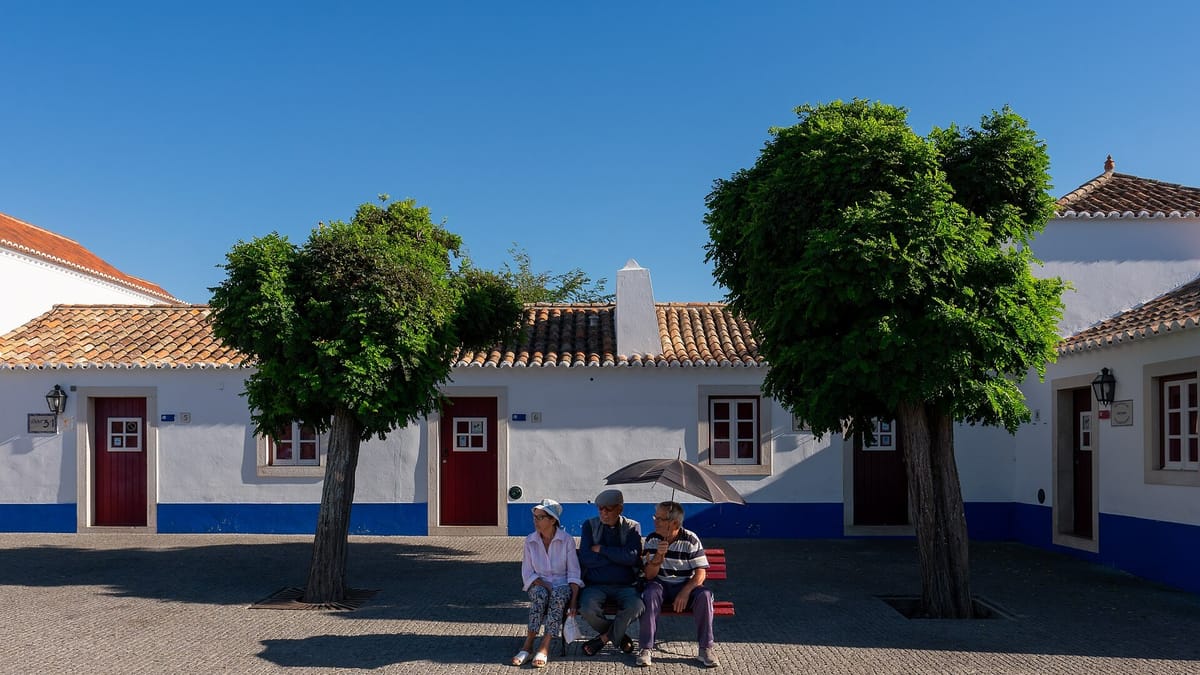
Almost half of Portugal's residents aged 65 and over have trouble with at least one everyday household task, such as shopping, cooking, housework, managing money, taking their medicines or using the telephone. That is 45.9 percent of older people, or about 1.2 million, according to figures the Instituto Nacional de Estatística (INE, the National Statistics Institute) published on Thursday for the International Day of Older Persons.
The figures come from the Inquérito Nacional de Saúde (National Health Survey), which INE carried out in the last quarter of 2025 on a sample of 22,000 households. Its headline results came out in June; Thursday's release looks only at people aged 65 and over.
Women report far more difficulty than men
The gap between the sexes is wide. Of women aged 65 and over, 59.2 percent reported at least one difficulty with household tasks, against 28.5 percent of men. From the age of 85 the figure reaches 78.6 percent.
Basic personal care is a smaller but still large problem. Some 442,400 older people, or 16.9 percent, said they had at least one difficulty looking after themselves: 20.7 percent of women, 11.9 percent of men and 41.0 percent of those aged 85 or more. Almost everyone (97.3 percent) can still eat without help. The tasks that need more movement are another matter: 32.6 percent reported some difficulty bathing or showering, 28.6 percent getting into or out of a bed or chair, and 14.7 percent dressing or undressing.
Among household tasks, the ones most often described as very difficult were occasional heavy jobs (22.3 percent), shopping (13.1 percent) and light housework (8.2 percent). From 85, managing medication and dealing with paperwork and money also became common problems, reported by 21.7 and 22.5 percent.
Movement is the main barrier
Fewer than a third of people aged 65 and over (32.0 percent) live with no physical or sensory limitation at all. Motor limitations affect 38.3 percent of them, against 6.0 percent of people aged 15 to 64, and 46.8 percent of older women against 27.2 percent of older men. The most common severe difficulties were biting and chewing (17.1 percent), climbing or descending 12 steps unaided (16.9 percent) and walking 500 metres unaided (15.4 percent).
Asked where long-term health problems hold them back, older people put transport first (16.9 percent), followed by getting into and using buildings (16.0 percent) and getting about outside the home (15.7 percent).
Little formal help, a lot of informal care
Only 4.6 percent of older people had received home support at least once a week in the previous year, while 22.4 percent had received informal, usually unpaid, help. Older people are also carers themselves: 11.9 percent said they had looked after someone else, slightly more than people aged 25 to 64 (11.4 percent). People caring for a relative may qualify for the informal carer status.
Vaccination is lowest on the islands
In the year before the survey, 69.5 percent of older people had a flu jab. The North was highest at 77.2 percent; the Azores (52.6 percent) and Madeira (55.7 percent) were lowest. Covid-19 vaccination reached 50.1 percent nationally but only 25.3 percent in the Azores and 18.9 percent in Madeira. Just 18.8 percent had been vaccinated against pneumonia in the previous five years, falling to 8.7 percent in the Alentejo. This autumn's free flu and covid campaign is now under way.
The most common chronic conditions among older people were high blood pressure (55.5 percent), back pain (50.0 percent), high cholesterol (48.4 percent) and osteoarthritis (45.6 percent).