Moita's 13 Public Water Wells Get Protection Zones That Bar New Petrol Stations, Cemeteries and Scrapyards Nearby
Five ordinances in Friday's official gazette draw three protection rings around 13 groundwater sources in Moita. New buildings need APA's opinion, septic tanks must be watertight, and petrol stations, cemeteries and landfills are kept out.
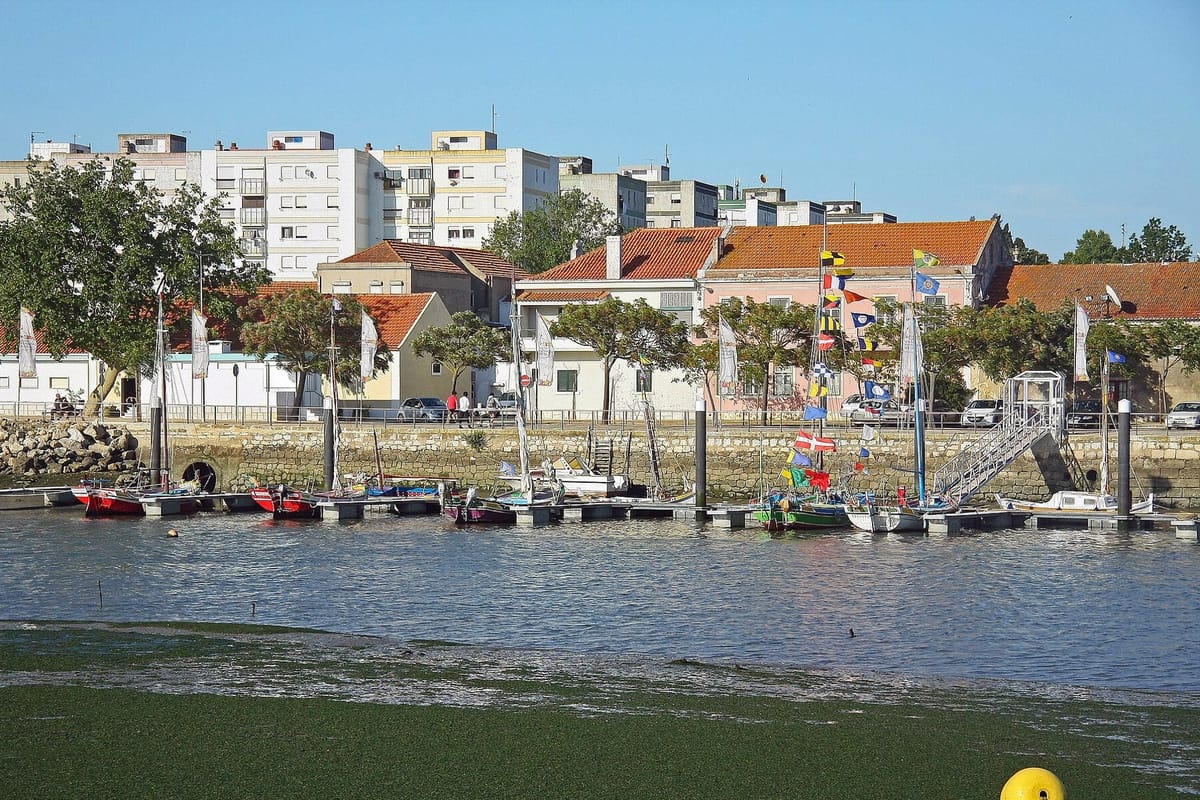
Thirteen groundwater sources in Moita that feed the public water supply now have legal protection zones around them, under five ordinances published in the Diário da República (the official gazette) on Friday. Portarias 535/2026/1 to 539/2026/1 were signed on 16 November by the Secretary of State for the Environment, João Manuel do Amaral Esteves. They take effect on Saturday, 28 November.
The zones cover five well fields in the municipality, on the south bank of the Tagus estuary:
- Moita, Gaio-Rosário and Sarilhos Pequenos: three sources (Portaria 535/2026/1)
- Barra Cheia: two (Portaria 536/2026/1)
- Penteado: one (Portaria 537/2026/1)
- Rego de Água: two (Portaria 538/2026/1)
- Vinha das Pedras: five (Portaria 539/2026/1)
The boundaries were proposed by the Agência Portuguesa do Ambiente (APA, the Portuguese Environment Agency), based on studies by Moita council. The first ordinance replaces two orders from 2013 for the Moita and Gaio-Rosário field.
Three rings around each source
The rules come from Decreto-Lei 382/99 (Decree-Law 382/99), which sets protection zones for groundwater used for drinking. Each ordinance draws three rings, with coordinates in its annexes and a location map in Annex IV:
- Immediate zone: the ground right around each source. It must be fenced and kept clean, and nothing is allowed there except work to maintain and run the source.
- Intermediate zone: petrol stations, car workshops and service stations, scrapyards, cemeteries, landfills, quarries, airfields and polluting industry are banned. So are septic tanks where a public sewer is available. New private boreholes are banned where the home can connect to the public water network, and disused boreholes must be sealed with cement.
- Extended zone: new petrol stations, cemeteries, landfills, scrapyards, airfields, refineries and chemical plants are banned, as are storage and transport of fuels and hazardous substances.
Existing petrol stations, workshops and airfields in the extended zone may stay, but only if the ground under maintenance, repair and fuel-storage areas is sealed and their runoff is collected or treated. Existing cemeteries there may also stay, but the operator of the water sources must monitor water quality and report the results to APA.
What it means for residents
- Building: in an intermediate zone, a new building needs a binding opinion from APA. It can go ahead only if it connects to the municipal sewer or, where that is impossible, has a watertight septic tank.
- Septic tanks: in both outer rings, existing tanks must be replaced or converted to watertight systems. Once a public sewer reaches the area, they must be taken out of use and the property connected.
- Farming and gardens: grazing and farming in the intermediate zone need APA's prior opinion, as do persistent pesticides in the extended zone. Manure stores must be on sealed ground with effluent collection.
- Boreholes: in the extended zone, a new borehole needs a water-use permit.
Anyone who owns land near one of the five well fields can check the maps at the end of each ordinance. Questions about a specific plot go to Moita council or APA's Tagus and West regional office.