ModA Results Reach Parents of Year 4 and Year 6 Pupils: Maths Edges Up, Reading Slips, and Only Half Those Entered for One Non-Native Portuguese Test Sat It
EduQA released the 2026 ModA results to schools and families on 20 October. National averages rose in maths and written Portuguese but fell in reading, and just 738 of the 1,477 Year 4 pupils entered for the B1 test in Portuguese as a non-native language sat it.
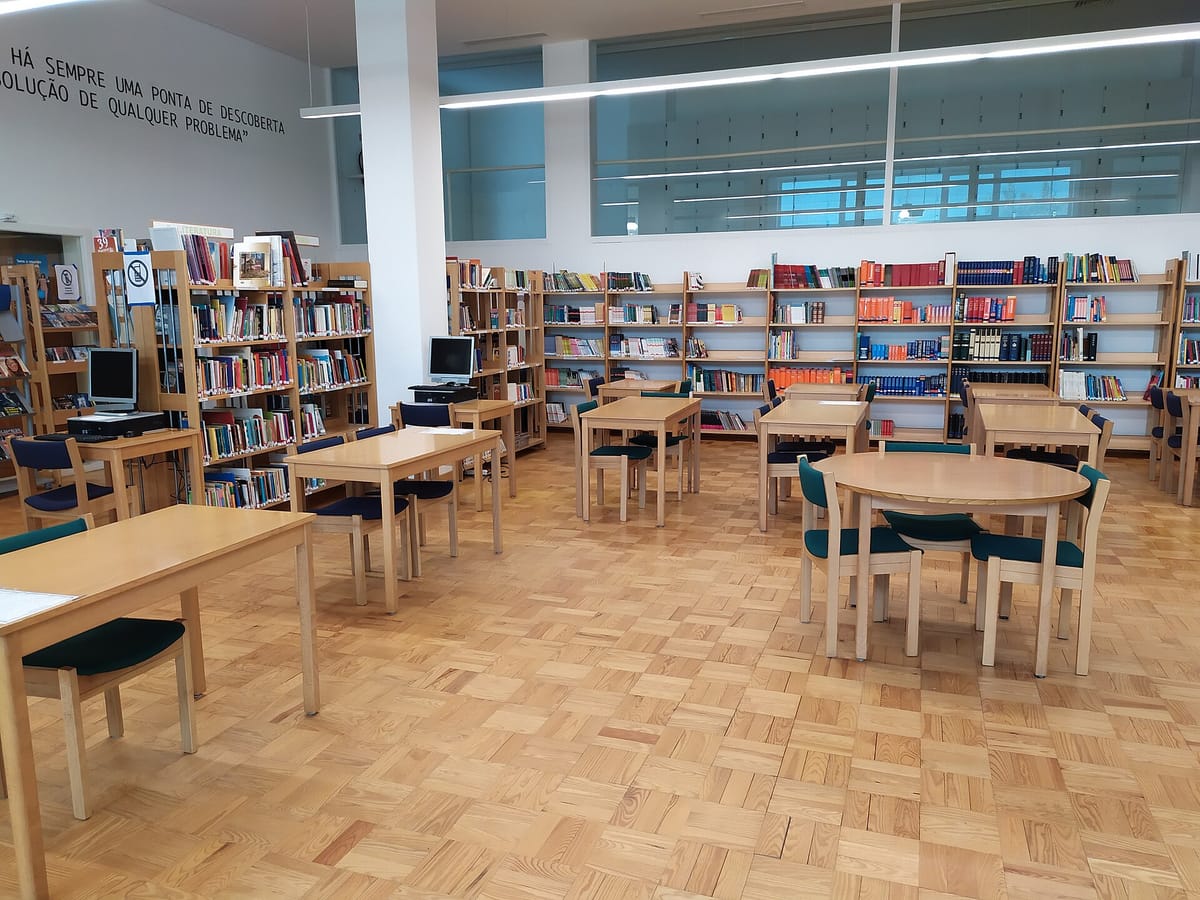
Families of children who were in Year 4 or Year 6 last school year can now see how they did in the ModA tests, the national on-screen assessments sat in May and June. The Instituto de Educação, Qualidade e Avaliação (EduQA, the education quality and assessment agency) released the results to schools, pupils and parents on Tuesday 20 October, with a national report showing small gains in maths and in written Portuguese, and slips in reading.
The national figures also show that only half of the Year 4 pupils entered for the B1 test in Português Língua Não Materna (PLNM, Portuguese as a non-native language) actually sat it: 738 of 1,477.
What the ModA tests are
The Provas de Monitorização das Aprendizagens (ModA, learning monitoring tests) were held for the first time in 2025 and are sat by every pupil in Years 4 and 6, in public and private schools. EduQA says they exist to follow how learning develops through basic schooling, to diagnose each child's strengths and weaknesses, and to inform decisions in the classroom and in education policy.
Every year the tests cover Portuguese, maths, PLNM at levels A2 and B1, and Português Língua Segunda (PL2, Portuguese as a second language). A rotating subject is added: this year it was arts education in Year 4 and English in Year 6. This year's tests ran from 27 May to 9 June, and 514,402 were sat: 246,073 in Year 4 and 268,329 in Year 6. EduQA counts tests rather than pupils.
How the results are reported
Scores are given in "Pontos ModA" on a scale of 0 to 100. EduQA stresses that the score is not the percentage of correct answers but a measure of proficiency, built with the same kind of statistical model used in the international PISA and TIMSS studies, so that results can be compared from year to year even when the questions change. Each child is also placed in one of six performance levels for the whole test (Inicial, Básico 1, Básico 2, Proficiente 1, Proficiente 2 and Avançado) and in one of four levels for each part of it.
The individual report shows the pupil's score and level for the test and each of its parts, alongside the averages for the school, the municipality and the country. EduQA says it was designed mainly for teachers but also to be read easily by pupils and parents. Reports are held on a results platform that each school and each parent or guardian (encarregado de educação) reaches with their own credentials. EduQA's documents do not explain how parents receive theirs, so the school is the place to ask.
The national results
This is the first year two editions can be compared. National averages, 2025 then 2026:
- Maths, Year 4: 50.9 to 52.5, up in both reasoning and problem-solving;
- Maths, Year 6: 51.3 to 52.3, with problem-solving up (47.4 to 51.5) but reasoning and communicating down (54.0 to 51.8);
- Portuguese, Year 4: 51.4 to 51.7, with writing up (47.4 to 50.0) and reading comprehension down (53.7 to 51.8);
- Portuguese, Year 6: 48.6 to 49.4, with writing up (45.0 to 47.9) and reading comprehension down (51.4 to 49.5);
- Arts education, Year 4: 52.1 (first year);
- English, Year 6: 48.1, with speaking the weakest part at 45.4. English was a Year 4 subject in 2025, so there is no comparison.
Portuguese for non-native speakers
PLNM pupils, children whose first language is not Portuguese, sit their own tests at level A2 or B1. Entries are small next to the roughly 94,000 to 100,000 pupils entered for Portuguese in each year, but they are the national measure of how children still learning the language are getting on. The completion rates were uneven:
- Year 4, A2: 967 of 1,259 entered (76.8 percent);
- Year 4, B1: 738 of 1,477 (50.0 percent);
- Year 6, A2: 1,361 of 1,601 (85.0 percent);
- Year 6, B1: 711 of 810 (87.8 percent).
EduQA gives no reason for the low Year 4 B1 figure, and its report does not comment on it. Overall completion was 80.5 percent in Year 4 and 94.4 percent in Year 6, which EduQA calls high "even in a period when there were strikes". In Year 4 even the main subjects were lower, from 77.2 percent in maths to 83.1 percent in Portuguese, against 91.1 to 99.9 percent for the main Year 6 tests.
On results, the A2 average, for Years 4 and 6 together, rose from 58.0 to 59.2. EduQA highlights the gains in writing (43.3 to 55.4) and speaking (46.6 to 52.0), though understanding fell (62.5 to 59.4). The comparison is not exact: the report notes that the A2 and B1 results were processed together in 2025. B1 is reported separately for the first time, at 52.9, with speaking the weakest part at 44.7. The speaking parts of the PLNM and English tests were marked live by teachers at the pupil's own school, using a script supplied by EduQA; everything else was marked by EduQA's own teams.
The results arrive a month into a new school year, with the pupils who sat them now in Years 5 and 7. We reported the start of this year's tests in May, and the electronic marking failures that delayed the secondary exam results in July.