Markets, Business & Tech Briefing: PSI at Four-Month Highs, INE Clears the REN Purchase, a €75 Million Porto Tower
📋 In This Edition
- Weekend Wrap: Lisbon Finishes the Week Back at April's Levels
- The Statisticians Clear the REN Purchase of a Deficit Hit, but Not of the Politics
- A €75 Million Porto Tower Trades 80 Luxury Flats for 249 Ordinary Ones
- Securitas Portugal Puts Its Next €151 Million Behind Sensors Rather Than Guards
- Bonds, the Euro, and a Bigger Fuel Rebate for Monday
- The Week Ahead
Weekend Wrap: Lisbon Finishes the Week Back at April's Levels
Euronext Lisbon is dark for the weekend, so this is a weekend edition written off the closing bell. The PSI (Portuguese Stock Index) ended Friday, 21 August, at 9,354.78 points, and the more useful number is the one that spans the five sessions: the index started the week at 9,254.52 and finished 100.26 points higher, a gain of 1.08%. That is enough to put Lisbon at its highest close in four months and within about 1.7% of its 52-week peak of 9,516.43, a level last touched in the spring before the summer's drawdown.
The week had no single engine. It opened softly, slipping on Monday and again on Wednesday, when Galp Energia went ex-dividend and drained a chunk of index weight, then turned on Thursday when the utilities did the lifting (the PSI added 0.48% to 9,282.81), and closed on Friday with a 0.78% advance that came from an entirely different quarter. Fourteen of the sixteen index members rose on the final day, led by Jerónimo Martins at 3.24% to €17.54, the cork group Corticeira Amorim at 3.10% to €6.99 and the paper and cement holding Semapa at 1.97% to €20.70. Only the EDP family gave ground, with EDP off 0.65% to €4.62 and EDP Renováveis (EDP Renewables) off 0.59% to €13.47.
Read across the whole week rather than any one day, the pattern is a market rotating rather than re-rating. Energy carried Lisbon through the middle of August; by Friday the leadership had passed to the consumer and industrial names, with CTT and Sonae both up 1.26%, Navigator up 1.17% to €3.28, the builder Mota-Engil up 1.12% to €4.52, the restaurant group Ibersol up 1.11% to €9.99, the telecoms operator NOS up 0.99% to €4.87 and BCP, or Banco Comercial Português, up 0.78% to €1.10. The grid operator REN, or Redes Energéticas Nacionais (National Energy Networks), barely moved at €3.55 despite being the week's most-discussed stock away from the screen. Teixeira Duarte closed 0.84% higher at €0.48 on the day it reported a 71% fall in half-year profit to €11.4 million, a drop that says more about the €46.5 million one-off that flattered last year's comparison than about a construction group whose order book has climbed to €1.8 billion.
A second consecutive weekly gain, with breadth improving rather than narrowing, is the sort of tape that usually reflects money coming back to a small market rather than conviction about any one company. It also leaves the index with less room for error: at 9,354.78, Lisbon is priced for the good news it has already had.
The Statisticians Clear the REN Purchase of a Deficit Hit, but Not of the Politics
The most consequential Portuguese business news of the weekend came from a statistics office rather than a boardroom. The INE, or Instituto Nacional de Estatística (National Statistics Institute), has confirmed that the state's return to REN's share register will be booked in the financial account, with no impact on the general government balance and no direct effect on public debt. In accounting terms, the state is swapping one asset (cash) for another (shares), and the national accounts treat that as a transaction rather than as spending.
The operation itself we covered when it was priced: Parpública, the state holding company, is buying 13.7% of REN from Pontegadea Inversiones, the family office of the Zara founder Amancio Ortega, for €380 million. That is roughly €55 million, or 17%, above where REN traded on the day the deal was announced, and it should return about €15 million a year in dividends to the public purse. Parpública will fund it from its own resources, topped up by a €42.77 million capital injection made shortly before the announcement that lifted its share capital to €2.042 billion; only if those resources fall short would the State Budget's Chapter 60, the line reserved for exceptional investment in financial assets, be opened.
The INE's ruling settles the narrow question and leaves the wide one open. It removes the argument that the purchase blows a hole in a budget the government has spent two years protecting, which matters given that Portugal's debt ratio ticked back up to 92.9% of GDP in the second quarter. It does not answer why the state paid a 17% premium for a minority stake it cannot control with, why Pontegadea was the counterparty of choice, or what a 13.7% holding actually buys in the way of influence over energy prices, which is the justification the prime minister, Luís Montenegro, has offered. The Tribunal de Contas (Court of Auditors) has opened its review and must still sign off, and José Luís Carneiro, secretary-general of the PS (Socialist Party), has put all three questions to the government in writing. For investors, the practical read is simpler: REN now has a large, patient, politically motivated shareholder, which tends to be good for the dividend and less good for anything that requires the company to move quickly.
A €75 Million Porto Tower Trades 80 Luxury Flats for 249 Ordinary Ones
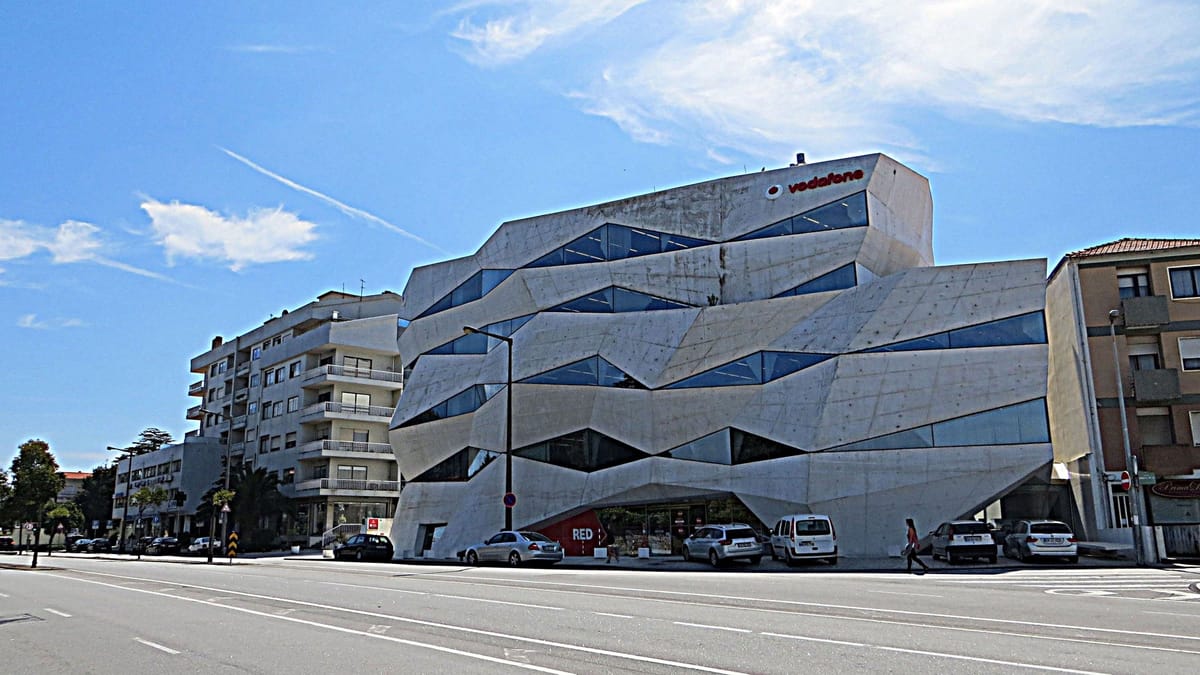
The developer Mesmo Valor confirmed on Saturday that it will invest €75 million in a residential tower with 249 homes on Avenida da Boavista, the long arterial road that runs from central Porto to the sea. The site, near the Foco district and the VCI ring road, was bought from ZFC, and the interesting part is what the plan used to be: roughly 80 luxury apartments plus office floors. What replaces it is 249 units starting at about 75 square metres, priced between €250,000 and €500,000.
That is a deliberate move down-market, and it is a rational one. Porto's luxury pipeline has thickened considerably (the Boavista corridor alone has absorbed several boutique schemes in the last eighteen months), while the mid-market has almost nothing new at scale. With buying a home now consuming 76% of a Portuguese salary, a €250,000 flat is hardly cheap by local incomes; it is, however, roughly a third of what the site's previous concept would have asked, and it is the kind of product that clears.
Mesmo Valor is not doing this in isolation. The group has €90 million committed to four towers on the former Campo do Salgueiros site and €60 million to Oporto Plaza, on the land that held the city's equestrian centre. Taken together, that is more than €225 million of announced residential investment from a single promoter in one city, which is a useful counterweight to the story Portuguese real estate has been telling all year, in which foreign capital chases hotels and domestic capital struggles to make housing arithmetic work. Whether 249 homes arrive on time is another matter; licensing on Avenida da Boavista has not historically been quick.
Securitas Portugal Puts Its Next €151 Million Behind Sensors Rather Than Guards
Securitas Portugal, marking 60 years in the country, expects to close 2026 with revenue of about €151 million and around 12% of the Portuguese private security market, up from close to €145 million in 2025. The number that says more about the business is a different one: technology now accounts for more than half of its activity and roughly 75% of its results.
Frederico Paiva, the chief executive, framed the shift as a move from reactive to predictive security, built on artificial intelligence, connected sensors, video analytics and centralised management platforms, with remote surveillance, intelligent monitoring, electronic solutions and fire safety as the growth lines. The company has restructured internally around technology, information security, solutions and innovation, sustainability and customer care. "The security professional today needs to combine human and technological competencies," Paiva said, adding that technology is what allows the group to raise operational efficiency.
The wider context makes the pivot look less like marketing. Portuguese private security billed about €1.2 billion in 2024, growing 8.5%, in a sector that has long competed on the hourly cost of a uniformed guard in a market where labour is scarce and getting dearer. A firm that can bill for sensors and software instead of headcount escapes that squeeze; one that cannot, does not. For a services economy where employers keep complaining about the cost and availability of staff, Securitas is a small, legible example of how that pressure gets answered.
Bonds, the Euro, and a Bigger Fuel Rebate for Monday
Portugal's 10-year Obrigações do Tesouro (Treasury bonds) ended the week yielding about 3.62%, against roughly 3.26% on the German 10-year Bund, leaving the spread at about 36 basis points and still close to its narrowest ever. The comfort is confined to the front of the curve. The 20-year rate has drifted to around 4.15% in the secondary market, above Spain's equivalent and well above the 3.875% Lisbon paid on its syndicated issue in May, which is the clearest local sign of the global repricing of long-dated debt. The IGCP, or Agência de Gestão da Tesouraria e da Dívida Pública (Treasury and Public Debt Management Agency), had completed about 65% of its 2026 financing programme by June, so there is no urgency to issue into that. The euro finished around $1.1683, near its firmest against the dollar since June.
Drivers get the week's other piece of state arithmetic. A portaria (ministerial order) published in the Diário da República on Friday raises the extraordinary ISP rebate, the discount on the Imposto sobre os Produtos Petrolíferos e Energéticos (Tax on Petroleum and Energy Products), from Monday 24 August to €81.61 per 1,000 litres of road diesel and €53.98 per 1,000 litres of petrol on the mainland. That is 8.161 cents and 5.398 cents a litre, up €1.09 and €4.37 per 1,000 litres respectively on the week. The Automóvel Club de Portugal (Automobile Club of Portugal) expects diesel to rise about 3.5 cents and petrol about 2.5 cents at the pump. After a near ten-cent jump a week ago, this one is a nudge rather than a shock, and it keeps diesel just above the €2 mark.
The Week Ahead
Lisbon reopens on Monday, 24 August, with an empty domestic data calendar and earnings season behind it, so the week's direction will again be set abroad and at the long end of the curve rather than on the trading floor. Three threads are worth watching: whether Jerónimo Martins holds a 3.24% move made with no company announcement behind it, since gains of that size in the index's largest consumer name are as often repositioning as re-rating; whether the 20-year yield keeps trading through Spain's, an anomaly that either corrects or hardens into the cost base of the 2027 budget; and whether the Tribunal de Contas raises anything awkward as it reviews the REN purchase. Our best guess for Monday is a quiet, slightly softer open, with Lisbon consolidating a four-month high rather than pressing on toward 9,500.