Lula Leaves Lisbon With No Signed Treaties — But With Montenegro Quoting 235,000 Brazilian Regularizations and a Mercosur Pitch as Portugal's Strategic Wedge
Brazilian President Luiz Inácio Lula da Silva concluded a one-day official visit to Lisbon on Tuesday 21 April with a single public verdict — “ muito boa, maravilhosa ” (very good, wonderful) — and with no signed bilateral treaty to show...
Brazilian President Luiz Inácio Lula da Silva concluded a one-day official visit to Lisbon on Tuesday 21 April with a single public verdict — “muito boa, maravilhosa” (very good, wonderful) — and with no signed bilateral treaty to show for it. What the visit produced instead was a tightly choreographed joint statement that crystallised the talking points both governments now intend to repeat for the rest of the year: Brazilian integration in Portugal as an “impeccable” success story, the Mercosur–EU agreement entering into force on 1 May as the keystone of a Lisbon-mediated commercial reset, and a careful exchange of pointed messages on immigration and xenophobia.
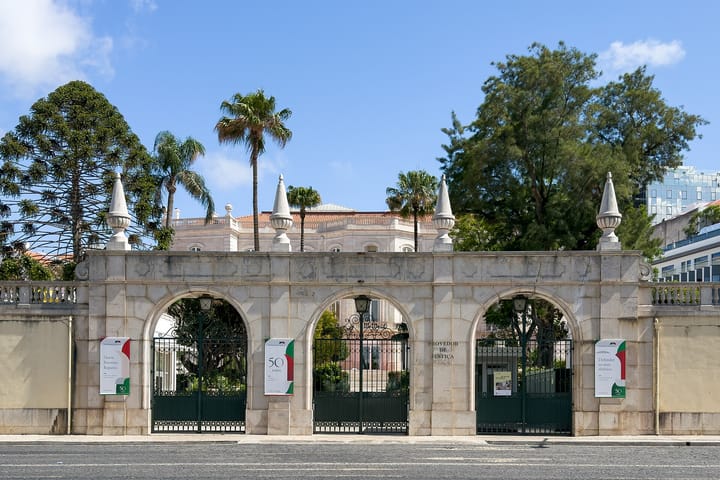
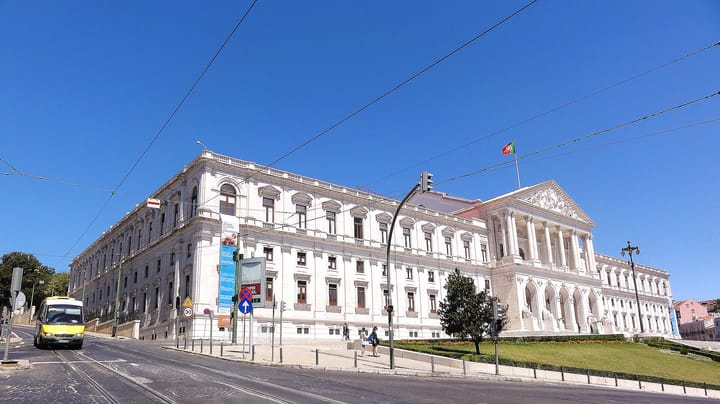
Lula spent the morning at the Palácio de São Bento with Prime Minister Luís Montenegro, then crossed the Tagus for a working lunch with the President of the Republic, António José Seguro — their first ever in-person meeting since Seguro took office on 9 March. The day was bookended by competing demonstrations outside the Embassy of Brazil in Lapa and along the Belém waterfront, with hundreds of pro- and anti-Lula protesters facing off in front of riot police. Chega leader André Ventura had already promised, on 19 April, that the visit “não vai ser igual à de Barcelona” — a pointed reference to the standing ovation Lula received in the Catalan capital the week before.
The Number Montenegro Wanted Everyone to Carry Home: 235,000
Standing alongside Lula at São Bento, Montenegro reached for one statistic above all others: the Portuguese state, he said, had “regularised more than 235,000 processes of Brazilian immigrants in Portugal” over the last two years, against a Brazilian community that now exceeds 500,000 residents. He framed the integration of that community as “absolutamente impecável” in social and economic terms, and noted that refusal rates on Brazilian residency applications remained below 5 per cent.
The choice of figure is no accident. The 235,000 number is essentially the headline output of the AIMA (Agência para a Integração, Migrações e Asilo) backlog-clearing operation that the previous Costa government launched and the Montenegro government has continued — work that finally cleared a long-standing CPLP-permit logjam. Quoting it next to Lula gave Montenegro a way to neutralise the most uncomfortable subtext of the visit: that the same government has spent the last twelve months tightening Portuguese nationality and family-reunification rules in ways the Brazilian community has experienced as hostile. Just three days before Lula landed, AIMA quietly reopened its CPLP family-reunification portal — limited for now to minor children — in what looks in retrospect like a deliberately timed olive branch.
Lula did not let the message pass unanswered. According to the joint declaration and read-outs from both Público and Observador, the Brazilian side reiterated its interest in “working jointly to combat xenophobia” and stressed the importance of guaranteeing “legal security” for Brazilians “in the context of changes to Portuguese immigration laws” — diplomatic shorthand for the ongoing nationality-law reform and the tightened residency criteria that have generated months of headlines.
Mercosur, the 1 May Switch, and Lisbon as “Gateway”
If the immigration choreography was about damage control, the Mercosur framing was about positioning. With the EU–Mercosur agreement entering into force on 1 May 2026, Lula explicitly cast Portugal as “a grande porta de entrada dos interesses empresariais brasileiros” in Europe — the great gateway for Brazilian business interests. Montenegro, in turn, called the deal “a moment from which Brazil can project itself more objectively and deeply in the European economy.”
The numbers help explain why both sides are leaning so hard on the framing. Total Brazil–Portugal trade in 2025 came to USD 4.55 billion, with a Brazilian surplus: USD 3.30 billion in Brazilian exports against USD 1.25 billion in Portuguese sales the other way. By the standards of a relationship that both governments routinely describe as “privilegiada”, that figure is, as Público put it, “tímida” — modest. Brazilian exports are dominated by crude petroleum (60.6 per cent), petroleum-derived fuel oils (8.5 per cent) and aircraft, equipment and parts (6.5 per cent — overwhelmingly Embraer). Portugal sells back vegetable oils (33.5 per cent), aircraft equipment (18 per cent) and alcoholic beverages (6.8 per cent).
That sectoral mix tells you where the Mercosur upside is most likely to land first: aeronautics partnerships (especially around the OGMA-Embraer-EmbraerPortugal cluster at Alverca), construction joint ventures of the type Lula promised executive-level conversations on, and Portuguese exposure to Brazilian oil, gas, infrastructure and electricity supply chains. None of that was signed on Tuesday — but with Mercosur's switch flipping in nine days, both sides have an obvious incentive to lock in their narrative now.
What Foreign Residents Should Actually Take Away
For Brazilians and other foreign residents in Portugal, the meaningful signals from Tuesday's visit are not in what was signed but in what was telegraphed.
One — the AIMA family-reunification portal reopening is now politically anchored at the head-of-government level on both sides, which makes any future re-closure considerably harder for Lisbon to justify.
Two — the Brazilian government is now explicitly on the record demanding “legal security” on Portuguese nationality and residency reform, which gives Brazilian-community representatives in Portugal a stronger lobbying anchor as the nationality-law package moves through Parliament.
Three — the long-running treaty on automatic recognition of Brazilian primary- and secondary-school records, which Montenegro recently sent to Parliament for ratification, is now also on Lula's wish-list to extend to university diplomas. If that lands, it would dramatically lower the cost — both bureaucratic and financial — of moving Brazilian degree-holders into the Portuguese labour market and university system.
And four — the Mercosur switch on 1 May is going to reshape the commercial conversation in ways that have been in train for months but will now move much faster. Companies hiring across the Atlantic, family offices structuring Brazilian capital flows into Portugal, and exporters in both directions all just got a publicly endorsed political framework for the rest of 2026.
What did not happen on Tuesday is also worth naming. There was no Embraer order, no Mercosur side-letter on Portuguese-language teacher mobility, no F-39 industrial offset, no defence procurement announcement. Lula came, performed the choreography, took his lunch with President Seguro, and left. The treaty count for the day was zero. But the political baseline against which the rest of the legislature will negotiate immigration, education and trade with the largest non-EU community living in Portugal just shifted — and the number you will hear quoted back at every future bilateral is now 235,000. On the CPLP and Cabo Verde bilateral rail, our 19 May Cabo Verde legislativas read — PAICV reclaims the Assembleia Nacional in Praia with an absolute majority on 17 May, Francisco Carvalho lands 37 of 72 seats including the diaspora circles, Ulisses Correia e Silva steps down from the MpD leadership, and Montenegro wires the felicitation from Lisbon by mid-morning Monday sets the latest reference. On the driving-licence-side, our 2026 practical guide to exchanging your foreign driving licence for the Portuguese carta de condução — the IMT online portal and Centro de Exames in-person tracks, the EU and EEA administrative path, the bilateral-agreement framework for the Brazilian, UK, Canadian and CPLP-area cohorts, the 90-day residency window, the medical-certificate chain and the Carta por Pontos system sets the latest reference. On the EU foreign-policy and diplomatic-postings side of the file, our 4 June read on Kaja Kallas's 33-ambassador EEAS rotation — Sofia Moreira de Sousa moving from the Commission's Lisbon Representation to EU Ambassador in Tirana (Albania) and Francisco André transferring from Mexico City to EU Ambassador in Brasília (Brazil), with the EU-Mercosur ratification window framing the André posting and the Western Balkans Cluster 1 fundamentals framing the Moreira de Sousa brief sets the latest reference. On the Web Summit Rio, Startup Portugal, Unicorn Factory Lisboa and Brazil-export side of the file, our 8 June read on the twenty-seven Portuguese startups touching down at Web Summit Rio through 11 June carrying €20 million in backing and 269 employees across AI, health-tech and defence — Startup Portugal and Unicorn Factory Lisboa anchor the fourth-consecutive Brazil push, with Lisboa, Funchal, Aveiro and Mirandela postcodes on the manifest and AICEP on the Brazilian commercial-attaché desk sets the latest reference. On the cross-border pensions side of the file, our guide to how years worked abroad count toward a Portuguese pension explains EU aggregation, the pro-rata pension and the bilateral agreements that make foreign contributions count.