Greenpeace Puts a Number on Portugal's Fossil-Fuel Bill — €7 Billion a Year Saved, €3.4 Billion a Year Spent, and 2040 as the Finish Line
A UTS-modelled Greenpeace report argues that decarbonising Portugal by 2040 — a decade ahead of the EU target — would cost €3.4bn a year, less than the €3.6bn currently trajectory, while eliminating €7bn in annual fossil imports. Nuclear and CCS are explicitly excluded.
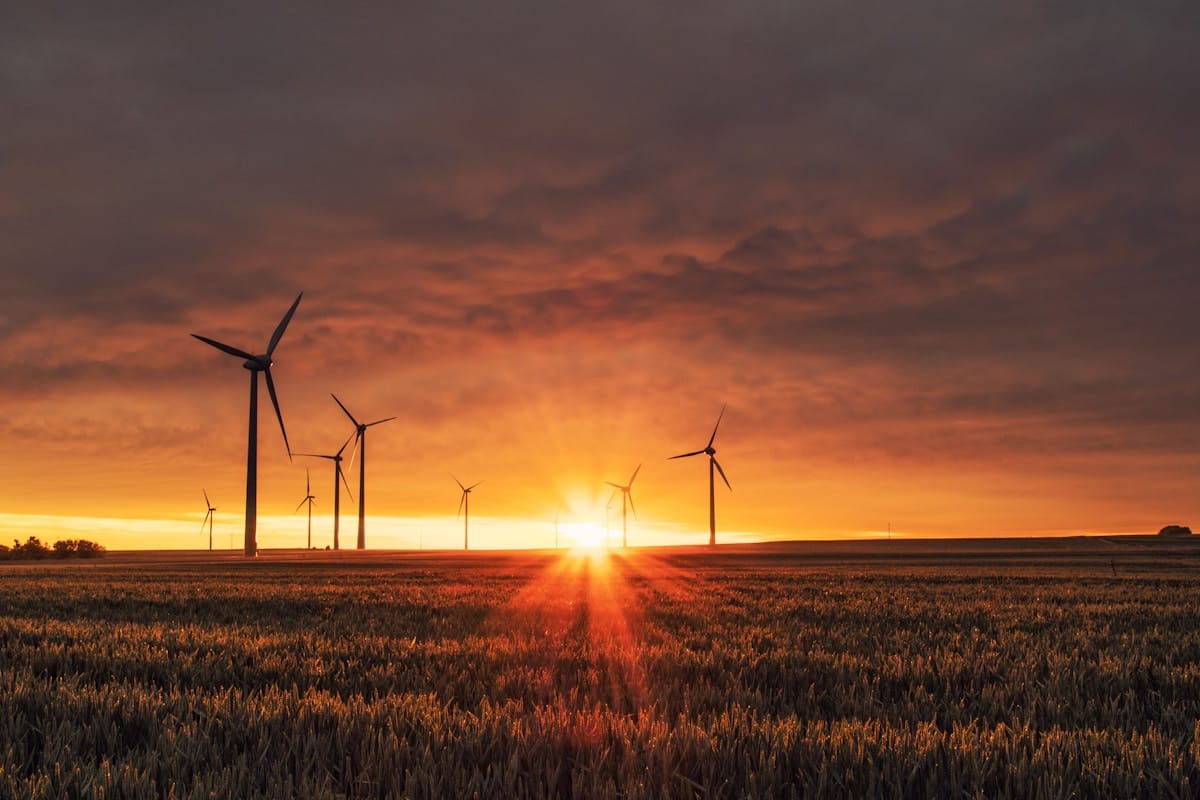
Greenpeace published an Iberian decarbonisation model on 21 April that puts harder numbers on a softer debate. The study — prepared by the Institute for Sustainable Futures at the University of Technology Sydney — argues that Portugal could fully decarbonise its economy by 2040, a decade earlier than the EU's 2050 target, while spending less on energy investment than the current policy trajectory and saving €7 billion a year in fossil imports.
The top-line figure: €3.4 billion of annual investment from now until 2040 under the Greenpeace scenario, versus €3.6 billion a year under "business as usual". Scaled to the Iberian peninsula as a whole — the report treats Portugal and Spain as a single energy system, because the Iberian electricity market (MIBEL) effectively already does — the numbers become €27 billion in annual investment against €32 billion in annual fossil-fuel savings. By 2040, CO2 emissions would be 99 per cent lower than today.
The three pillars
The scenario is deliberately narrow: it rests on three levers — energy sufficiency, technical efficiency, and 100 per cent renewables — and explicitly excludes both nuclear power and carbon capture and storage. That is a political choice, not an engineering one: Greenpeace's position on both technologies is well known, and the framing will draw predictable pushback from Spain's Partido Popular (which has been pushing to delay the 2027–2030 nuclear phase-out) and from the Portuguese gas lobby, which has argued that CCS-equipped combined-cycle plants buy flexibility the all-renewable scenario does not.
The modellers ran continuous hourly simulation to stress-test the reliability claim — a standard rebuttal to the "what about when the wind doesn't blow" critique — and concluded that the Iberian system, with its deep hydro, its rapidly growing battery stack, and its sun-plus-wind diurnal complementarity, can sustain 24/7 supply without thermal back-up.
Where the numbers cut deepest
The 2035 milestone is the one that should interest Portuguese policymakers. Under the Greenpeace trajectory, gas demand falls 77 per cent and oil demand falls 68 per cent by 2035 — both roughly a decade ahead of what the Portuguese Plano Nacional de Energia e Clima (PNEC 2030) currently contemplates. That implies accelerated retirement of refining capacity at Sines and Matosinhos, a different trajectory for the Sines LNG terminal, and a much steeper electrification curve in heavy transport and industry.
Spain's coal phase-out is slated for 2030 in the scenario — consistent with the current Spanish policy line, though not with the PP's proposed extensions. Portugal already exited coal with the closure of Sines and Pego in 2021, so the lift-and-shift is mostly on the gas and liquid-fuels side.
The missing government response
At the time of publication neither the Environment Ministry nor the Energy Secretariat had commented on the study. The political calendar works against quick movement: the government is preparing its revised PNEC 2030 update for submission to Brussels in June, and officials have been deliberately conservative about committing to more aggressive milestones while Budget 2026 is still being executed. The Agência Portuguesa do Ambiente has historically treated Greenpeace's Iberian scenarios as useful pressure but not as adopted policy.
Where the scenario is most contestable
Three places. The €3.4 billion investment figure relies on continuing current cost declines in solar PV, wind, and battery storage — declines that have wobbled since 2024 as Chinese export controls on critical minerals and European content-rule protectionism have pushed capex back up. The 2040 deadline implies a permitting and grid-connection pace that Portugal's own REN and DGEG have not yet hit — transmission reinforcement is the current bottleneck, not generation. And the absence of any flexibility from nuclear or CCS means the Iberian system becomes fully dependent on battery economics holding their current curve, which is the largest single uncertainty.
What to watch
The government's PNEC 2030 revision, due to Brussels in June, will show whether Lisbon is willing to tighten its own milestones. The MIBEL capacity market consultation, which reopens this quarter, will settle the question of whether Portugal is willing to pay for gas-fired flexibility beyond 2030. And the Spanish general election campaign — due by end-2027 but running on an earlier track now — will determine whether the Greenpeace 2040 path has a governmental partner on the other side of the border.