Lightsource bp Dropped Its 240 Million Euro Beira Solar Plant, and Shrank the Neighbouring One by 35 Percent
The assessors counted 479 cork and holm oaks and an Iberian imperial eagle. Reworking the plant to answer that, the promoter says, stopped adding up financially.
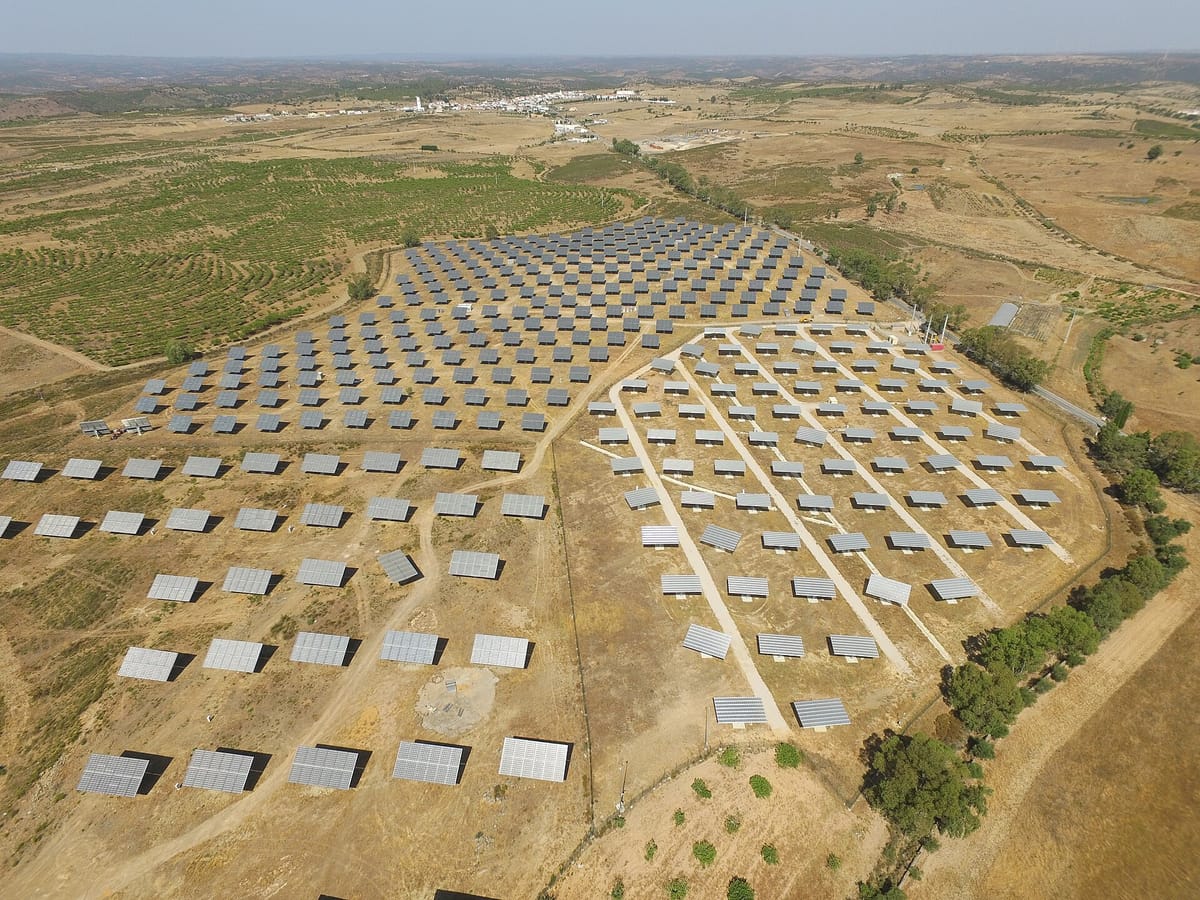
Lightsource bp has abandoned the Beira solar plant, a 266 megawatt project spread across Castelo Branco and Idanha-a-Nova that carried an estimated investment of about 240 million euros. On the same day, the company confirmed it has cut its other Beira Baixa megaproject, Sophia, by about a third.
The Beira decision follows a negative opinion from the environmental assessment committee at the end of 2025. Under that process the promoter had six months to reconfigure the plant. It has now concluded that "the conditions of financial viability necessary to proceed with the development of the reformulated solution were not met", and that "the project, in the terms previously presented and in that location, will not go ahead".
The company says no reformulated version will be submitted under the current environmental impact assessment procedure. Asked what tipped the balance, Lightsource bp pointed to no single factor, attributing the outcome to "a joint analysis of the changes that would have to be introduced". It declined to say how much it had already spent; the money went on development work, technical and environmental studies, engineering and licensing.
What the assessors objected to
The rejected plant would have covered more than 500 hectares across several parishes of Castelo Branco, including Monforte da Beira, Malpica do Tejo and Benquerenças, and of Idanha-a-Nova, including Ladoeiro. The assessment committee found cumulative impacts it rated significant and very significant, with a threat to species at risk including the Iberian imperial eagle. The proximity of the project and its very high voltage line to the Tejo Internacional nature park weighed against it, as did the effect on farming and the felling of 479 cork and holm oaks.
Both Beira and Sophia drew heavy local opposition. The public consultation on the original Sophia design attracted 12,693 submissions.
Sophia loses a third of its panels, and Fundão loses all of them
Sophia has taken the opposite route and been redrawn rather than dropped. The area covered by panels falls from 395 hectares to 258, a reduction of 35 percent, and capacity falls in step, down 34 percent from 867 megawatts peak to 573. Two very high voltage lines become one, routed alongside existing lines, and four planned medium voltage overhead corridors are cut entirely.
The changes are unevenly distributed across the three councils. Fundão loses its entire allocation of panels, 80.7 hectares reduced to zero, and keeps only the transmission line running to the Fundão substation. Penamacor is cut by 25 percent to 129 hectares. Idanha-a-Nova, which takes the largest share, is cut by just 9 percent. The redesign also avoids unbroken expanses of panels: only one block now exceeds 50 hectares, and ecological corridors are to run between the arrays.
No price, no date, no final decision
Lightsource bp's chief executive in Portugal, Miguel Lobo, would not put a new figure on Sophia against the earlier estimate of about 591 million euros, saying only that it should be lower, and blaming the volatility of electricity and battery prices. The project would not be financially structured for another three years, and would not be operational before 2031. The final investment decision, he said, "has not been taken".
The reformulated Sophia must reach the licensing authorities by 2 October, the submission deadline, after which it returns to public consultation. Lightsource bp is left with five projects in development in Portugal. The other four, Alqueva at 341 megawatts peak, Chamusca at 281, Paiva at 266 and Planalto at 130, all hold environmental impact declarations already. For the cancelled Beira, the company intends to use the opening the government has created to transfer grid capacity reservation titles to other locations.