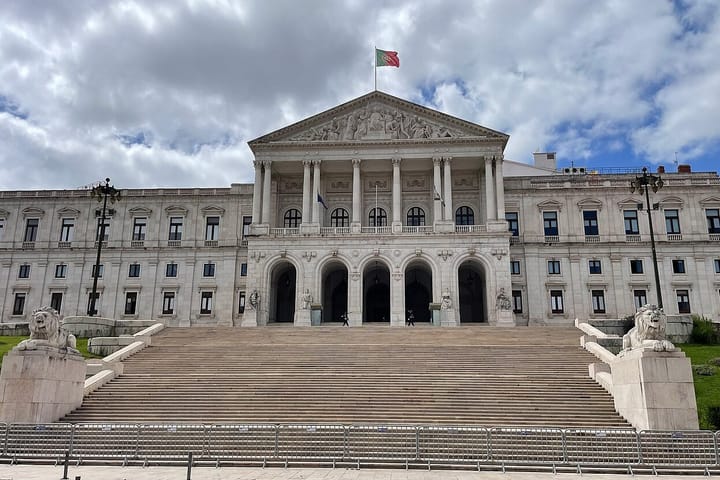
Resolving a Dispute through the Peace Courts (Julgados de Paz)
Researched and written with AI tools from official sources. How we make our guides
Portugal's small claims courts: what they hear up to €15,000, the €70 fee, mediation, how to file, whether you need a lawyer, and when you can appeal.
Last verified: October 2026.
Who this is for
- You have a civil dispute worth €15,000 or less, such as a withheld deposit, unfinished building work, or a neighbour's damage.
- You live in Portugal and want a cheap, simple court without hiring a lawyer.
- You are the person claiming, or the person being claimed against.
Not for you if: your dispute is about a divorce, an inheritance, or your job. Read Getting Divorced in Portugal or Employment Contracts, Pay, and Worker Rights in Portugal instead.
Peace courts (julgados de paz) are real courts for everyday civil disputes worth up to €15,000. They are simpler, cheaper, and less formal than the ordinary courts. The whole case costs a single fee of €70, paid by the side that loses, or €50 shared if you settle in mediation. You can usually run your own case without a lawyer. Cases take about six months on average. A peace court's decision has the same value as a judgment of an ordinary first-level court.
What peace courts are
Peace courts have run in Portugal since 2002. They are courts, like the ordinary courts, but they work in their own way. They aim for a fair settlement, and they favour simple, spoken, fast, and informal procedures.
Each case starts with an offer of mediation. If that fails, a justice of the peace (juiz de paz) tries to bring both sides to an agreement. If that fails too, the judge holds a hearing and decides. Peace courts have no court holidays, and their opening hours follow local needs.
Not every municipality has one. Check which peace court, if any, covers your case before you plan (see "How to start a case").
What they can hear
Peace courts hear civil claims worth up to €15,000. That includes claims:
- to make someone deliver, do, or pay what a contract requires;
- to recover your belongings, or documents;
- between flat owners in a building, such as payment for works or lift upkeep, unless the owners' meeting has made arbitration compulsory;
- between neighbouring owners, such as rights of way, water running off land, hedges, and windows or balconies overlooking your land;
- about possession or ownership of property, or dividing property owned jointly;
- about usufruct and other rights to use property;
- about a residential lease, such as unpaid rent or a withheld deposit, but not eviction;
- for compensation when someone's breach of contract or fault caused you loss, for example after a road accident or damage caused by an animal;
- about contracts not carried out, such as a service not delivered or a faulty job;
- for compensation for some minor crimes, where no criminal complaint was made or it was withdrawn.
The minor crimes are simple assault, injury by negligence, defamation, insults, simple theft, simple damage, moving boundary markers, and leaving without paying for food, drink, or services.
For disputes between flat owners, see How a Condominium (Condomínio) Works in Portugal. For deposit disputes, see Renting a Home in Portugal.
What they cannot hear
A peace court cannot hear:
- family law, such as divorce or custody;
- inheritance disputes;
- employment disputes, which go to the labour courts or the labour mediation service;
- evictions;
- money debts from standard-form contracts (contratos de adesão), the small-print contracts used by phone, power, and similar companies;
- rural leases;
- claims over €15,000.
If your case is outside their powers, you can still use any peace court's mediation service, even if no peace court covers your area. Each side pays €25. If you reach an agreement, it is written down and signed. It can be enforced, but it does not have the value of a judgment.
For a complaint against a shop or service, you can also use the complaints book. See How to File a Consumer Complaint in Portugal.
What it costs
| Outcome | Fee |
|---|---|
| The judge decides the case | €70, paid by the side that loses |
| You win only part of your claim | The judge can split the €70 between you |
| You settle in mediation | €50, split between both sides |
| Mediation only, for a case outside the court's powers | €25 for each side |
You pay with a payment slip (Documento Único de Cobrança, DUC) issued by the peace court. If you cannot afford the fee or a lawyer, you may qualify for legal aid, which applies in peace courts. See Applying for Legal Aid in Portugal.
How to start a case
- Find the right peace court. The Justice Ministry's dispute resolution office (DGPJ) links to the Peace Courts Council's site, which shows which court covers your dispute.
- Write down your claim. Say who you are claiming against, what you want, and why. Gather contracts, receipts, photos, messages, and witnesses' details.
- File your claim (requerimento). You can file it in writing, or say it out loud at the court's office, where staff write it down. You can also send it by post, by email to the court, or online through the RAL+ platform.
- Wait to be contacted. The court notifies the other side and invites you both to mediation.
About RAL+. The platform covers every peace court except Lisbon, Porto, and Vila Nova de Gaia. For those three, file in person, by post, or by email. You log in to RAL+ with a Portuguese Citizen Card or the Digital Mobile Key (Chave Móvel Digital). The DGPJ says foreign citizens cannot yet log in with the Digital Mobile Key, so if you have no Citizen Card, use another way to file.
How a case runs
- Pre-mediation. Unless either side objects, a session explains mediation and checks whether you both want to try it.
- Mediation. Mediation is voluntary. A trained mediator chosen by the Ministry of Justice helps you talk and look for your own solution. The mediator cannot decide anything. What you say in mediation is confidential and cannot be used as evidence later. Sessions can also be held by video.
- Agreement. If you agree, the justice of the peace approves the agreement. It then has the value of a judgment.
- Conciliation. If mediation fails, the justice of the peace tries to bring you together and may suggest a solution.
- Hearing and decision. If there is still no agreement, the judge hears both sides and the evidence, then gives a judgment (sentença).
You must attend in person. You may bring a lawyer, trainee lawyer, or solicitor if you want.
The DGPJ says cases finished in 2023 took about six months on average.
Do you need a lawyer?
Usually not. Representing yourself is normal. You must have a lawyer in two cases:
- if you cannot read or write, or do not speak Portuguese well;
- if you appeal the decision.
The hearing is in Portuguese. If your Portuguese is weak, plan for a lawyer early, and check whether you qualify for legal aid.
Appeals and enforcement
Appeals. You can appeal only if the case is worth more than €2,500 (from €2,500.01). The appeal goes to the district court (tribunal de comarca) where the peace court sits, and you need a lawyer. Below that value, the peace court's decision is final.
If the other side does not pay or comply. A peace court's judgment, or an approved agreement, can be taken to an ordinary court to enforce it.
Before you file
- Check the value. Add up what you are claiming. It must be €15,000 or less.
- Check the type. Make sure your dispute is not family, inheritance, employment, eviction, or a standard-form contract debt.
- Check coverage. Find out which peace court covers your case.
- Try to settle first. Write to the other side by registered letter, set a deadline, and keep copies.
- Go in willing to mediate. Settling costs less (€50 shared) and you help shape the result.
This guide is general information, not legal advice. Your rights depend on your contract and the facts; check your case with the peace court or a lawyer before you file.
Sources
This guide is written from official sources and, where relevant, organisations' own websites.
- DGPJ, Justiça.gov.pt, Como funcionam os Julgados de Paz: https://dgpj.justica.gov.pt/Resolucao-de-Litigios/Julgados-de-Paz/Como-funcionam-os-Julgados-de-Paz (€15,000 limit; excluded areas; list of claims; condominium arbitration exception; minor crimes; mediation outside competence; ways to file; RAL+ coverage and login limits; mediation, conciliation, and judgment; appeal from €2,500.01; same value as first-instance judgment; lawyer compulsory cases; €70 paid by the loser; €50 in mediation; DUC payment under Portaria n.º 342/2019; legal aid; no court holidays; local opening hours), checked 2 October 2026
- DGPJ, Justiça.gov.pt, Perguntas frequentes sobre os Julgados de Paz: https://dgpj.justica.gov.pt/Resolucao-de-Litigios/Julgados-de-Paz/Perguntas-frequentes-sobre-os-Julgados-de-Paz (courts since 2002; how cases run; enforcement through the ordinary courts; average of about six months in 2023; appeals; lawyers; €70 split on partial loss; €25 each for mediation outside competence; pre-mediation; voluntary and confidential mediation; video sessions; mediators chosen by the Ministry of Justice), checked 2 October 2026
- DGPJ, Justiça.gov.pt, Encontrar um Julgado de Paz: https://dgpj.justica.gov.pt/Resolucao-de-Litigios/Julgados-de-Paz/Encontrar-um-Julgado-de-Paz (link to find the competent peace court), checked 2 October 2026
- DGPJ, Plataforma RAL+: https://meiosral.justica.gov.pt/ (online filing platform), checked 2 October 2026
- Procuradoria-Geral Regional de Lisboa, Lei n.º 34/2004 of 29 July (access to law and the courts): https://www.pgdlisboa.pt/leis/lei_mostra_articulado.php?nid=80&tabela=leis (article 17: legal aid applies in the peace courts), checked 2 October 2026
Last verified October 2026. Rules and fees change; check the official source before acting.