Halloween and Pão-por-Deus with Children in Portugal
Researched and written with AI tools from official sources. How we make our guides
How Halloween, trick-or-treating, and the Pão-por-Deus custom of 1 November work in Portugal, with safety tips, local events, and useful words.
Last verified: October 2026.
Who this is for
- Parents new to Portugal wondering whether children go trick-or-treating here.
- Families who want to join in Pão-por-Deus, the Portuguese door-to-door custom on 1 November.
- Anyone planning the weekend of 31 October to 2 November with children.
Not for you if: you want every holiday and festival of the year. Read "Portuguese Festivals and Public Holidays through the Year".
Yes, Halloween is celebrated in Portugal, especially by children. You will find costume parties and workshops at council libraries, museums, and schools. Some children also go door to door in costume on 31 October.
Portugal also has its own, older custom. On the morning of 1 November, All Saints' Day, children in many areas knock on doors and ask for Pão-por-Deus: bread, cakes, fruit, nuts, or sweets.
In 2026, Halloween is Saturday 31 October. All Saints' Day is a public holiday, but it falls on a Sunday this year. Monday 2 November is a normal school and working day.
Is Halloween celebrated in Portugal?
It is, and it is growing. Albufeira council describes Halloween as a fairly recent custom in Portugal, dating from the 1980s, that attracts more fans every year, young and old.
Most of what you will find is organised. Council libraries and museums run costume parties, story hours, and craft workshops. Some also run sessions for local schools in the days before 31 October. In Portuguese the night is often called Dia das Bruxas, or Noite das Bruxas: the day, or night, of the witches.
How much happens depends on where you live. Some towns hold large street events, while in other places Halloween is a small party at the library. Some councils deliberately promote the local Portuguese customs instead.
Do children go trick-or-treating?
Some do. Children dress up, go round the streets in small groups, and knock on doors asking for sweets. The Portuguese for "trick or treat" is "doçura ou travessura". You may also hear "doçura ou diabrura", which rhymes.
Not every neighbour takes part, and some may not know what the children want. Our advice for families new to Portugal:
- Go with an adult, and keep the group small.
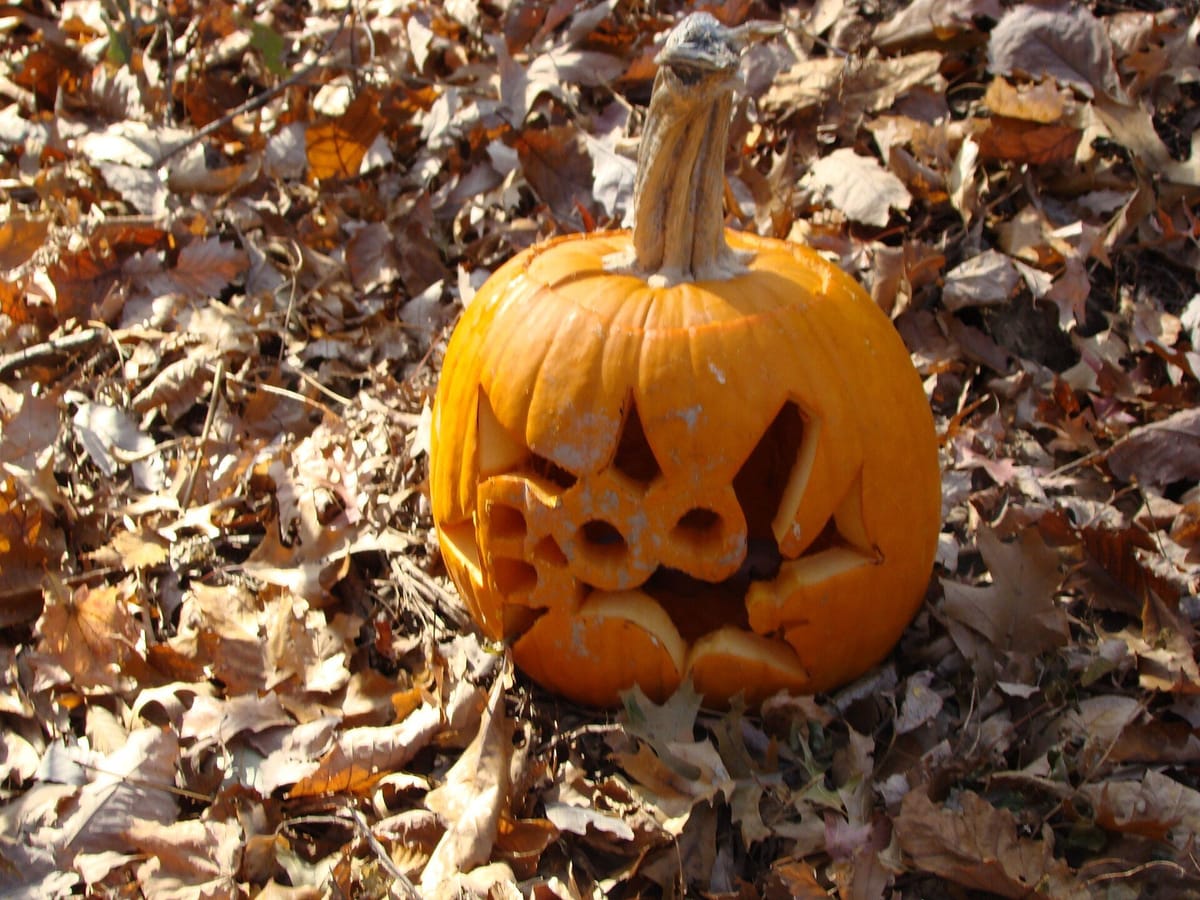
- Knock only where people are clearly taking part: a pumpkin or decorations at the door, or a neighbour who has told you they will have sweets.
- In an apartment building, ask in the building group or on the noticeboard first. That way, neighbours who want visitors can say so.
- Say "doçura ou travessura" and smile. Then say "obrigado" (or "obrigada" if you are a girl or woman) for whatever you get.
- Accept a "no" or an unopened door, and move on. Nobody plays tricks.
- Go early in the evening and head home in good time.
If door-knocking does not appeal, a council event is the easiest way to give children a Halloween with costumes and other children. See "How to find events near you" below.
What is Pão-por-Deus?
Pão-por-Deus means "bread for God's sake". On 1 November, All Saints' Day, children get together in small groups and go from door to door asking for it. They traditionally go out early in the morning.
Unlike Halloween, this is not about fright. Children are usually dressed nicely. They carry a small cloth bag (saquinho) for the gifts and behave politely. Nobody plays tricks.
People give cakes, biscuits, seasonal fruit, chocolates, and sweets. Chestnuts, walnuts, and dried figs are traditional, as are bread and pomegranates. Today sweets are more common than they used to be.
The rhyme
At each door the children say a short verse. A common version is:
Pão por Deus, fiel de Deus, / bolinho no saco, / e vai com Deus.
This means roughly: "Bread for God's sake, faithful of God, a little cake in the bag, and go with God." The words change from place to place, and so does the last line.
Where the custom comes from
There are two explanations, and both are told. One links it to the Lisbon earthquake, which struck on All Saints' Day in 1755. In the hungry year that followed, people went door to door begging for bread. The other says the custom is much older: the children stand for the souls of the dead, who are said to walk among the living on 1 November.
How Pão-por-Deus varies by region
Pão-por-Deus is not universal. It is strongest in rural areas and in Madeira, and it is not followed everywhere on the mainland. Even where it is, the name, the date, and the gifts vary:
- Around Leiria, 1 November is often called the dia do bolinho (the day of the little cake). Children ask for "o bolinho" or Pão-por-Deus, and hundreds of people usually take to the streets.
- In Lousã, near Coimbra, the custom is called "Bolinhos e Bolinhós", and the council has held it on the evening of 31 October, the eve of the holiday.
- In the Guarda district, especially around Sabugal, godparents give their godchildren a festive aniseed bread called pão santoro at All Saints.
- In Óbidos, several parish councils have handed out Pão-por-Deus to children in recent years, as children walk round in small groups.
- In Cascais, the council's food lab teaches the custom and the bolo santoro, a saints' bread made with flour and aniseed.
- In Madeira, children set out early on 1 November with their saquinho and say the rhyme above.
We found no official source describing the custom in the Algarve or the Alentejo in 2026, so ask locally there.
Joining in as a newcomer
- Ask a neighbour, your child's teacher, or your parish council (junta de freguesia) whether children go round in your street.
- If they do, keep a bowl of small treats by the door on the morning of 1 November. Wrapped sweets, small cakes, fruit, or nuts are all usual.
- If your children want to go, give them a small cloth bag and teach them the rhyme. Go with them, and visit neighbours you know.
All Saints' Day and the Day of the Dead
All Saints' Day (Dia de Todos os Santos) on 1 November is a national public holiday. In 2026 it falls on a Sunday, so there is no extra day off. The Day of the Dead (Dia de Finados) on 2 November is not a public holiday. Schools follow the normal timetable on Friday 30 October and Monday 2 November, as there is no school break until December.
The days around 1 and 2 November are a time to remember the dead, and many families take flowers to cemeteries. Some councils, such as Évora, license extra flower sellers at cemetery gates for the Day of the Dead. If you take children, keep voices low and stay on the paths.
Cemetery hours around these days:
- Porto: Agramonte and Prado do Repouso are open every day from 08:30 to 17:00, and until 18:00 on 1 and 2 November.
- Braga: the municipal cemetery is open 08:30 to 17:00 on Sundays and holidays, including 1 November.
- Anywhere else: check your council's website, as hours change around these days.
What is open on 1 November
Because the holiday is a Sunday this year, most places keep their normal Sunday hours:
- Citizen Shops (Lojas do Cidadão) close on national holidays.
- Lisbon's metro runs every day, including holidays, on its weekend and holiday timetable.
- CP trains on public holidays run to the Sunday timetable.
Keeping children safe
On the street after dark
Halloween happens after dark, and drivers find it hard to see pedestrians at night. The road safety authority (ANSR) advises:
- Carry something that lights up or reflects: a torch, a reflective armband, or a vest.
- Point a torch at the ground so it does not dazzle drivers.
- Wear white or light colours over a dark costume where you can.
- Hold small children's hands and walk them on the inside of the pavement, away from the road.
- Teach them that cars cannot stop instantly, and to look left, right, and left again before crossing.
- Watch out between parked cars. Children are small, and drivers may not see them.
If you are driving on Halloween evening, slow down in residential streets. A child in a dark costume is hard to see at dusk.
Check the weather warnings from IPMA, the weather service, before you go out. If your district has an orange or red warning, follow the official advice and think about staying in.
Costumes, masks, and face paint
If a costume, mask, wig, or face product is sold for children under 14, the law treats it as a toy. It must carry the CE mark, and its instructions and warnings must be in Portuguese. Toys must also meet fire-safety rules. The consumer authorities advise:
- Look for the CE mark on the costume or its packaging.
- Check the label for the age it is meant for.
- Buy from a shop or online seller you trust.
Keep every costume away from candles, including those in carved pumpkins. A battery light is safer. If face paint causes a rash, itching, or a skin reaction, wash it off. See a doctor or pharmacist, and take the product with you.
Sweets, allergies, and choking
On packaged sweets, the label must highlight any allergens in the ingredients list, for example in bold. Home-made or loose treats have no label. If your child has a food allergy, swap anything unlabelled for a safe treat from home.
Nuts and small sweets can cause choking in young children. The health authority (DGS) says nuts should never be given whole to babies. Check what younger children have in their bags before they eat it.
If a child is choking and can still cough, encourage them to keep coughing. If they cannot cough, give up to five back blows, then up to five abdominal thrusts. Keep alternating the two until the object comes out or the child stops responding. For a baby under one, use chest compressions with two fingers instead of abdominal thrusts. If the child stops responding, call 112 at once and start basic life support. A child who needed back blows or thrusts should be checked at a hospital afterwards: call 112.
- 112: emergencies.
- 808 24 24 24: SNS 24, the health line, for advice when it is not an emergency.
How to find events near you
Councils publish their Halloween and Pão-por-Deus events on their websites, usually in the "agenda" or "eventos" section, a week or two ahead. Libraries and museums run most of them, and many need registration. Your parish council and your child's school are also worth asking.
These council events are listed for 2026:
- Valongo (North): Halloween at the Ermesinde library, Vila Beatriz, 31 October, 17:00 to 20:00. Shows, a workshop, and a story hour for babies and families. Registration needed for some activities.
- Aveiro (Centre): Halloween craft workshop at the Museu da Cidade, 31 October, 15:00 to 17:00. €1, ten places, registration by email.
- Coimbra (Centre): Halloween story hours at the children's library, 30 and 31 October at 18:00. Free, with registration.
- Leiria (Centre): Halloween at the municipal library for children aged 4 to 10, 31 October, 16:00 to 19:00, free. The library also hands out bolinho on 31 October, 14:00 to 20:00. On 1 November, Leiria Castle stages a Pão-por-Deus performance, 15:00 to 17:30. It is free for under-10s and Leiria residents; others pay €1.05 to €2.10.
- Amadora (Lisbon area): Halloween at the Fernando Piteira Santos library, 31 October, 19:30 to 22:30. For children aged 3 and over, €3 per child, free for adults with them, registration needed.
- Cascais (Lisbon area): Halloween at the Mercado da Vila, Friday 30 October, 17:00 to 19:30, free. Face painting, a children's workshop, and inflatables.
In the Alentejo, the Montemor-o-Novo library holds a Halloween night for children aged 8 to 12 most years. In the Algarve, Albufeira council has held a Halloween night in the old town in recent years. Neither had a 2026 date on its council website when we checked. Lagos has cancelled its 2026 Halloween event.
Useful words and phrases
- Pão-por-Deus: "bread for God's sake", the 1 November door-to-door custom, and the gifts themselves.
- Saquinho: the small cloth bag children carry for Pão-por-Deus.
- Bolinho: a little cake. "Dia do bolinho" is a name for 1 November around Leiria.
- Dia das Bruxas or Noite das Bruxas: Halloween (the day, or night, of the witches).
- Doçura ou travessura: trick or treat. Also heard as "doçura ou diabrura".
- Dia de Todos os Santos: All Saints' Day, 1 November, a public holiday.
- Dia de Finados: the Day of the Dead, 2 November, not a public holiday.
- Junta de freguesia: your parish council.
- Obrigado / obrigada: thank you (said by a man or boy / a woman or girl).
This guide is general information. Event details can change, so check with the organiser before you go.
Sources
This guide is written from official sources and, where relevant, organisations' own websites.
- Câmara Municipal de Albufeira, Município junta-se aos comerciantes para celebrar o Halloween na Baixa da cidade (19 October 2018): Halloween dates from the 1980s in Portugal; "doçura ou travessura" and "doçura ou diabrura" (Portuguese only)
- Câmara Municipal de Albufeira, Albufeira é capital nacional do Halloween (22 October 2025) (Portuguese only)
- Câmara Municipal de Coimbra, Semana cultural municipal em Coimbra, 26 de outubro a 1 de novembro (2026): Dia das Bruxas workshop, Halloween story hours (Portuguese only)
- Câmara Municipal de Aveiro, Oficina de Halloween, Museu da Cidade (31 October 2026) (Portuguese only)
- Câmara Municipal da Lousã, Bolinhos e Bolinhós animaram Biblioteca Municipal (6 November 2019) (Portuguese only)
- Câmara Municipal de Cascais, Cascais Food Lab, Pão por Deus: 1 November custom, origins, traditional gifts, bolo santoro (Portuguese only)
- Governo Regional da Madeira, Direção Regional de Educação, Festa da partilha: comemoração do Pão-por-Deus (7 November 2022): the morning walk, the saquinho, the gifts, and the rhyme (Portuguese only)
- Câmara Municipal de Leiria, Vamos celebrar o Bolinho em segurança: All Saints' Day as the dia do bolinho (Portuguese only)
- Direção-Geral de Agricultura e Desenvolvimento Rural, Produtos Tradicionais Portugueses: Pão Santoro de Pêga (Portuguese only)
- Câmara Municipal de Óbidos, Concelho de Óbidos assinala o Pão por Deus (2023) (Portuguese only)
- Município de Leiria, Leiriagenda, Pão por Deus, Castelo de Leiria (1 November 2026) (Portuguese only)
- Município de Leiria, Leiriagenda, Ó Biblioteca, dá Bolinho! (31 October 2026) (Portuguese only)
- Município de Leiria, Leiriagenda, Halloween, Pequenos Monstros, Grandes Pintores (31 October 2026) (Portuguese only)
- Câmara Municipal de Valongo, Mistérios na Biblioteca: uma noite de arrepiar na Biblioteca de Ermesinde (31 October 2026) (Portuguese only)
- Câmara Municipal da Amadora, Halloween na Biblioteca com histórias e oficinas temáticas (2026) (Portuguese only)
- Câmara Municipal de Cascais, Cascais Food Lab, Halloween no Mercado (30 October 2026) (Portuguese only)
- Câmara Municipal de Montemor-o-Novo, Uma noite de Halloween na Biblioteca (2025 edition) (Portuguese only)
- Câmara Municipal de Lagos, Events, October 2026: Halloween Lagos 2026 cancelled (Portuguese only)
- Procuradoria-Geral Distrital de Lisboa, Código do Trabalho (Lei n.º 7/2009), consolidated text, articles 234 and 235: mandatory and optional public holidays (Portuguese only)
- Diário da República, Despacho n.º 8368/2024, school calendar 2024-2025 to 2027-2028 (terms and breaks for 2026-2027) (Portuguese only)
- Diário da República, Despacho n.º 10430/2026, second amendment to the school calendar (breaks unchanged) (Portuguese only)
- Câmara Municipal de Évora, Edital: flower-selling pitches at the cemeteries for the dia de finados (2024) (Portuguese only)
- Câmara Municipal do Porto, Cemitério de Agramonte: opening hours (Portuguese only)
- Câmara Municipal do Porto, Cemitério Prado do Repouso: opening hours (Portuguese only)
- Câmara Municipal de Braga, Cemitério Municipal de Braga: opening hours (Portuguese only)
- gov.pt, Loja de Cidadão do Saldanha: closes on national holidays (Portuguese only)
- Metropolitano de Lisboa, Horários e frequências: open every day including holidays (Portuguese only)
- CP, Comboios de Portugal, Coimbra urban and regional timetable: Sunday and public holiday services (Portuguese, with an English key)
- Autoridade Nacional de Segurança Rodoviária, Guia do Peão: walking at night, children, crossing (Portuguese only)
- Prevenção Rodoviária Portuguesa, Condução noturna e visibilidade reduzida: pedestrians in dark clothing at dusk (Portuguese only)
- Instituto Português do Mar e da Atmosfera, Avisos meteorológicos: weather warnings by district (Portuguese only)
- Autoridade de Segurança Alimentar e Económica, ASAEnews n.º 94, Operação Carnaval: costumes and masks for under-14s are toys and need the CE mark and Portuguese instructions (Portuguese only)
- Diário da República, Decreto-Lei n.º 43/2011, toy safety, Annex II part II: flammability (Portuguese only)
- Direção-Geral do Consumidor, DGC fiscaliza publicidade a brinquedos (20 December 2024): check the CE mark, age, and Portuguese labels (Portuguese only)
- European Commission, Toy safety: CE marking and flammability requirements
- Infarmed, Notificação de efeitos indesejáveis associados aos cosméticos: skin reactions to cosmetics (Portuguese only)
- Your Europe (European Union), Food labelling, general rules: allergens emphasised in the ingredients list
- Direção-Geral da Saúde, Alimentação Saudável dos 0 aos 6 anos (2019): nuts never whole for infants, choking risk (Portuguese only)
- Direção-Geral da Saúde, Boletim de Saúde Infantil e Juvenil: nuts and sweet wrappers as choking hazards (Portuguese only)
- INEM, Gestos que salvam: sabe como agir em caso de engasgamento? (Portuguese only)
- Serviço Nacional de Saúde, SNS 24 triagem: 808 24 24 24 and 112 (Portuguese only)
Last verified October 2026. Rules and fees change; check the official source before acting.