Food Up Nearly 7 Percent, Rents Up 5: The Inflation Squeeze Tightening on Portuguese Households
Portugal's inflation rate climbed to 2.1 percent in February 2026, up from 1.9 percent in January, placing the country slightly above the eurozone average and confirming a trend that is hitting household budgets where it hurts most: at the...

Portugal's inflation rate climbed to 2.1 percent in February 2026, up from 1.9 percent in January, placing the country slightly above the eurozone average and confirming a trend that is hitting household budgets where it hurts most: at the supermarket checkout and on the monthly rent statement.
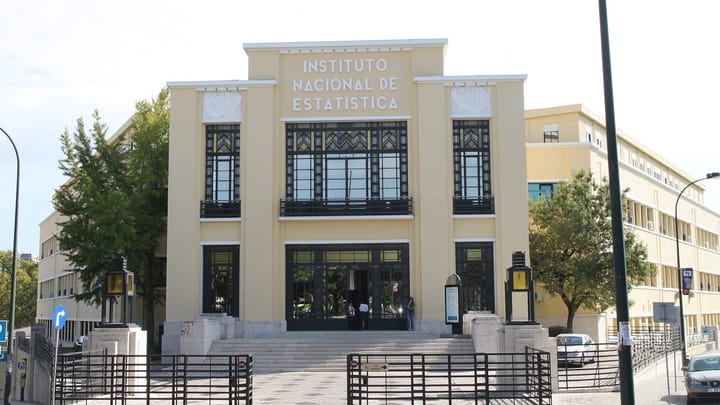
The figures, confirmed by the National Statistics Institute (INE), reveal an economy where headline inflation tells only part of the story. Beneath the surface, the pressures are sharply uneven, with food and housing costs racing ahead while energy prices — for now — provide a fragile counterweight.
The Grocery Squeeze
Unprocessed food prices surged 6.7 percent year-on-year in February, accelerating from 5.8 percent the month before. Processed food also climbed, rising 1.0 percent compared to 0.8 percent in January. The drivers are both domestic and imported: severe weather earlier this year damaged greenhouses and farms across Portugal, disrupting supply chains and forcing greater dependence on imports at a time when global agricultural commodity prices remain elevated.
For a country where household food expenditure represents a larger share of income than in wealthier northern European nations, the acceleration is acutely felt. The average Portuguese household spends roughly 20 percent of its budget on food, compared to 11 percent in Germany and 8 percent in the United Kingdom. A nearly 7 percent annual increase in fresh food prices translates directly into reduced purchasing power for millions of families.
Rent: The Relentless Climb
Housing rents rose 5.2 percent annually in February, continuing a multi-year trend that has made affordability the defining domestic policy issue. In Lisbon and Porto, where demand from tourists, foreign investors, and a growing tech workforce collides with chronically limited supply, the pressures are even more intense.
The government's proposed rental market reforms, currently before parliament, aim to address some of these imbalances by expanding tenant protections and incentivising landlords to offer longer-term contracts at regulated rates. Whether these measures will meaningfully slow rent inflation remains an open question. Critics argue that without a significant increase in new housing construction — currently constrained by labour shortages, bureaucratic licensing delays, and rising material costs — demand-side interventions alone cannot solve the problem.
Energy: The Calm Before the Storm
Energy prices fell 2.2 percent year-on-year in February, providing the single largest deflationary offset in the consumer basket. This decline reflects favourable supply contracts negotiated before the current Middle East crisis and the delayed transmission of international oil price shocks into Portuguese retail fuel and electricity tariffs.
However, with Brent crude now trading above 100 dollars per barrel — a 42 percent increase since the start of the Iran conflict at the end of February — the energy deflation cushion is unlikely to survive into the second quarter. Portugal imports approximately 67 percent of its energy, predominantly fossil fuels. When current supply contracts expire or are renegotiated, the pass-through to consumer prices could be significant.
What It Means for Residents
Core inflation, which strips out volatile energy and unprocessed food, edged up to 1.9 percent from 1.8 percent, a signal that price momentum is broadening beyond commodity swings into services and processed goods. For residents, both Portuguese and foreign, the picture is one of gradually eroding purchasing power across nearly every category of daily spending.
The European Central Bank meets on 19 March, and its decisions on interest rate policy will have direct implications for mortgage holders and borrowers across Portugal. President Christine Lagarde has signalled readiness to act if Middle East tensions drive energy costs substantially higher, but any rate adjustment will involve a difficult trade-off between containing inflation and supporting economic growth in a continent already navigating geopolitical uncertainty.
For those considering a move to Portugal — or those who have recently arrived — the February inflation data offers a reality check. The country remains significantly more affordable than most Western European capitals, but the gap is narrowing. Planning for rising food and housing costs is no longer optional; it is essential.