Five Measles Cases in Lisboa e Vale do Tejo Since 6 October Bring Portugal's 2026 Total to 15: Who Should Check Their MMR Status
Three of the five cases were imported by unvaccinated travellers and two were secondary cases. All who needed hospital care have been discharged. Here is the MMR schedule, who should check their record, and what to do if exposed.
Five cases of measles have been identified in the Lisboa e Vale do Tejo region since 6 October, bringing the number of confirmed infections in Portugal this year to 15, the Direção-Geral da Saúde (DGS) said on Thursday 22 October, in figures given to the Lusa news agency and published by Observador.
The five patients are three adults, a child and a baby under one year old. Three are imported cases with no link between them: each had recently travelled to a country with a high incidence of measles, and none had a record of measles vaccination. The other two are secondary cases, caught from another patient, and one of those two was not vaccinated. The DGS said every patient who needed hospital treatment has been discharged.
How the cluster built up
On 14 October the DGS told Público that three imported cases had been found in the region since 6 October, in an adult, a child and an infant, as Observador reported; one had been confirmed by Hospital de Cascais. The week before, Unidade Local de Saúde de Santa Maria confirmed that an unvaccinated adult with measles was in isolation at Santa Maria and that his family had been vaccinated.
The three imported cases generated contacts, whose follow-up is being organised, the DGS said. Health authorities are investigating each case, tracing contacts, checking their vaccination status and referring them for vaccination, or giving immunoglobulin after exposure where indicated. Between 1 January and 21 October, 15 cases were confirmed through the national surveillance system, SINAVE, compared with 21 in each of 2024 and 2025. In its communiqué of 21 May the DGS had counted seven cases, six of them in unvaccinated people.
The DGS said high vaccine coverage in Portugal is an important barrier to transmission. Imported cases are possible given international travel, it said, but they do not by themselves mean a risk of sustained transmission in the country.
What to check and what to do
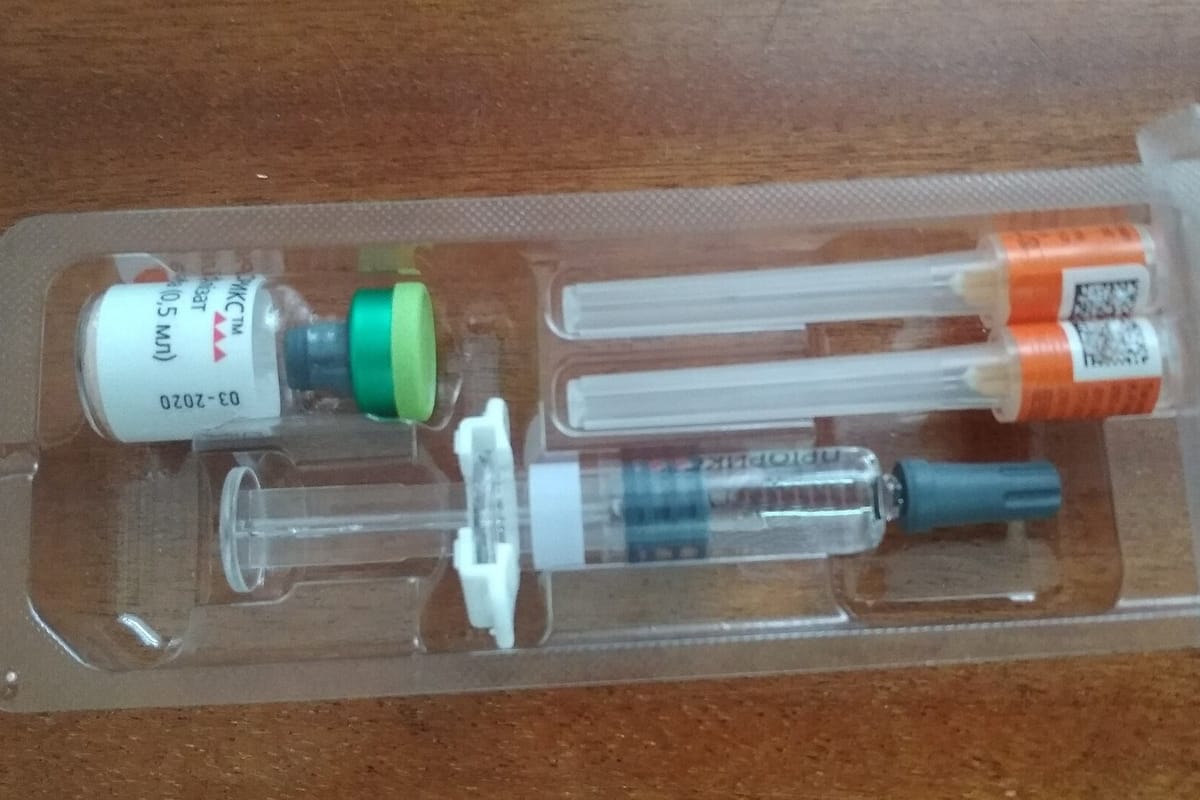
Measles is one of the most contagious infections and spreads through the air, by droplets or aerosols from coughing or sneezing. The vaccine is the main protection, and the DGS says it is free for everyone present in Portugal. Its measles questions and answers set out the schedule for the combined measles, mumps and rubella vaccine (VASPR) in the Programa Nacional de Vacinação:
- Under 18: two doses, at 12 months and at 5 years of age.
- Adults born in or after 1970: at least one dose, unless they have a credible history of having had measles.
- Adults born before 1970: no dose needed, as about 99 percent are protected, unless they are exposed to a case or are travelling to a country with measles.
- Health workers: two doses, whatever their year of birth.
You can check your record in the SNS 24 app or the Área do Cidadão on the SNS portal (our earlier piece explains how to check your vaccine record on SNS 24). If it cannot be confirmed, the DGS says the health centre will vaccinate you for your age, and an extra dose is not harmful.
Symptoms begin with fever and malaise, followed by a runny nose, conjunctivitis and a cough, and then a rash that starts on the face and spreads to the trunk and limbs. A person is contagious from four days before to four days after the rash appears. If you have symptoms, or have been in contact with a case, the DGS advises you to avoid contact with other people and call SNS 24 on 808 24 24 24 or your own doctor.