Every Fuel Pump in Portugal Must Now Display an 'ISP+IVA Reduction' Figure, and It Is Bigger Than This Week's Tax Discount
From 17 October, fuel stations must post how much less fuel tax and VAT drivers pay per litre than at the 2019 rates: 23.1 cents on petrol and 23.9 on diesel from Monday. Why that is not this week's discount, and what to do if the sign is missing.
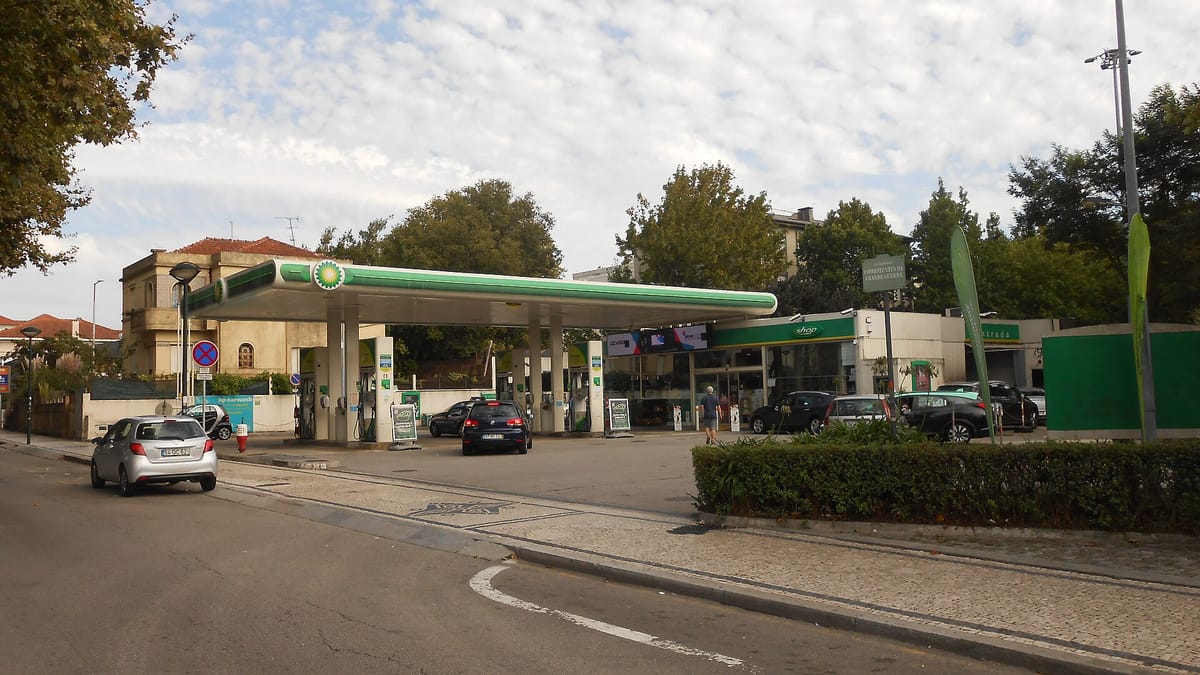
Since Saturday 17 October, every fuel station in Portugal has had to display, next to or on its pumps, a figure headed "Redução ISP+IVA" (ISP plus VAT reduction) for each fuel it sells. The figure tells drivers how many cents less fuel tax and VAT they pay per litre than they would at an older reference rate. A station that leaves it out, or shows a wrong or out-of-date figure, faces a fine of 1,000 to 3,000 euros.
For the week starting Monday 19 October, the government has published the figure itself: 0.231 euros a litre for unleaded petrol and 0.239 euros for road diesel on the mainland. That is roughly twice this week's temporary fuel-tax discount, and the reason is worth understanding before you read the sign.
Where the rule comes from
The obligation is in article 30 of Decreto-Lei n.º 199/2026, published in the Diário da República (Portugal's official gazette) on 7 October. Most of that decree-law sets out the second round of fuel aid for buses, taxis, hauliers, charities and fire brigades. The display rule sits at the end, and article 31 delays it by ten days after publication, which brought it into force on 17 October.
The duty falls on the "comercializadores de combustíveis derivados do petróleo" (sellers of petroleum fuels), at every fuel station they run. The sign must be "em local bem visível" (clearly visible), placed beside the pumps or on them, and carry the words "Redução ISP+IVA".
What the number actually measures
The figure is the difference between two amounts, both per litre and both with VAT at 23 percent added:
- the ISP (imposto sobre os produtos petrolíferos e energéticos, the tax on petroleum and energy products) that would be charged at the rates set in Portaria n.º 301-A/2018, the order that fixed the rates for 2019: 526.64 euros per 1,000 litres of petrol and 343.15 euros per 1,000 litres of diesel;
- the ISP actually charged at the rate in force at the time.
So the sign does not show only the temporary discount the government adjusts each Friday. It shows how far today's fuel tax sits below its 2019 level, plus the VAT on that gap.
The weekly order for 19 October, Portaria n.º 458-A/2026/1, sets the ISP at 425.62 euros per 1,000 litres of petrol and 259.49 euros per 1,000 litres of diesel. Its article 3 then publishes the sign values of 0.231 and 0.239 euros. By our arithmetic, those values only add up if the 2019 rates are counted together with the road service contribution, which was a separate levy in 2019 and is now part of the ISP rate (87 euros per 1,000 litres on petrol and 111 euros on diesel, as the order states).
The temporary discount in the same order is 71.90 euros per 1,000 litres on petrol and 102.11 euros on diesel. With VAT, that comes to about 8.8 cents a litre on petrol and 12.6 cents on diesel. The rest of the figure on the sign, roughly 14 cents on petrol and 11 cents on diesel, reflects how far the underlying rate was already below its 2019 level before this week's adjustment.
In short, a sign reading 0.239 does not mean diesel got 23.9 cents cheaper this week. It is the total tax saving per litre against the 2019 rates.
It changes every week
The government resets the fuel-tax discount by portaria each Friday for the following week. The current mechanism applies a discount when prices have risen more than 10 cents a litre above the week of 2 to 6 March, handing back the extra VAT the state collects. Parliament voted on 9 October to keep that discount until 31 December. Each time the rate moves, the figure on the sign must move with it: the decree treats an out-of-date figure as an offence, just like a missing one.
The 19 October order is the first to publish the sign values. The previous order (Portaria n.º 451-A/2026/1 of 9 October), still in force on 17 and 18 October, publishes none, so for that first weekend stations had to work the figure out themselves. On that order's rates, our calculation gives about 0.239 euros for petrol and 0.232 euros for diesel.
The published figures apply to the mainland only. The Azores and Madeira set their own fuel tax rates, and the order gives no values for the islands.
Who checks, and what the fine is
The decree applies the enforcement rules of Lei n.º 5/2019, the law on the information energy sellers owe consumers. Under that law, inspection, case handling and fines fall to the Entidade Nacional para o Setor Energético (ENSE, the National Agency for the Energy Sector). The fine for a missing, false, incorrect or outdated sign is 1,000 to 3,000 euros. The 2019 law halves the minimum and maximum where the station acted through negligence, and the fines go to the energy regulator, ERSE.
What you can do
- Look for the sign beside or on the pump, one figure for each fuel sold.
- Compare it with the official value for the week, which the government now publishes in the weekly ISP portaria in the Diário da República. For the week from 19 October, the mainland values are 0.231 euros (petrol) and 0.239 euros (diesel).
- If it is missing or wrong, ask for the Livro de Reclamações (complaints book) at the station, or file online at livroreclamacoes.pt. ENSE is the body that enforces the rule.
The sign tells you about tax, not about the price. It does not show what the station charges, which is set freely by each retailer, and a large figure on the sign does not mean that station is cheaper than the one down the road. Fuel complaints were already running high this year: in September we reported that four in ten complaints against fuel retailers concerned a discount drivers said never arrived.