EU Ministers Clear the Way for Return Hubs Outside Europe, and Let Detention Before Removal Run to Two Years
The Council's final vote on the new return regulation replaces the 2008 directive. It allows hubs in non-EU countries, longer detention and entry bans of up to 20 years, and will apply directly in Portugal.
The EU's member states gave their final approval on Thursday to a regulation that rewrites how Europe sends home people with no right to stay. It allows countries to send them to "return hubs" in non-EU countries, lengthens the time they can be held before removal and lets entry bans run for up to 20 years. The Council of the EU said the rules will be published in the Official Journal and take force the following day, "in the coming weeks".
Because it is a regulation, not a directive, it will apply directly in Portugal, without a national law to transpose it. It repeals the 2008 Return Directive, which has framed Portuguese return law until now.
"Around two in three people ordered to leave the EU do not actually leave," Ireland's Minister for Justice, Home Affairs and Migration, Jim O'Callaghan, said in the Council's statement. Portugal shows the gap sharply. Eurostat counted 11,190 non-EU nationals ordered to leave Portugal in the second quarter of this year, against 330 recorded returns, as we reported on Wednesday.
What changes
Return hubs. A country may send a person who has received a return decision to a non-EU country that is not their own, under an agreement or arrangement with that country. Such deals may only be made with countries that respect international human rights standards, including the ban on sending people somewhere they face persecution (non-refoulement). Where onward return is planned, a deal must name an independent monitor. Unaccompanied minors are excluded. These provisions apply as soon as the regulation is in force.
Detention. Detention for return may last up to 12 months, and up to 24 months where the person does not cooperate or travel documents are delayed. A further six months is possible where there is a risk of absconding and a change, such as a newly obtained travel document, makes removal realistic. The 2008 directive capped it at six months, extendable by twelve, so 18 in all.
Leaving. A return decision will set a departure period of no more than 30 days, or order the person to leave immediately. The old rule gave between seven and 30 days to leave voluntarily.
Entry bans. A ban becomes compulsory when a person is removed, misses the departure deadline or poses a security risk. It may last up to ten years, or 20 "for duly substantiated reasons". The 2008 text said bans should not normally exceed five years.
Security risks. People judged a threat to public or national security, or suspected of serious crimes or terrorism, face priority removal. They can be detained in prisons, kept separate from ordinary prisoners where possible, and given entry bans of indefinite length.
A duty to cooperate. People ordered to leave must cooperate with the authorities. If they do not, national law may cut their benefits, withhold voluntary-return incentives, or impose fines or criminal penalties.
The regulation also creates a European Return Order, a standard form shared through the Schengen Information System. Recognising another country's return decision stays voluntary for now, and will be reviewed after three years.
When it reaches Portugal
Apart from the return hubs and a handful of general provisions, most of the regulation, including the new detention and entry ban limits, applies 12 months after it enters into force. Until then, Portugal's own rules stand, including the law in force since September that created screening centres and a 12-week border return procedure. The Council's statement does not say how Portugal voted, and the government has not said whether it intends to seek a return hub agreement.
Sources: Council of the EU press release, 1 October 2026; text of the regulation (PE-CONS 40/26), Articles 5, 8, 13, 14, 18, 30 and 50; Directive 2008/115/EC, Articles 7 and 15 and recital 14.
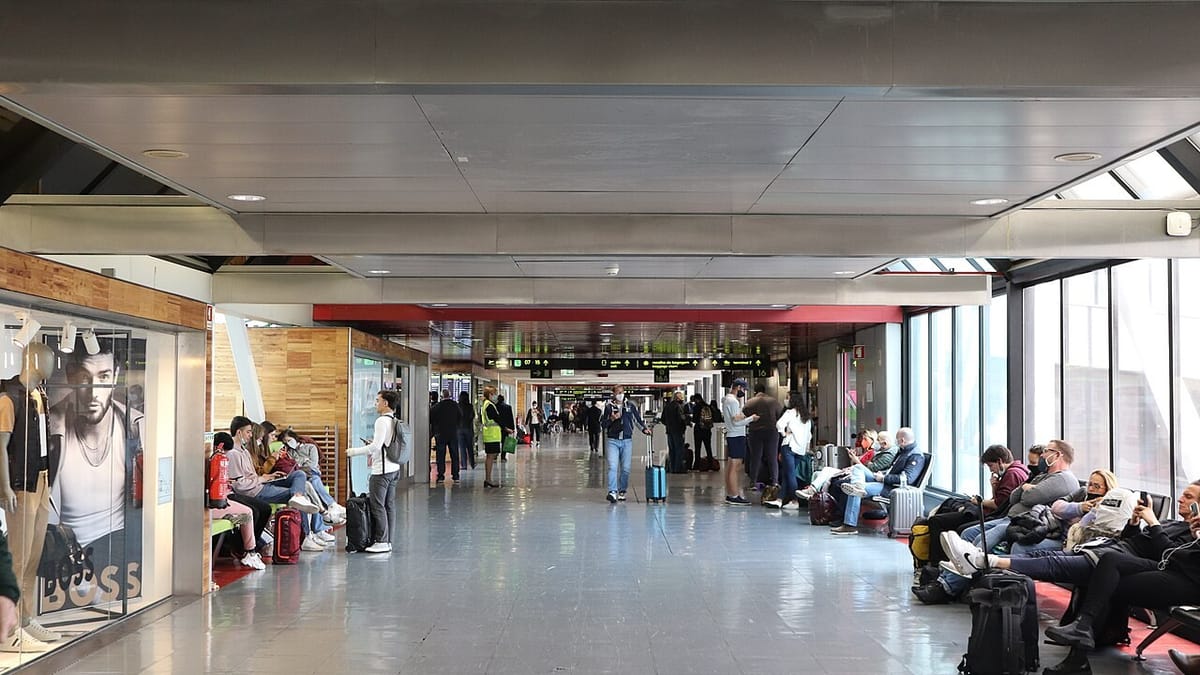
Feature image: Terminal 1 at Lisbon's Humberto Delgado Airport. Photo by Andrzej Otrębski (CC BY-SA 4.0), via Wikimedia Commons.