Environmental Groups Contest the Girabolhos Dam Tender, Calling It a 'False Solution' to Baixo Mondego Flooding
As the government opened the tender to build the Girabolhos dam on the Mondego, the groups Zero and Quercus called it a 'false solution' to the Baixo Mondego floods and demanded a fresh environmental assessment, noting the reservoir covers under 15% of the river basin.
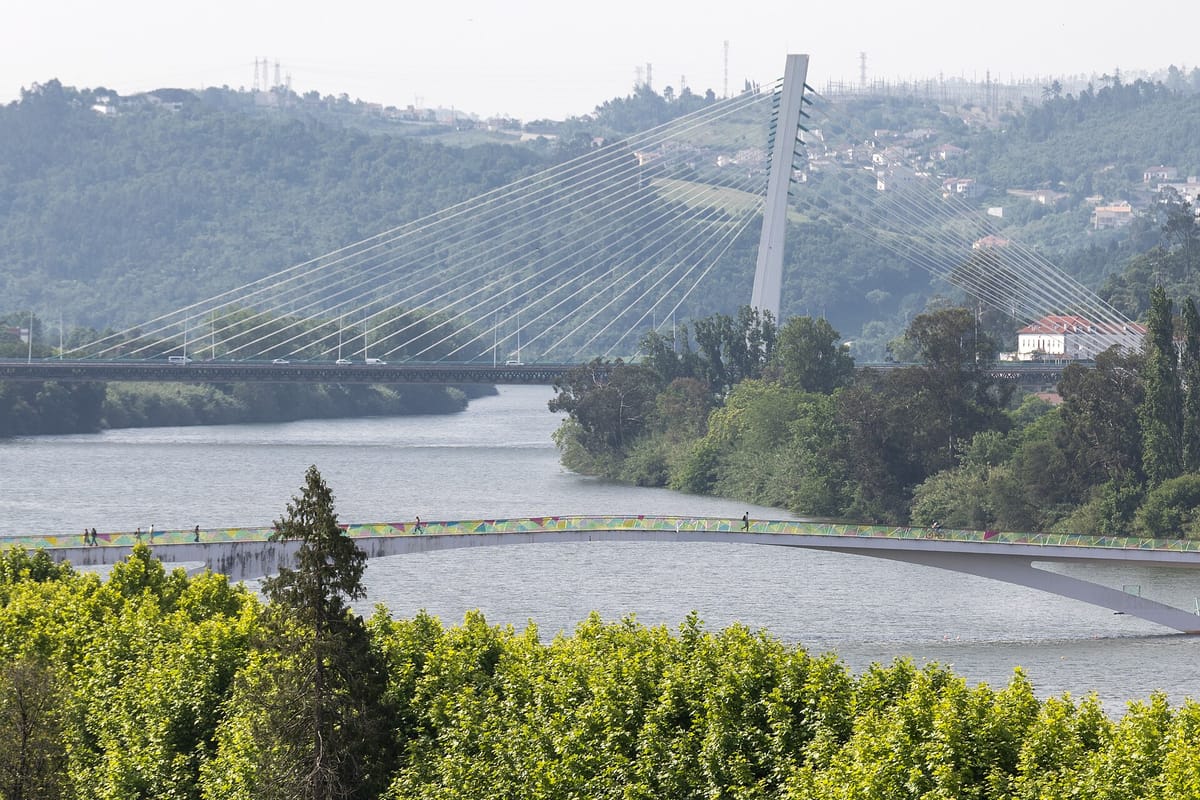
As the government opened the public tender on Wednesday for a concession to build the Girabolhos dam on the River Mondego, two of Portugal's leading environmental groups told it to stop. The associations Zero and Quercus argue the reservoir is a "false solution" to the flooding that devastated the Baixo Mondego — the river's lower plain around Coimbra — last winter, and they are demanding that the project be sent back for a fresh environmental assessment before any concrete is poured.
The tender was launched in Gouveia, in the Guarda district, by Environment Minister Maria da Graça Carvalho. It forms part of the government's "Água que Une" (Water that Unites) strategy, with construction pencilled in for 2026 and 2027 at an official indicative cost of €300 million. Zero puts the likely bill above €500 million.
The environmentalists' case
Zero's central objection is one of scale and geography. The area draining into Girabolhos is estimated at 980 square kilometres — less than 15% of the entire Mondego basin. The remaining 85%, the group notes, would keep generating floods the dam cannot intercept. "Spending hundreds of millions of euros downstream of the problem is not building resilience, it is repeating, on the scale of the Mondego, the planning error the 2026 floods exposed," the association said. "The priority has to be where the flood is born — in the mountains."
The groups also question the project's paperwork. The Declaração de Impacte Ambiental (Environmental Impact Declaration, or DIA) for the Girabolhos hydroelectric scheme was issued on 26 July 2010 and has been lapsed since 2014, and the original design was for power generation rather than the multi-purpose water use now being put out to tender. On those grounds, Zero and Quercus want a new Avaliação de Impacte Ambiental (Environmental Impact Assessment) that genuinely compares alternatives, including reforestation of the Açor and Lousã ranges upstream.
Why the floods happened
The February 2026 floods, the environmentalists argue, were the product of two compounding factors: above-normal rainfall between October 2025 and mid-February 2026 that saturated the soils, and a succession of wildfires — the most recent in 2025 — that stripped the land of its ability to soak up water, an effect that can linger for two to seven years. A working group that studied the February disaster concluded that existing river infrastructure is performing below expectations because deforestation and fire have altered how the basin behaves.
Their proposed alternative is to spend upstream, not downstream. Integrated forest restoration costs an estimated €2,000 to €3,000 per hectare, they say, meaning the €300 million earmarked for the dam could instead treat 100,000 to 150,000 hectares — enough to cover the whole upstream basin, while delivering sediment retention, fire resilience, biodiversity, carbon storage and cleaner water that a wall of concrete does not.
For residents of the Coimbra region and the Beira interior, still counting the cost of February's inundations, the dispute is more than academic: it will shape whether the state's flood-protection money buys a single large reservoir or a slower, landscape-wide restoration. The government has framed Girabolhos as decisive action; its critics warn that betting on one dam covering a sliver of the basin risks leaving the Baixo Mondego exposed to the next record winter. On the money behind the physical repairs, the Territorios Resilientes fund the government widened on 31 August sets out Resolução do Conselho de Ministros 176/2026, the rise in the ceiling to 80,088,647 euros, the five inland councils added to Annex I after reporting their damage late, the seventeen categories of river and coastal work it pays for, and the carry-over that lets unspent 2026 money run into 2027. On the mechanics of taking a Portuguese public body to court, our guide to the providência cautelar, the urgent administrative injunction that carries a 48-hour first order, an automatic freeze on executing a suspended act, and a 306 euro court fee sets the latest reference.