EDP Hands EDPR's 1.8-Gigawatt Brazilian Fleet to EDP Brasil to Refocus the Renewable Arm on the United States and Europe
EDP confirmed on Tuesday that EDPR's onshore wind and solar fleet in Brazil — 1.1 GW of wind and 0.7 GW of solar — moves to 100-percent-owned EDP Brasil before year-end at an enterprise value of around €1.5 billion. Capital recycles into US and European projects.
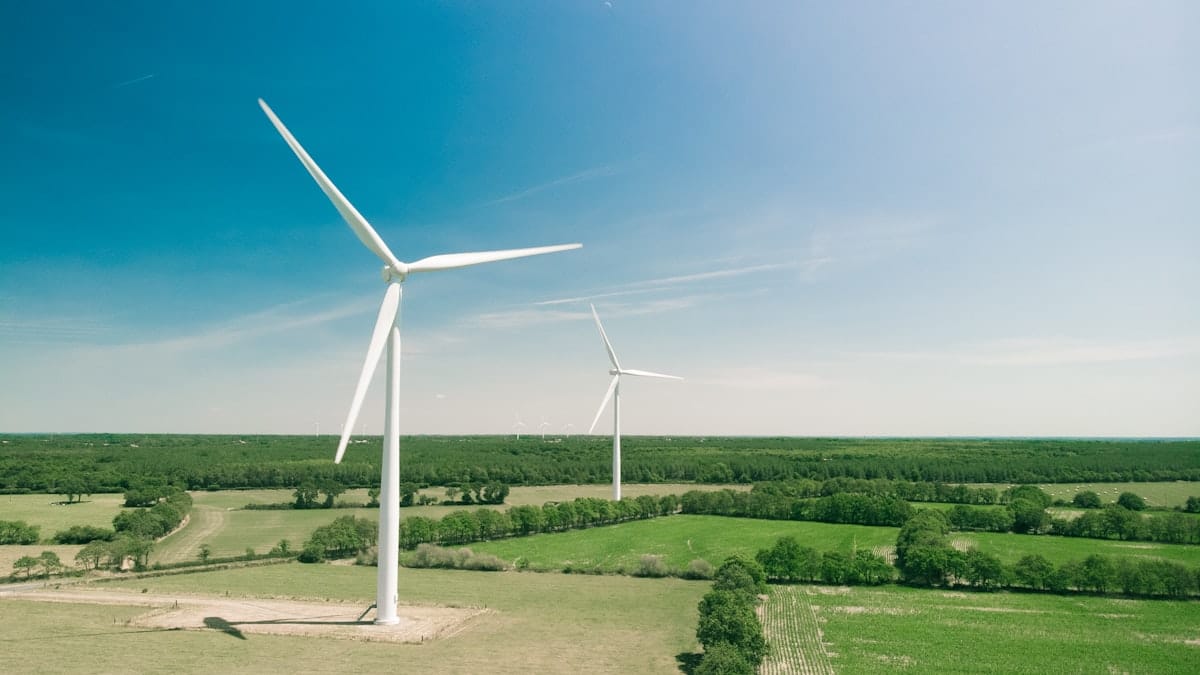
The Portuguese utility EDP told the market on the morning of Tuesday 19 May that its 71.3-percent-owned renewable subsidiary EDP Renováveis — known on the bolsa as EDPR — will offload its entire Brazilian onshore wind and solar fleet to EDP Brasil, the parent's wholly owned Brazilian arm, by the end of 2026. The intra-group transaction values the asset block at an equity figure of roughly 4.1 billion Brazilian reais, or about €700 million at the 6.0 EUR/BRL conversion EDP uses internally, with an enterprise value of around €1.5 billion once project-level debt is folded in.
The move is the cleanest expression to date of the strategy EDPR chief executive Miguel Stilwell de Andrade has been signalling since the 2025 capital markets day: EDPR will become a pure-play developer concentrated in A-rated markets where electricity prices, permitting and counterparty quality justify the cost of capital. Brazil — for years EDPR's largest Latin American footprint outside Spain and the United States — no longer makes that cut.
What Moves and Why
The perimeter of the transfer is 1.8 gigawatts of operational and contracted renewable capacity: 1.1 GW of onshore wind in the Bahia and Rio Grande do Sul wind belts, and 0.7 GW of solar across an array of distributed and centralised plants. After the move, EDPR's EBITDA composition rebalances toward growth markets, with the company guiding that the share of EBITDA generated in A-rated economies rises from roughly 90 percent to north of 95 percent.
EDP framed the decision in two clauses. The first is the diminished outlook for greenfield renewable returns in Brazil: an oversupplied free market, a regulated tariff system that has been re-priced repeatedly, and a real that has shed value against the euro have squeezed dollar-equivalent returns even on assets that perform well operationally. The second is the opportunity cost: EDPR's pipeline in the United States — solar, onshore wind, offshore wind and grid-scale battery storage — and in Europe is hungry for capital and benefits from inflation-linked PPAs that the Brazilian market increasingly cannot offer.
EDP Brasil, which already runs the parent's regulated distribution and conventional generation businesses in São Paulo, Espírito Santo and Mato Grosso do Sul, slots the EDPR fleet into a single Brazilian platform exposed to the mercado livre. The group says the consolidated platform will compete more effectively for the long-term contracts that large Brazilian industrial off-takers — from auto plants to data centres — are signing as Latin American demand for clean megawatt-hours catches up with European levels.
Capital Recycling Mechanics
From a treasury angle, the deal is asset rotation rather than divestment: cash technically stays inside the EDP group but moves from the EDPR balance sheet to the EDP-Brasil balance sheet, freeing EDPR to redeploy approximately €700 million of equity into its 2026-28 capex programme. EDPR's guidance has been that every gigawatt of new high-quality onshore wind in the United States costs around €1.0-1.2 billion to build, so the recycled equity supports roughly a 5- to 6-GW capex tranche when leveraged at the group's standard project gearing. Standard & Poor's and Moody's, which both grade EDPR investment grade, are expected to read the move as credit-positive because it lifts the share of EBITDA from A-rated jurisdictions while reducing currency-mismatch exposure.
For minority shareholders in EDPR — EDP holds 71.3 percent, with the rest free-floating on Euronext Lisbon — the related-party nature of the transaction is the sensitive piece. EDPR's audit committee and the bolsa supervisor CMVM are expected to scrutinise the fairness opinion that underpins the €1.5-billion enterprise value, which broadly equates to about €830 of EV per kilowatt installed — at the lower end of the comparable range for Brazilian renewable portfolios but defensible given the regulated-market drag. A small wave of analyst notes are expected when EDPR posts the deal's formal communication to the bolsa later this week.
Read in the Wider Group Picture
The Brazilian handover slots into a sequence of EDP capital-allocation moves that all point in the same direction. EDPR's Tuesday's PSI session already had EDPR digesting a scrip-dividend drag from prior weeks, with Brazilian wind margins compressed against currency. The parent has continued to lean on its strong Iberian hydro and grid-services businesses to fund domestic solar expansion despite the APA stall on the Beira mega-solar pipeline, and government minister Maria da Graça Carvalho's 2-GW-a-year wind-and-solar target for 2030 has reinforced the political case for capex inside Portugal.
EDP's listed siblings on the PSI — REN, Galp, EDP itself and EDPR — closed Tuesday in mixed territory, with the PSI edging up 0.19 percent on REN and NOS gains while EDPR digested the Brazilian announcement. The Brazilian real reacted modestly: any meaningful repricing will follow the closing schedule, which EDP indicated runs through the second half of 2026 pending regulatory approvals at ANEEL and the Brazilian competition authority CADE.
What This Means for Expats
- If you hold EDPR equity in a Portuguese brokerage account, the deal is structurally neutral at the parent level but credit-positive at the EDPR level, with capital recycled into higher-return markets. Expect the audit-committee fairness opinion before the next ex-dividend date.
- If you are a Portuguese-resident retail investor with EDP shares, no cash distribution event is triggered; group debt does not change, and IRS treatment of any future dividend remains under the 28-percent flat rate inside Category E of the IRS code.
- If you work in Portuguese renewable-energy services — wind-blade fabrication at A-to-Be, solar EPC, balance-of-plant logistics — the capital recycled into US and European projects is the addressable market for export-oriented Portuguese supply chains, not the Brazilian market that just got internalised.
- If you are a residential autoconsumo solar producer, EDP's reaffirmed Iberian capex bias suggests grid services, smart-meter rollout and battery-pairing offers will continue to expand inside Portugal, with EDP Comercial pushing solar-plus-storage bundles aggressively into the second half of 2026.
- If you are a Brazilian expat in Portugal, the deal underscores that EDP Brasil is now the consolidated Brazilian face of the group — useful context if you maintain accounts with Brazilian utility services or if you are tracking how Portugal-headquartered firms position in the Lusophone economic space following PAICV's return to power in Cabo Verde.
The closing schedule, fairness opinion and ANEEL/CADE regulatory packets will set the rhythm of the next news cycle. For Stilwell de Andrade, the harder follow-up question is operational: where, exactly, does the recycled €700 million land first — the US offshore-wind queue, the European battery pipeline, or a second wave of Iberian solar — and how does that allocation absorb the tariff and rate-volatility shocks that have made 2026 such an uneven year for the European utility complex? On the electricity-market reform and renewable-acceleration side of the file, our 5 June read on President António José Seguro promulgating the Government's electricity decree-law that amends Decreto-Lei 15/2022, transposes EU Directive 2024/1711 plus partial transposition of Directives 2023/2413 (RED III) and 2023/1791 (Energy Efficiency), carves out ZAER renewable-acceleration zones, exempts 800 W self-consumption from prior verification and mandates fixed-price tariffs from retailers above 200,000 customers sets the latest reference. On the Portuguese M&A tape, TTR Data Iberian release, venture-capital deployment, cross-border buyer profile and Strait-of-Hormuz/tariff macro overlay side of the file, our 11 June read on the Portugal M&A tape skidding through Jan-April 2026 with deal count down 32% and value down 28% on TTR Data's release — €1.3 billion across 141 operations as Technology and Real Estate tie at 21 each, Spain leads cross-border inflow with 13 inbound transactions, the largest disclosed deal is Inverso Estratégico's €20M Aquitex acquisition and venture capital posts +48% counter-cycle sets the latest reference. On the Portuguese renewables-equity tape, Acciona Energía portfolio rotation, Iberian wind-and-solar M&A and parent-level strategic-review side of the file, our 19 June read on Acciona Energía plotting a 166 MW Portuguese wind-and-solar divestment — 120 MW wind stack and 46 MW solar cluster go to advisors as the Spanish parent weighs a delisting or buyout of its 91% renewables stake sets the latest reference. On the energy, industry and green-investment side of the file, our coverage of Portugal's bet that cheap electricity can draw green industry sets the latest reference.