Solar Self-Consumption (Autoconsumo) in Portugal in 2026 — A Practical Guide to UPAC Tiers, the DGEG Communication, the ERSE Surplus-Injection Rules and What Your Roof Actually Earns
Portugal closed 2024 with 237,000 self-consumers and 1.8 GW of installed UPAC capacity. This 2026 guide walks foreign residents through the four DGEG/ERSE capacity tiers, the SERUP communication, surplus-injection rules to the CUR, and the payback maths on a typical Portuguese roof.
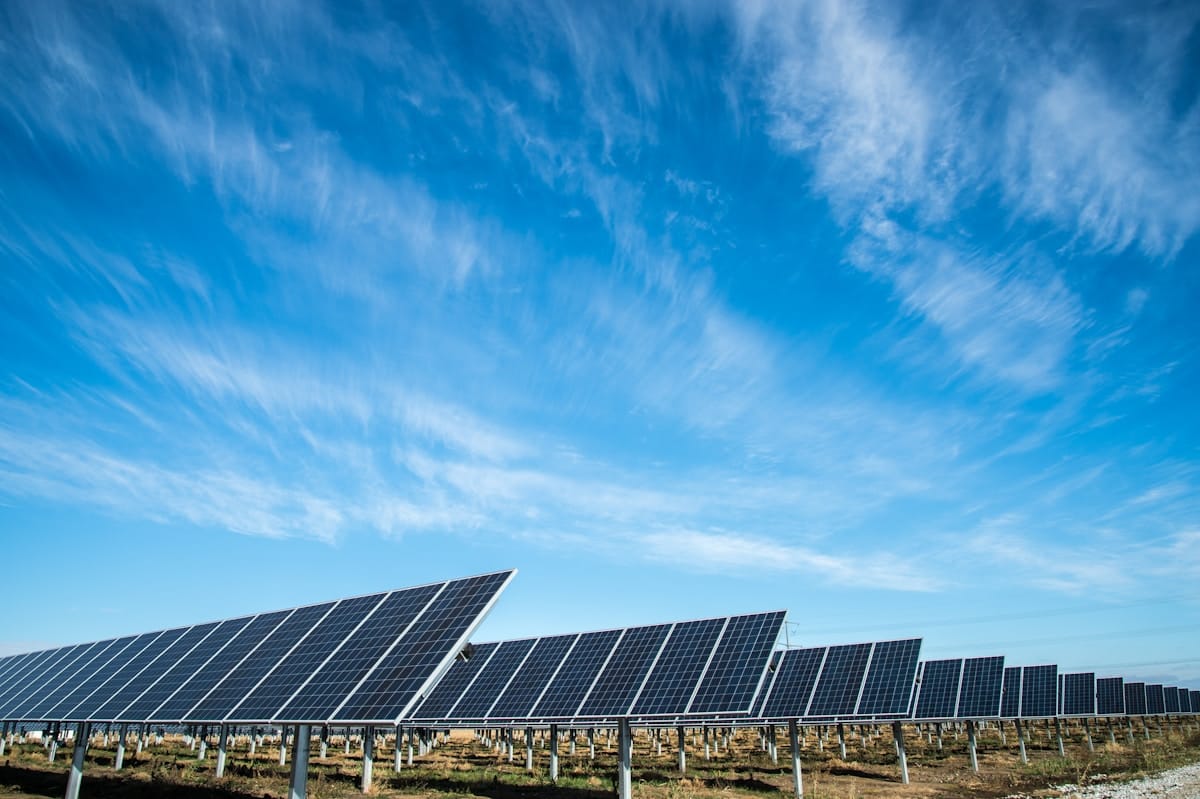
Portugal closed 2024 with 237,000 registered self-consumers and roughly 1.8 GW of installed UPAC capacity (about 3% of final electricity consumption), a number that has roughly doubled since the 2022 reform of the autoconsumo regime under Decreto-Lei n.º 15/2022 — and the curve is still steepening. For foreign residents who own a house, an apartment with private roof rights, or a small commercial space, installing a photovoltaic UPAC is now the single most concrete way to reduce a household electricity bill in a country with some of Western Europe's highest residential power tariffs and one of its longest sunshine windows. This guide walks through the four installed-capacity tiers, the DGEG and ERSE registration paths, the surplus-injection rules into the public grid (RESP), and the rough payback maths for a typical Portuguese household roof in 2026.
The legal stack — what governs autoconsumo in 2026
The framework is built on five pieces:
- Decreto-Lei n.º 15/2022 of 14 January, the core legislation that consolidated the autoconsumo regime and transposed the EU Renewable Energy Directive (RED II);
- Despacho n.º 46/2019, which sets the licensing procedures (mera comunicação, registo, certificado de exploração, licença de produção);
- Portaria n.º 16/2020, which defines the UPAC fees;
- ERSE Regulamento n.º 8/2021, the regulator's self-consumption regulation that governs how UPACs interact with the public grid (RESP) — the rules for surplus-energy sales, fixed-bilateral contracts and access tariffs;
- Despacho n.º 1177/2024, which exempts self-consumed energy distributed via the public grid from CIEG charges on the network access tariff — the most important 2024-2026 update for collective self-consumption (CER).
The four installed-capacity tiers
The administrative effort scales with the size of the system. The cleanest mental model is four tiers:
- Up to 700 W of installed power, no surplus injection. No registration, no DGEG communication, no fees. This is the regime for plug-and-play balcony or balcony-rail kits — the small monocrystalline modules wired to a wall socket via a microinverter. The catch: you cannot sell surplus.
- 700 W to 30 kW. Mera comunicação prévia to DGEG via the SERUP portal. The fee under Portaria 16/2020 is symbolic. This is the bracket that catches most residential rooftop systems — a typical Portuguese T2/T3 house roof with 4-8 kWp of panels lands here.
- 30 kW to 1 MW. Registration plus an Operating Certificate (Certificado de Exploração), with annual reporting to DGEG. This is where small commercial premises, condomínios with collective self-consumption, and farms with irrigation pumps live.
- Above 1 MW. Full production licence (Licença de Produção) under the centralised renewable regime. Outside scope of household autoconsumo.
What "autoconsumo" actually means — and the surplus question
The 15/2022 regime distinguishes three operational modes for any UPAC:
- Pure self-consumption: every kWh produced is used on-site in real time. Whatever you do not consume is curtailed by the inverter. Simplest, cheapest, but wastes energy on long sunny afternoons.
- Self-consumption with surplus injection (com excedente injetado): surplus is exported to the public grid (RESP). The 15/2022 regime gives you two ways to monetise it — a venda à comercializadora de último recurso (CUR), at the OMIE-indexed price minus a marketing fee, or a contrato bilateral with any liberalised retailer. The vast majority of households take the CUR route because the contract is automatic and the spread is small.
- Coletivo (Comunidade de Energia Renovável, CER): multiple consumers share a single UPAC through a pre-registered agreement and an internal regulation that has to be filed with DGEG within three months of operation. This is the regime that lets condominiums in Lisbon and Porto put solar on the roof of an entire building and split the production by pre-agreed coefficients across the apartments — the regime is also the one that the Despacho 1177/2024 CIEG exemption directly targets.
The CUR surplus tariff — what your kWh exports actually earn
The price you receive when you sell surplus to the comercializadora de último recurso (the SU Eletricidade — the last-resort supplier wing of EDP Comercial) is set monthly and tracks the OMIE Iberian wholesale market price minus a regulated marketing margin. Through 2024 and the first half of 2025 the surplus tariff bounced between roughly 4 and 9 cents/kWh, well below the retail tariff most households pay (typically 18-22 cents/kWh on the regulated tariff, or 14-18 cents on a competitive retailer). Practical implication: a kWh consumed inside the house at the moment it is produced is worth roughly two to three times more than the same kWh exported. This is why the engineering rule of thumb is to size a residential UPAC to your daytime baseline (fridge, electronics, heat-pump water heater) rather than to your annual total — oversizing past the daytime baseline gives you surplus you can only sell at the wholesale price.
What your roof can typically produce in 2026
A south-facing rooftop on the Greater Lisbon plateau gets around 1,650-1,750 kWh per kWp installed per year; the Algarve runs about 100 kWh/kWp higher, and northern Portugal — Minho, Trás-os-Montes — about 100 kWh/kWp lower. A 4 kWp household system on a Lisbon roof therefore produces about 6,800 kWh/year, of which roughly 2,500-3,500 kWh is self-consumed in real time on a typical occupied home and 3,000-4,000 kWh is exported. Turnkey installation costs in 2026 sit at around €1,000-1,300 per kWp for a residential system using monocrystalline modules and a hybrid inverter; the same system with battery storage runs €1,800-2,400 per kWp. Payback periods on the no-battery configuration land at 6-8 years on Greater Lisbon retail tariffs.
The CIEG exemption that makes CER work
The single most important administrative update for collective self-consumption in 2024-2026 is Despacho n.º 1177/2024, which exempts UPAC-distributed energy moving over the public grid (i.e. from a roof-mounted UPAC on building A to consumption point B in building B, both inside the same CER) from the Custos de Interesse Económico Geral component of the network access tariff. Before the despacho, CER members were paying the full CIEG component on every kWh they shared through the grid — a charge that wiped out roughly half the savings the regime was meant to deliver. With the exemption in place, an apartment-block CER on a Lisbon roof now beats the household-by-household economics of individual UPACs in most configurations, and is the recommended route for any condominium with at least 3-4 participating units.
Step-by-step — how to install a residential UPAC in 2026
- Confirm roof, orientation and electrical capacity. Get a structural sign-off from a credentialled installer (the DGEG keeps a public list). South-facing or south-east/south-west orientations work; flat roofs need a 10-15° tilt frame.
- Sign the installer contract — the installer is responsible for the SERUP portal mera comunicação or registo on your behalf. Watch the contract for the IVA tax rate (the IVA Reduzido at 6% on solar PV has been confirmed for 2026 under the State Budget).
- The installer files the SERUP comunicação with DGEG. For the 700 W-30 kW bracket the response is administrative-silent if no objection is filed within 30 working days.
- E-Redes (the DSO) sends a smart meter with bidirectional metering capability so the inverter can register both consumption and surplus. Free of charge if you do not already have one.
- Sign the surplus-injection contract with the SU Eletricidade — the standard CUR contract. Comes with a 30-day cooling-off window.
- Commissioning visit by a credentialled technician — the installer has 30 days from energisation to file the certificate of conformity with DGEG.
- Annual readings: the SU Eletricidade reads the surplus meter monthly via E-Redes; surplus credits are netted on your monthly bill.
What the IRS jovem and the IFICI tax regimes do not cover
Solar PV installation costs are not deductible against IRS through any of the three special-resident regimes that drive the most expat enquiries (NHR-2/IFICI, IRS Jovem, retorno de emigrantes). The only tax break that does help is the IVA Reduzido at 6% on the photovoltaic equipment and labour, valid through 2026 under the current State Budget. Households on the regulated electricity tariff do not need to do anything to keep their access to the Tarifa Social on the consumption side — installing a UPAC has no effect on the social tariff status, even if the household becomes a net exporter on a sunny month.
The numbers that should drive your decision
- If you live in a flat without private roof rights: wait for your condomínio to organise a CER. The Despacho 1177/2024 CIEG exemption now makes the maths work; without the exemption it did not.
- If you own a south-facing house on the coast: a 4-6 kWp UPAC with no battery typically pays back in 6-8 years, with a 25-year panel warranty. The dominant variable is whether you can shift dishwasher, clothes-dryer and heat-pump water-heater consumption into daylight hours.
- If you own a rural Alentejo or Algarve property with a borehole or irrigation pump: the maths flips because daytime irrigation is a near-perfect match for solar production. Payback can drop to 4-5 years.
- If you are considering a battery: in 2026 the residential lithium-iron-phosphate battery market is improving but still adds 6-10 years to the payback unless you face frequent grid outages or you are on a complex tri-horária tariff.
The 1.8 GW of installed UPAC capacity at end-2024 is roughly the same nameplate as Portugal's largest single hydroelectric reservoir at Alqueva. It is also the segment of the energy system most tied to individual household decisions — and the one where a foreign resident in a Lisbon apartment, an Algarve villa or an Alentejo quinta has the most immediate agency over their electricity bill.