ECB Ties 27 Percent of Portuguese Lenders' and Investors' Company Exposures to High Wildfire-Risk Areas, More Than Twice Italy's Share
New ECB climate indicators put 27 percent of Portuguese financial institutions' exposures to companies in high wildfire-risk areas, against 12 percent in Italy. Portugal also ranks among the most exposed to rising cooling needs.
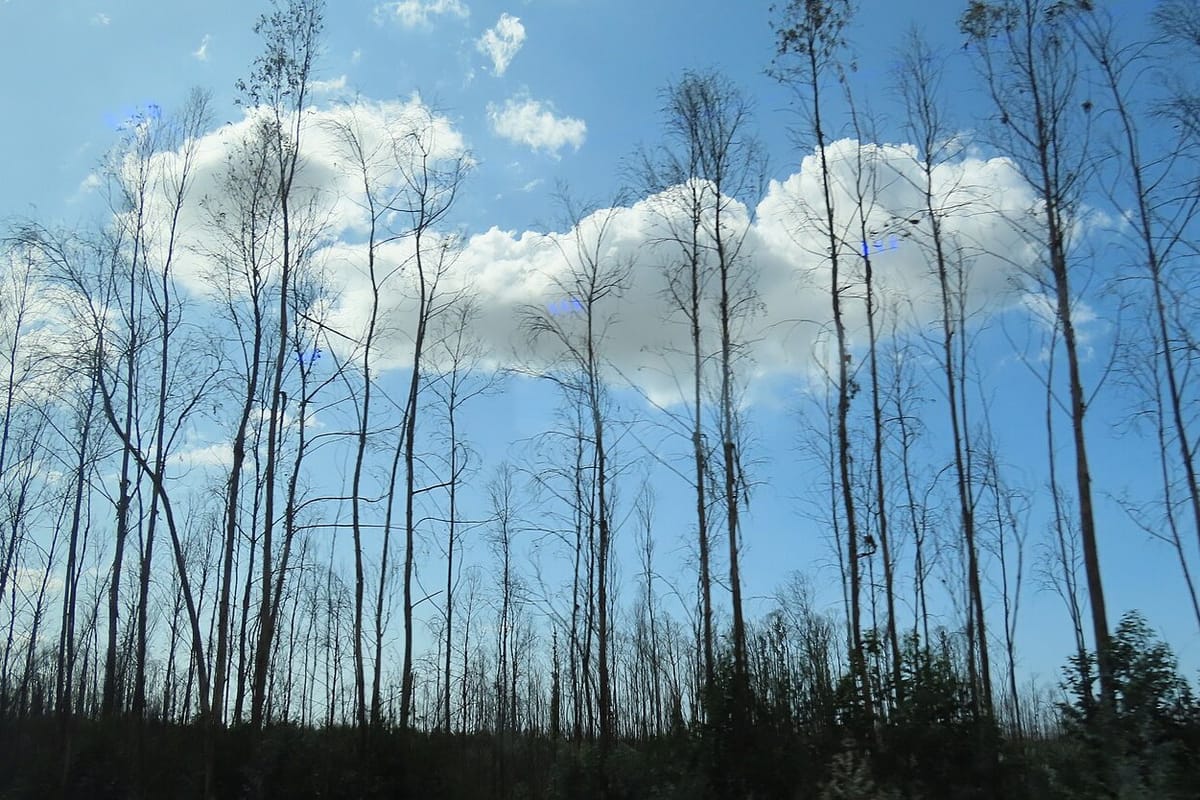
More than a quarter of the money that Portuguese financial institutions have lent to or invested in companies is tied to places at high risk of wildfire, according to climate indicators published by the European Central Bank (ECB) on Thursday. The share is 27 percent in Portugal, more than twice the 12 percent in Italy, the next country the ECB names.
What the ECB measured
The ECB's release looks at the loans, bonds and shares that euro area banks, investment funds, insurers and pension funds hold in non-financial companies, and at how exposed those companies are to natural hazards. The reference date is December 2025. The wildfire figures are projections under an intermediate climate scenario (known as RCP 4.5), not a count of past fires, and the ECB says its wildfire estimates have been improved with new data sources and methods in this release.
On that basis, the ECB says southern euro area countries stand out, "particularly Portugal, Italy, Spain and Greece". Greece has the highest exposure when all risk levels are added together. Institutions in central euro area countries have less exposure to high wildfire risk, but a large share in medium-risk areas: 40 percent of portfolios in Belgium and 27 percent in France.
Two caveats come with the figures. They are calculated by the country of the lender or investor, so a Portuguese institution's exposure can include companies abroad, and a country's figure "may reflect hazards outside its territory". The ECB also left some countries out of its chart for confidentiality reasons or because the hazard was of little relevance there. The figures cover lending to companies only, not mortgages.
Heat is the other warning
The release adds a new heat measure, "cooling degree days", as a proxy for how rising temperatures push up firms' energy demand and costs. Greece has the highest current score and the largest projected rise, followed by Croatia, Italy, Spain and Portugal; Estonia and Finland are the least exposed. The ECB expects cooling needs to rise across the whole euro area, and notes the "extreme heatwaves" and "significant wildfire activity" of summer 2026.
Emissions are falling
The same release shows the carbon footprint of euro area finance shrinking. Direct emissions of the companies financed by banks' loans fell 36 percent between 2018 and 2025, from 221 to 142 million tonnes of CO2 equivalent, without a drop in lending to those companies. For investment funds' securities, the fall was 34 percent, from 499 to 328 million tonnes. The 2025 values are ECB estimates (nowcasts), not final data.
Why it matters
The indicators are statistics, not a supervisory finding or a capital charge. They do, however, put a number on a risk that runs through Portugal's economy: if fires damage the businesses that banks and funds have financed, those losses can reach lenders and investors. Earlier this week the insurance regulator estimated that nearly half of Portugal's homes lack climate-risk insurance. The ECB plans to update its sustainable-finance indicators, the remaining part of this statistical set, by January 2027.