Driving Schools Want Every Portuguese Driving Test Tracked From Start to Finish, to Stamp Out the Favours They Blame for Some Passes
ANIECA, which speaks for more than 730 schools, also attacks the new tutor route to a licence, warns that a 500 euro licence can end up costing 1,000, and says instructors wait six months for their own exam.
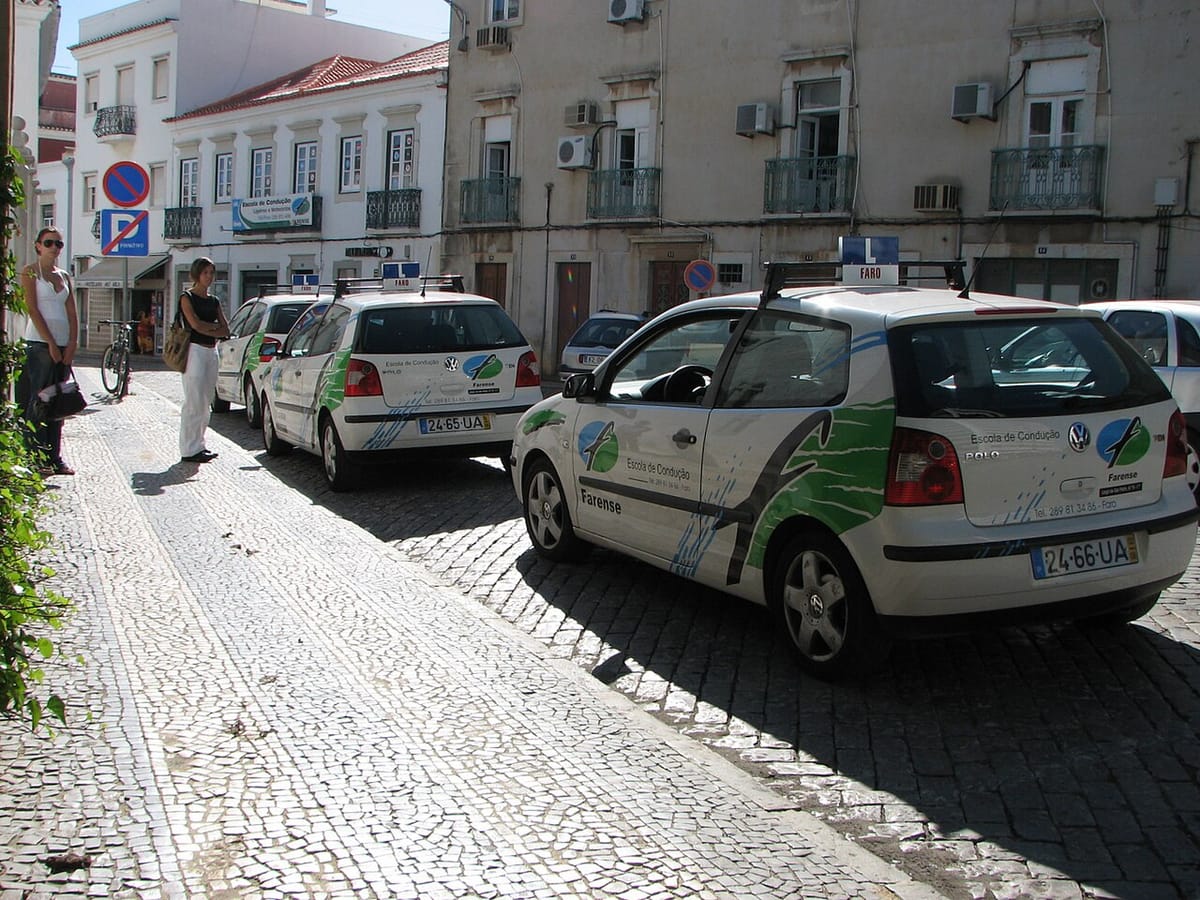
Portugal's driving schools want every driving test to be monitored from start to finish, the way their lessons already are, to end what they call "cunhas", the favours and personal connections that they say can tip a result. The call comes from ANIECA, the national association of driving schools, whose president, António Pinto Reis, set it out in an interview with ECO published this weekend.
"Monitoring will put an end to cunhas, it will put an end to the examiner's free will. It will improve assessment, the work of driving schools and road safety," he said. ANIECA represents more than 730 schools across the country.
Tests that run short
According to Pinto Reis, conditions differ from one test centre to another, and some tests do not last as long as they should. "We have set times for exams and not everyone meets them. There are 50-minute slots for the exam and unfortunately that does not happen in several places," he said. He also spoke of an "exame de boa hora", a well-timed test in which certain candidates would benefit from easier conditions.
The system ANIECA wants would record who the candidate is, where the test starts, how long it takes and when it ends. "Monitoring of the exam, promised by the government in 2014, has still not been done," he said.
Learning with a tutor
The interview comes as driving schools contest one of this year's changes to the licence system: a regime that lets learners do their practical training with a tutor instead of a school instructor, provided the tutor meets certain conditions, including holding a licence for at least ten years. In April the then Minister of the Presidency, António Leitão Amaro, said the tutor is responsible for any damage or offences caused by the learner. The Socialist Party asked parliament in July to review the decree.
ANIECA says the model undermines professional training and leaves open who is liable in an accident, and whether tutors will have insurance that covers it, especially when the learner is a minor. Pinto Reis said the regime could be corrected and that the association is willing to help put it into practice if training quality and liability are secured.
What a licence really costs
For anyone about to learn, the association's other complaints are worth reading. It says some operators advertise a licence for about 500 euros, while the final bill can come close to 900 or 1,000 euros once extra lessons and other charges are added, and it wants the law changed so that below-cost pricing can be tackled.
Schools are also short of instructors. Pinto Reis said newly trained instructors can wait six months to sit their own exam at the IMT, the transport regulator, often without pay in the meantime. About 4,000 instructors are registered with the IMT, he said.
He blamed a decade of piecemeal rule changes and too many overlapping regulators for the sector's troubles. "We need better regulators," he said.