Doctors May Prescribe the Pill to Under-16s Without Their Parents' Consent, the Medical Association's Ethics Council Concludes
Opinion No. 54 of the Ordem dos Médicos ethics council calls such a prescription possible and appropriate. It rests on medical confidentiality, the 1984 family planning law and the duty not to cause harm, while urging family conversations where possible.
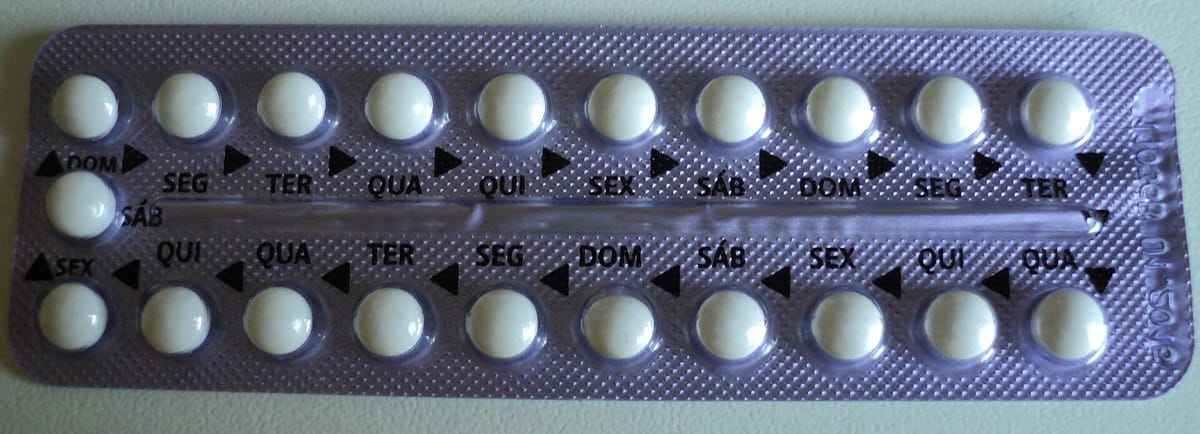
A doctor in Portugal may prescribe regular contraception, such as the pill or a long-acting method, to a girl under 16 without her parents knowing or agreeing. That is the conclusion of an opinion from the Conselho Nacional de Ética e Deontologia Médicas (National Council for Medical Ethics and Deontology) of the Ordem dos Médicos, the doctors' professional body, which calls such a prescription "possible and appropriate".
The opinion, Parecer n.º 54, "Contraceção na Adolescência" (Contraception in Adolescence), is dated 19 August 2026 and is published on the Ordem's website. Its rapporteur is the obstetrician and gynaecologist Miguel Oliveira da Silva, and it is signed off by the council's president, Margarida Silvestre. Público reported it on Friday.
The question
The Ordem's National Council passed the council a request, from a practitioner whose name is redacted in the published text, about "regular contraception in minors under 16". The request asked whether this can be done without the informed consent of legal representatives, for both the oral pill and long-acting contraception.
What the council found
The opinion starts from the law. Portugal sets no minimum legal age for starting a sexual life, and none for being prescribed contraception. It quotes the 1984 family planning law (Lei n.º 3/84), which guarantees everyone free access, without discrimination, to family planning consultations. It also cites a 1985 ordinance, Portaria n.º 52/85, which says the service must be provided "without restrictions" to all young people of fertile age. On confidentiality, it cites Lei n.º 120/99, under which young people can be seen at any family planning consultation, even at a health centre or hospital outside their home area. It also notes that Portaria n.º 52/85 binds staff at those consultations and at youth centres to professional secrecy.
It contrasts this with abortion, where current law does require the authorisation of parents or legal representatives for girls under 16.
From there the council draws three ethical points:
- All sexual and reproductive information is covered by medical confidentiality at any age, so the lack of parental consent cannot be a reason to hold back a prescription.
- Refusing contraception only because the parents have not authorised it, when the alternative exposes the adolescent to serious and preventable risks, could amount to causing harm by omission.
- For a minor who is sexually active, or about to be, preventing an unplanned pregnancy and sexually transmitted infections is part of the patient's good, and prescribing contraception is a direct act of beneficence.
Where teenagers get their information
The opinion cites a Kantar study for the European Parliamentary Forum for Sexual and Reproductive Rights, published in September 2024. It found that health professionals (44 percent) and social media or the internet (30 percent) are young people's first source of sexual information, well ahead of school (15 percent) and parents (3 percent). It also cites the Health Behaviour in School-aged Children study, coordinated in Portugal by Margarida Gaspar de Matos, whose 2018 round put the average age of first sex at between 15 and 16. The council adds that most adolescents do not tell their parents when they plan to start having sex, or when they already have.
Parents still have a role
The conclusion does not cut families out. In a healthy and inclusive family setting, "which is far from always the case", the council says it is desirable for under-16s to talk to their parents about their sexuality, relationships and any contraception.
The opinion is guidance on medical ethics from the profession's own regulator, not a new law. For families, the practical point is that a teenager can see a family doctor or a family planning consultation on their own, and the doctor is bound by confidentiality. Access to long-acting methods still depends on the service: an April survey found only a third of family doctors felt fully prepared to fit an IUD or implant.