Disabled People's Day Centres and Residential Homes Get a 95.2 Million Euro Building Call, Open to Charities Until 30 December
PARES 3.0 puts 39.8 million euros into activity centres and 55.4 million into residential homes for disabled people. The state pays up to 80 percent, funded places are to be covered by Social Security cooperation agreements, and charities apply until 30 December.
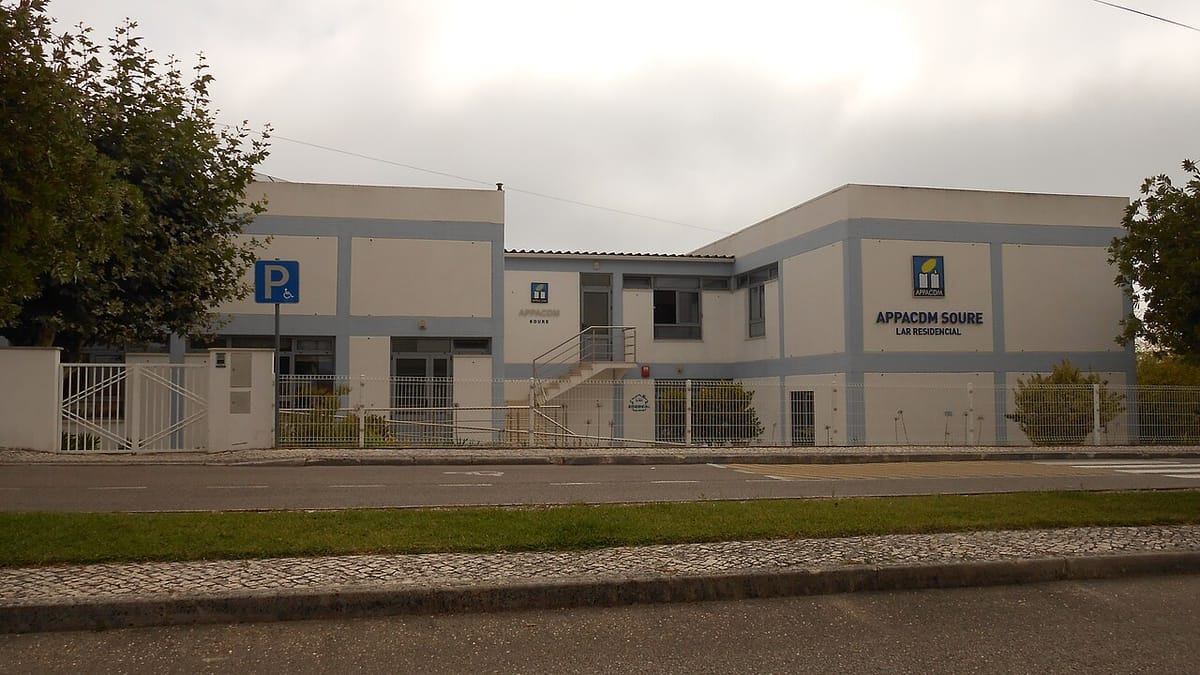
Charities that run day centres and residential homes for disabled people can apply, until 30 December, for a share of 95.2 million euros to build new places or refurbish the ones they have. The call for applications under PARES 3.0, the third generation of the Programa de Alargamento da Rede de Equipamentos Sociais (Programme to Expand the Network of Social Facilities), was published in the Diário da República (the official gazette) on 22 October as Despacho n.º 12924-A/2026. It is signed by the Secretaries of State for Social Security and for Social Action and Inclusion.
The money is not paid to individuals. It goes to the institutions that run these services, and families feel the effect through the number and quality of places near them.
Two kinds of service, two budgets
- Centro de Atividades e Capacitação para a Inclusão (CACI): an activity and skills centre for disabled people, which works on autonomy, community life and inclusion at work. 39.8 million euros.
- Lar Residencial (residential home): group housing, temporary or permanent, for disabled people who cannot live with their families. 55.4 million euros.
The call covers all of mainland Portugal. It funds two types of project:
- Type 1: projects that create new places;
- Type 2: urgent works, adapting buildings or replacing materials and equipment, without adding places.
A CACI can have up to two units of 30 places each. A residential home can have up to 30 places. Projects already contracted under the Recovery and Resilience Plan's investment in a new generation of social facilities are not eligible.
How much the state will pay
Public money can cover no more than 80 percent of the eligible investment, and projects with more of their own funding get priority. The despacho sets a standard building cost per resident, which caps the eligible investment:
- CACI: 5,906 euros for each place refurbished and 29,530 euros for each place created;
- Residential home: 9,318 euros for each place refurbished and 46,592 euros for each place created.
Set amounts per place are added for movable equipment, design work and site supervision. Anything above the cap must be paid by the institution, from its own funds, donations, loans or other support.
Funded projects have a maximum of 18 months under the programme's rules. Once the conditions for a cooperation agreement with Social Security are met, the agreement must cover every place that was built or refurbished. A cooperation agreement is the arrangement under which the state shares the running costs of a place.
How projects are ranked
Type 1 projects are scored equally on coverage, capacity, priority and insertion. Type 2 projects are scored on refurbishment (40 percent), priority (30 percent) and coverage (30 percent). The two lists are merged, with one Type 2 project slotted in after every two Type 1 projects.
Who applies, and how
Under the programme's 2020 rules, projects are promoted by instituições particulares de solidariedade social (private social solidarity institutions, the non-profit bodies that run most of Portugal's care services) or bodies legally treated as such. Applications are made on an electronic form on the seg-social.pt website, with an architectural study or later-stage project, the council's planning papers, proof of ownership or use of the land or building, and proof that the institution can fund its share. The Instituto da Segurança Social (Social Security Institute) answers questions on 300 512 370 or at [email protected].
Why it matters
The despacho links the call to the action plan of Portugal's strategy for the rights of disabled people, which plans to strengthen these services by 2030. Portugal's disability rights monitor recently listed gaps between the 2027 Budget and the UN Convention on the Rights of Persons with Disabilities, after telling the United Nations that support depends heavily on where people live. In the Azores, a new law gives disabled people a right to a personal assistant, but no one will get one until the regional budget pays for it.
For the support that individuals claim directly, see our guides to the Prestação Social para a Inclusão (Social Inclusion Benefit) and the multi-purpose disability certificate.