DGS Names Curry Cabral, São João and Dona Estefânia as Portugal's Three Ebola Reference Hospitals — Rita Sá Machado's 30 May Orientation Routes Suspect Cases Through INEM and INSA Ricardo Jorge With a 21-Day Post-Travel Self-Monitoring Window
A new DGS orientation signed by director-general Rita Sá Machado names Curry Cabral and São João as adult reference hospitals for suspect Ebola cases and Dona Estefânia for children, with INEM handling transport and INSA Ricardo Jorge confirming diagnoses.
The Direção-Geral da Saúde published an updated orientação on Saturday 30 May fixing the operational protocol for suspect viral haemorrhagic fever cases — Ebola and Marburg — in Portugal, naming the Curry Cabral hospital in Lisbon and the São João hospital in Porto as the adult reference units and the Dona Estefânia paediatric hospital in Lisbon as the route for children and adolescents. The document is signed by director-general Rita Sá Machado and was consulted by Lusa on Sunday 31 May, anchoring the national response posture to the Ebola surto declared by the Democratic Republic of the Congo on 15 May and elevated by the World Health Organization to a Public Health Emergency of International Concern.
Why the Update Now
The DGS orientação tracks the joint WHO and ECDC recommendation that countries not directly affected by the RDC outbreak — Portugal among them — reinforce early detection and clinical management of imported cases. The ECDC's Friday risk note placed the probability of infection for residents of Europe at “very low”, citing the limited importation pathway and the low secondary-transmission risk in European clinical settings. The African Union's Africa CDC tape published on Thursday counted 246 deaths and more than one thousand suspect cases in the Democratic Republic of the Congo, with the virus already detected in three RDC provinces and crossing into Uganda, where two new confirmed cases were posted on Friday lifting the East African country to nine confirmed.
The Suspect-Case Definition and the Notification Chain
Under the orientation, a suspect case is a person with fever above 38°C combined with nausea, vomiting, diarrhoea, anorexia, abdominal pain or haemorrhagic signs, and a recent travel history through areas with active viral circulation. Any clinician who identifies a suspect case must contact the DGS by telephone immediately and notify the case through the Sistema Nacional de Vigilância Epidemiológica platform. The DGS validates the suspect status and onward-routes the case in three directions in parallel: the Instituto Nacional de Emergência Médica is informed to assemble the dedicated transport team, the reference hospital is alerted to admit the patient, and the Instituto Nacional de Saúde Doutor Ricardo Jorge is briefed to run the confirmatory laboratory diagnosis.
What Happens at the Point of Identification
Before INEM arrives, the suspect case must be held in physical isolation in a dedicated space with controlled access, ventilated to the outside in a safe manner, with reinforced hand hygiene and respiratory etiquette and with the patient wearing a surgical mask. The orientation is explicit that the holding space must keep the patient separated from other people on the premises until the INEM specialist transport unit is on site.
The Three Reference Hospitals and the DIAC Isolation Units
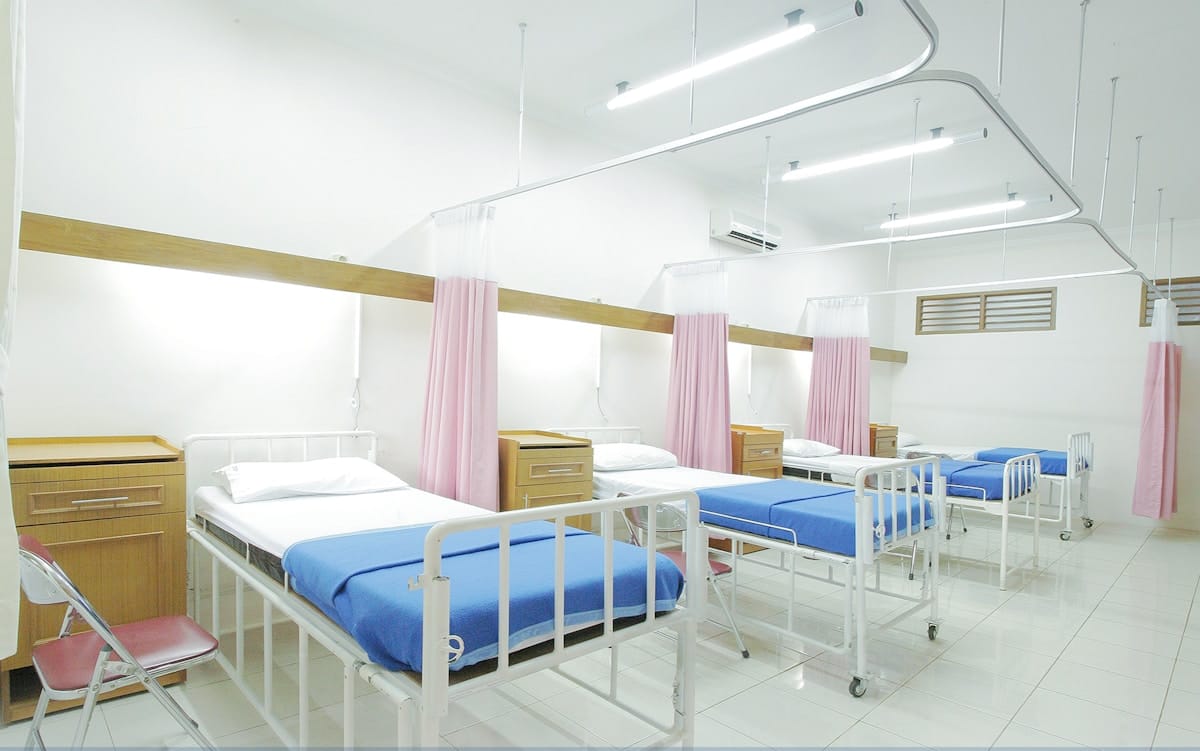
The Curry Cabral hospital, part of the Centro Hospitalar Universitário Lisboa Central, runs the Doenças Infecciosas de Alta Consequência isolation perimeter for adult cases in the Lisbon and Vale do Tejo region. The São João hospital, the Centro Hospitalar Universitário São João in Porto, is the adult reference unit for the Norte region. The Dona Estefânia paediatric hospital, also under CHULC, takes paediatric and adolescent suspect cases nationally. Once a suspect arrives, the infecciologia teams at each hospital coordinate with INEM the bed-receiving protocol and the patient is admitted immediately to the dedicated High-Consequence Infectious Disease isolation unit, where confirmatory testing is staged in liaison with INSA Ricardo Jorge.
What Travellers Heading to Endemic Areas Should Do
The orientation sets a four-step prophylactic frame for residents travelling to endemic or active-outbreak areas. Pre-trip, travellers should book a Consulta do Viajante through their local health unit, register on the Portal das Comunidades managed by the Ministério dos Negócios Estrangeiros and contract a travel insurance policy that includes evacuation cover. On return, the orientation requires active self-monitoring for 21 days, no blood donation for 60 days and no walk-in attendance at any Serviço Nacional de Saúde clinical service without prior telephone guidance from the SNS 24 line or the local USF.
If Symptoms Appear in the First 21 Days After Return
Travellers who develop fever or any of the suspect-case symptoms within the 21-day post-return window are instructed to call 112 in a medical emergency, mentioning the symptoms, the travel dates and the itinerary, so that the call centre can route the case directly through the INEM dedicated-transport channel rather than through a standard ambulance dispatch. For non-emergency symptoms, the orientation routes the traveller through SNS 24 (808 24 24 24) for triage before any in-person attendance. On the immunisation side of the file, Portugal's measles count for 2026 and the single chain that formed sets out the nine cases the Direção-Geral da Saúde notified through SINAVE between 1 January and 18 August, how they split between imported and domestic origin, and why the directorate is watching Brazil. On the state of Portugal's own disease reporting, what the WHO is now counting in Portugal that the DGS has not published sets out the 66 clade Ib mpox cases the World Health Organization recorded here in six weeks, more than Germany, France and the United Kingdom combined, against a national bulletin that stopped in May 2025 saying the country had seen none.
What Foreign Residents and Travellers in Portugal Should Know
- The three reference hospitals are Curry Cabral and São João for adults and Dona Estefânia for children. They run the Doenças Infecciosas de Alta Consequência isolation units — do not walk into any general emergency department if you suspect Ebola; call SNS 24 first.
- Self-monitor for 21 days after returning from the Democratic Republic of the Congo or Uganda. Track temperature twice a day and log any of the suspect symptoms: fever above 38°C, nausea, vomiting, diarrhoea, abdominal pain or any bleeding.
- Do not donate blood for 60 days after returning from an endemic area. The DGS orientation specifies the 60-day window irrespective of symptoms.
- Register on the Portal das Comunidades before travelling to an active-outbreak zone. The consular registration allows MNE to reach travellers in case of an evacuation or local-restrictions notice.
- SNS 24 is the entry point for any post-travel symptom triage. Dial 808 24 24 24 from a Portuguese line; the operator routes the case to the dedicated transport channel and avoids hospital walk-in exposure.
- The ECDC risk assessment for Europe is “very low”. The orientation is precautionary infrastructure for imported-case management, not a community-transmission alert.