Court of Auditors Counts 676 Million Euros of Extra Works on Public Contracts From 2023 to 2025, Almost Half of It at Infraestruturas de Portugal
Public bodies added 675.8 million euros of extra works to their largest contracts in three years, 562 million net of cuts, the Court of Auditors says. Infraestruturas de Portugal added 48.6 percent; 2025 was the highest year since 2006.
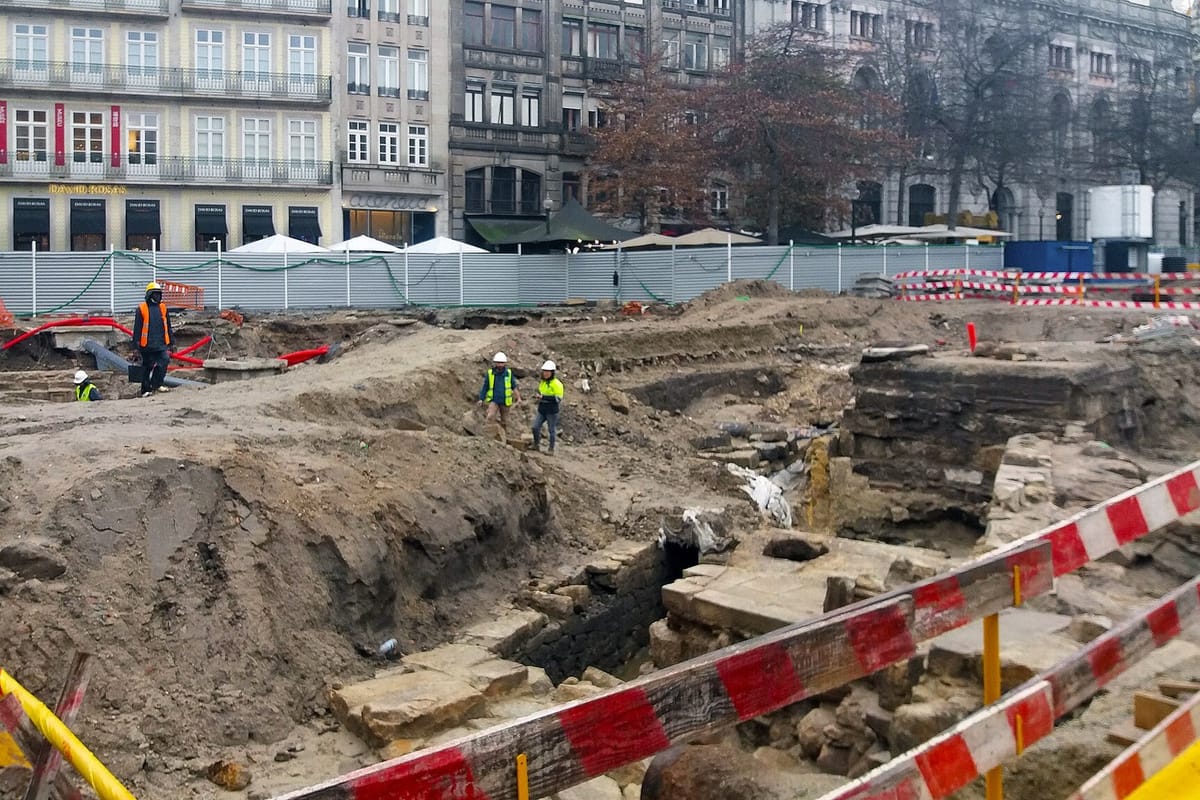
Public bodies in Portugal added 675.8 million euros of extra work to their largest building and engineering contracts between 2023 and 2025, the Tribunal de Contas (TdC, the Court of Auditors) says in a report published on its website this week. It counted 3,530 addenda to 1,197 public works contracts signed by 265 public entities. In 2025 alone the extra works came to 248.3 million euros, the highest yearly amount in the Court's records since 2006, even as the number of addenda fell.
Two figures are circulating for the same report, and both come from it. The 675.8 million euros is the gross value of added works. The contracting bodies also cut 114.3 million euros of originally planned work, which leaves a net increase of 561.6 million euros. The law does not let cuts be offset against additions when checking legal limits, so the gross figure is the one that counts.
What "extra works" are and what the law allows
Under the Código dos Contratos Públicos (CCP, the Public Contracts Code), "trabalhos complementares" (complementary works) are works whose type or quantity was not foreseen in the contract but turn out to be needed to finish it. Since 2017 it covers both what were called "trabalhos a mais" (extra works) and work to fix errors and omissions in the original design. Their total may not exceed 50 percent of the initial contract price. The latest revision of the code, Decreto-Lei n.º 177/2026, in force since 1 October, keeps that ceiling and applies it to contracts already under way.
The Court found the 50 percent limit was generally respected. Across the 1,197 changed contracts, worth 5.73 billion euros, extra works added 11.79 percent to the initial price; net of cuts, the rise was 9.79 percent. About 60 percent of the contracts reviewed had no changes.
Who added the most
Infraestruturas de Portugal (IP, the state road and rail company) was responsible for 48.62 percent of the total, or 328.6 million euros across 151 contracts. Metro do Porto followed with 62.7 million euros on four contracts, then Lisbon City Council (16.4 million) and the Lisboa Ocidental urban regeneration company (12.9 million). Railways made up 5 percent of the changed contracts but 40 percent of the extra works. Education projects added 50.1 million euros across 173 contracts; health projects, 13.4 million across 52.
The Court's sharpest finding concerns design errors. Bodies reported 175.1 million euros of work to correct errors and omissions, but held contractors responsible for only 3.6 million euros of it (2.04 percent). Only one municipality reported claiming money back from a designer: 1,270.44 euros.
What the Court recommends, and why it matters
The Court tells public bodies to approve complete, reviewed designs before tender, check every addendum against the legal tests and pursue designers and contractors for avoidable errors. It asks Parliament and the Government to regulate the compulsory design insurance foreseen in Lei n.º 31/2009, so faulty designs cost those who drew them up.
For residents, every euro of unplanned work on a road, a railway or a school comes out of state or municipal budgets. The figures cover only contracts that needed the Court's prior approval (750,000 euros and up in the period), so the true total is higher. That window would narrow under the Court of Auditors overhaul approved by Parliament in October, which lifts the prior clearance threshold to 7.5 million euros and now sits with the President.
The full report, Relatório n.º 1/2026 (OAC, 1.ª Secção), is on the Court's website in Portuguese; the judges ordered it sent to every minister and to the associations of municipalities and parishes.